 Save to Pinterest
 My sister called me the night before Mother's Day in a mild panic—she'd volunteered to host brunch for our mom and her friends, but didn't want to spend hours cooking. That's when I remembered the time my friend Margot showed up with a stunning board of pastries, fruit, and champagne, and how everyone gravitated toward it like it was the most sophisticated thing they'd ever seen. It hit me then: sometimes the most elegant entertaining isn't about cooking at all, but about knowing how to present beautiful things beautifully. A brunch board is the answer to that exact problem.
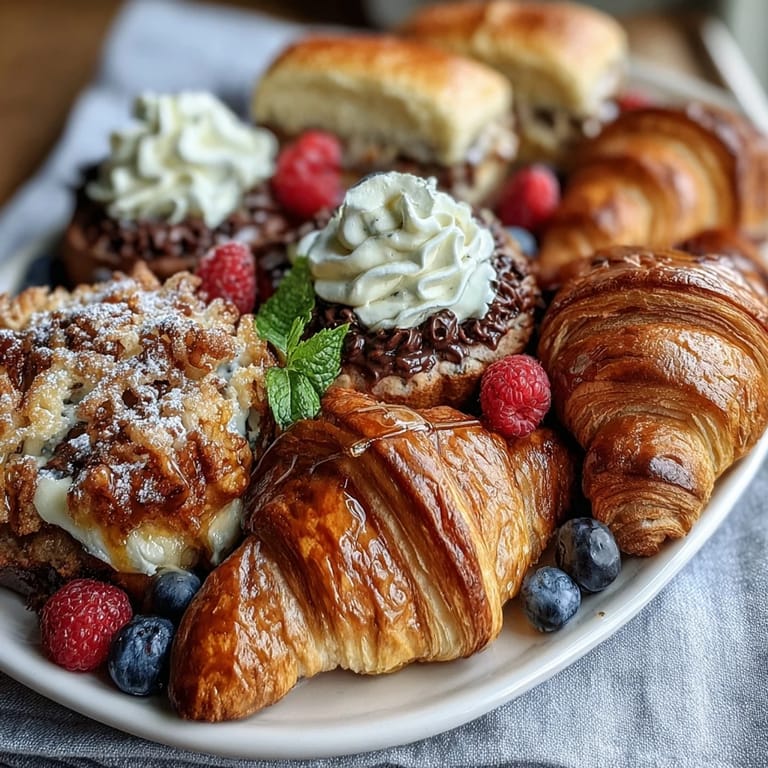
I assembled the first board for my sister that Mother's Day morning, and what surprised me wasn't how quickly it came together, but how the conversation shifted once it was on the table. My mom kept pointing out different elements—the way the pastries caught the light, how the berries looked like little jewels between the croissants. That's when I understood that a beautiful board isn't just about feeding people; it's about creating a moment where everyone feels taken care of without anyone having to say it.
Ingredients
- Mini croissants: Buy these from a good bakery the morning of; they're flaky, buttery, and require absolutely nothing from you except good judgment in choosing which shop has the best ones.
- Assorted mini Danish pastries: A mix of flavors—raspberry, cheese, apple—creates visual interest and ensures there's something for everyone's mood.
- Pain au chocolat or chocolate-filled pastries: These are the indulgent anchor of the board, the one thing people reach for first.
- Strawberries, blueberries, raspberries: Fresh berries are forgiving; they look beautiful the moment you arrange them and taste like themselves.
- Green grapes and pineapple: These provide textural contrast and a slightly sweeter note that balances the savory pastries.
- Orange slices: Both functional and decorative—they echo the orange juice in the mimosas and add brightness.
- Clotted cream or mascarpone: A neutral, luxurious spread that lets people build their own bites without needing much guidance.
- Fruit preserves: Strawberry or apricot works best; they're the bridge between pastry and fruit on the board.
- Honey: Drizzled in a small bowl, it becomes a finishing touch that feels somehow more elegant than it has any right to.
- Fresh mint: This is the difference between a nice board and one that looks like it belonged in a magazine—it adds color, aroma, and that final flourish of intentionality.
- Sparkling wine: Prosecco, Champagne, or Cava all work; the choice depends on your budget and how fancy you want to feel.
- Fresh-squeezed orange juice: If you can squeeze it yourself, do—the difference in flavor is noticeable and makes the whole thing taste more special.
Tired of Takeout? 🥡
Get 10 meals you can make faster than delivery arrives. Seriously.
One email. No spam. Unsubscribe anytime.
Instructions
- Set your canvas:
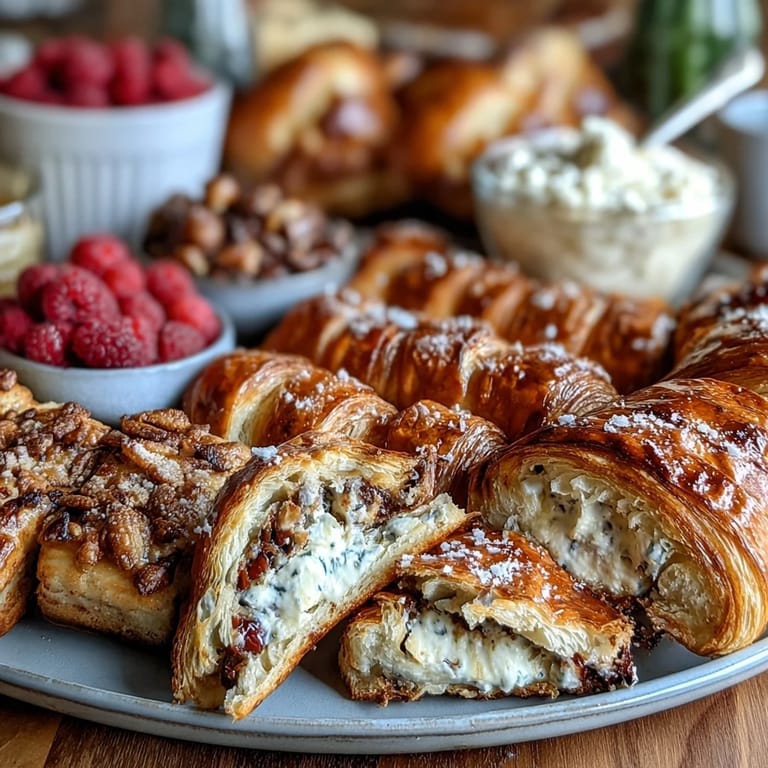
- Arrange your pastries on a large board or platter, grouping similar ones together so the eye can follow the design. Think of it like you're creating small neighborhoods of flavor rather than just scattering things randomly.
- Fill the spaces with fruit:
- Work around the pastries, nestling berries and fruit into the gaps. This is where you slow down and actually look at what you're creating—rotate the board, step back, move things around until it feels balanced and vibrant.
- Add the spreads:
- Place small bowls of clotted cream, preserves, and honey directly on the board with small spoons. This signals to people that they can customize their bites, which somehow makes the whole board feel more interactive.
- Garnish with purpose:
- Scatter fresh mint sprigs across the board—tuck some between pastries, lay some across fruit. The mint should feel intentional but not stiff.
- Mix the mimosas:
- Pour sparkling wine halfway up each champagne flute, then top slowly with cold orange juice, stirring gently so the bubbles don't escape. Finish with an orange slice or a berry balanced on the rim.
- Bring it all together:
- Set the board and glasses out at the same time so everything feels cohesive. Serve immediately while the pastries are still slightly warm and the mimosas are properly cold.
 Save to Pinterest
 There's a specific moment that happens at every brunch I've made this board for—when someone pauses between bites and just looks at the table with this expression of genuine pleasure. It's not because the food is complicated or rare; it's because someone took the time to make them feel worth celebrating. That's what this board really is: a quiet way of saying you matter.
Building the Perfect Brunch Board
The secret to a stunning brunch board is understanding proportion and color balance. You want roughly equal visual weight between pastries and fruit, with the spreads acting as anchors that draw the eye. Start by placing your largest items first—the pastries—then fill spaces with fruit in a way that feels organic rather than gridded. The board shouldn't look like you measured everything obsessively; it should look like you trusted your instincts.
The Mimosa Formula
The ratio of sparkling wine to orange juice is flexible, but I've found that a 1:1 ratio creates the most balanced drink—enough sparkle to feel celebratory, enough juice to taste refreshing and not overly boozy. If you're making a big batch, pour the wine first into all glasses, then walk around with the juice pitcher and top each one while chatting. It feels more intentional than pre-mixing, and you'll catch any glasses that are too full.
Adapting for Your Crowd
This board thrives on flexibility, which is exactly why it works for any gathering. Prefer croissants over Danish pastries? Go for it. Have guests who can't eat gluten? Substitute with gluten-free croissants from a good bakery, and suddenly you're being thoughtful without being heavy-handed about it. Add a small cheese board element—a wedge of brie, some aged cheddar—if your crowd leans savory, or lean entirely into chocolate pastries if sweetness is the goal.
- Check for allergens in pastries before you buy them; bakeries often have detailed ingredient lists if you ask.
- Non-alcoholic mimosas are just as festive; use sparkling water or non-alcoholic sparkling wine and no one will feel like they're missing out.
- Prep your fruit the night before—hull the berries, cube the pineapple, slice the orange—so morning assembly takes literally fifteen minutes.
 Save to Pinterest
 A brunch board is really just an excuse to slow down and enjoy time with people you love, without pretending you've been in the kitchen all morning. Make it beautiful, keep it simple, and let the gathering do the rest.
Recipe FAQs
- → What pastries work best for this brunch board?
Mini croissants, assorted Danish pastries like raspberry or cheese, and pain au chocolat create a flaky, flavorful variety perfect for this selection.
- → How should the fruit be prepared for the board?
Fresh fruit such as strawberries (hulled and halved), blueberries, raspberries, halved green grapes, cubed pineapple, and sliced oranges add color and freshness when arranged neatly.
- → What spreads complement the pastries and fruit?
Clotted cream or mascarpone and fruit preserves like strawberry or apricot provide creamy and sweet accents, while a drizzle of honey enhances the flavors.
- → Can I make this brunch board non-alcoholic?
Yes, replace sparkling wine with sparkling water or a non-alcoholic sparkling wine and garnish with fresh orange slices or berries.
- → What tools are helpful for assembling the board?
A large serving board or platter, small bowls for spreads and honey, spreaders, champagne flutes for drinks, and a fruit knife make assembling and serving easy.