 Save to Pinterest
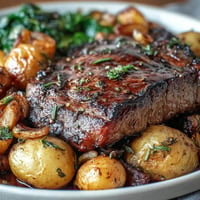
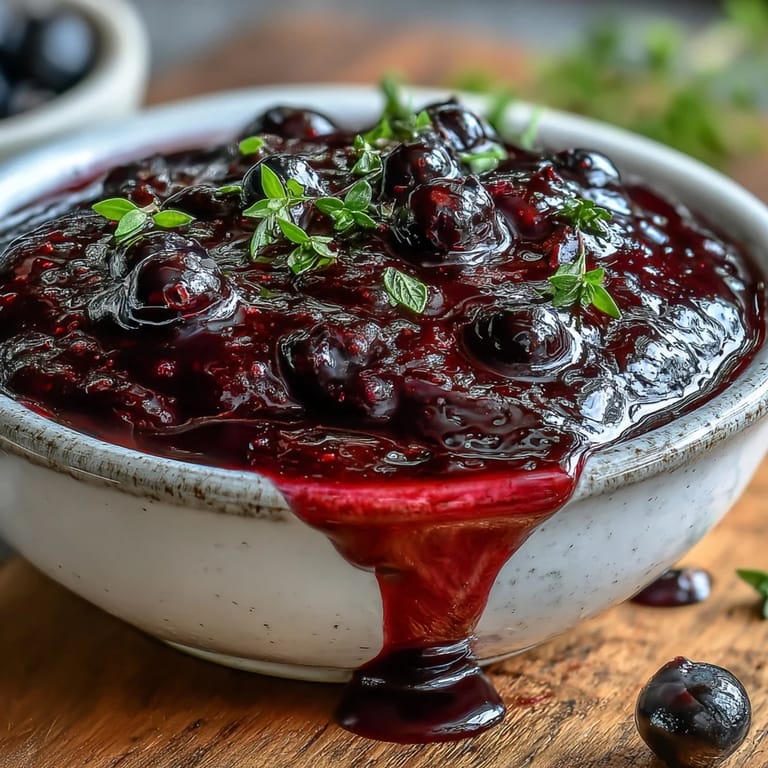
 There's a moment in every cook's life when they realize a sauce can completely transform a plate, and mine happened at a dinner party when I nervously drizzled this black currant reduction over duck breast. The deep burgundy liquid pooled like liquid jewels, and suddenly the whole dish felt restaurant-worthy. I'd discovered that bold, fruity reductions weren't intimidating—they were actually the secret weapon hiding in plain sight.
I remember standing in my kitchen on a rainy autumn evening, the kind where cooking feels like a small act of defiance against the weather. My partner wandered in asking what smelled so good, and I realized the black currants had filled the entire space with this dark, almost wine-like aroma. By the time we sat down to eat, what started as an experiment had become the kind of sauce people ask about weeks later.
Ingredients
- Fresh or frozen black currants (1 cup): These are the soul of the sauce—tart and slightly musky in a way that pairs beautifully with game and rich meats, and frozen works just as well as fresh if that's what you can find.
- Dry red wine (1 cup): Choose something you'd actually drink; it doesn't need to be expensive, but it should taste good enough to sip while you cook.
- Chicken or vegetable stock (1/2 cup): This adds body and depth without overwhelming the fruit's personality.
- Balsamic vinegar (2 tbsp): The secret ingredient that adds umami and a subtle sweetness that rounds everything out.
- Shallot, finely chopped (1 small): Gentler and more refined than onion, it dissolves into the sauce and adds a whisper of sweetness.
- Fresh thyme (1 sprig) and bay leaf (1): These aromatic herbs keep the sauce from feeling one-dimensional and add an herbal sophistication.
- Granulated sugar (2 tbsp): Just enough to balance the wine's natural acidity and the currants' tartness.
- Freshly ground black pepper and fine sea salt (1/4 tsp each): Season thoughtfully at the end; these will bring out all the hidden flavors.
- Cold unsalted butter (2 tbsp), cut into cubes: This is the finishing touch that makes the sauce glossy and luxurious, so keep it cold until the very end.
Tired of Takeout? 🥡
Get 10 meals you can make faster than delivery arrives. Seriously.
One email. No spam. Unsubscribe anytime.
Instructions
- Soften the shallot gently:
- Melt one tablespoon of butter in a medium saucepan over medium heat and add your chopped shallot. You'll know it's ready when it turns translucent and smells sweet, which takes about 2–3 minutes—this small step builds the flavor foundation.
- Build the sauce base:
- Pour in the black currants, red wine, stock, balsamic vinegar, thyme, bay leaf, sugar, salt, and pepper, stirring gently to combine everything. The mixture will look a bit loose at this point, which is exactly right.
- Let it reduce to concentrate the flavors:
- Bring everything to a gentle boil, then lower the heat and let it simmer uncovered for 15–20 minutes, stirring occasionally, until the liquid has reduced by about half and the mixture starts to look slightly syrupy. You'll notice the color deepens as it concentrates.
- Remove the aromatics:
- Fish out the thyme sprig and bay leaf with a spoon or small tongs so they don't end up in your finished sauce.
- Strain out the solids:
- Pour the sauce through a fine mesh strainer into a clean saucepan, pressing down gently on the currants to extract every bit of liquid and flavor. This step gives you that silky texture.
- Mount with butter for a glossy finish:
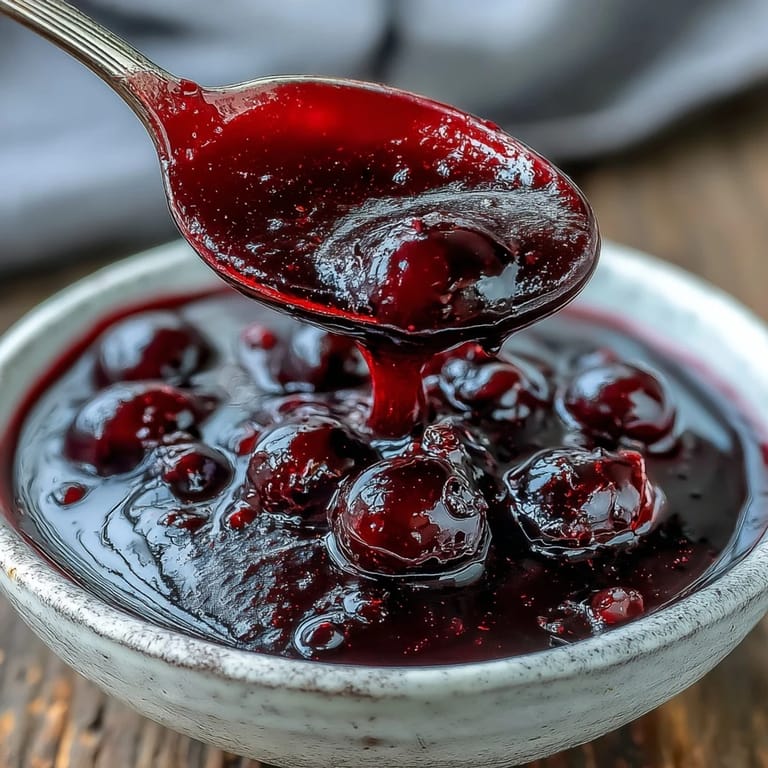
- Return the strained sauce to low heat and whisk in the remaining cold butter, one cube at a time, letting each piece melt and emulsify before adding the next. The sauce will transform into something glossy and rich-looking.
- Taste and adjust:
- This is your moment to add more salt, pepper, or a splash of vinegar if you want extra sharpness. Trust your palate and serve warm drizzled over roasted meats or charcuterie.
 Save to Pinterest
 One night, a friend declared this sauce was better than the gravy at her grandmother's house, and I realized something had shifted in how I thought about cooking. It wasn't about following rules perfectly—it was about understanding that a few good ingredients, given time and attention, could create something that tasted like it came from somewhere meaningful.
The Magic of Reduction
Watching a sauce reduce is mesmerizing; the liquid darkens, thickens, and transforms into something concentrated and intentional. I learned early on that patience here matters more than heat—a gentle simmer for 15–20 minutes creates a silky sauce, while a rolling boil can make it bitter and break the emulsion later. The occasional stir keeps the currants from settling and ensures even reduction.
Pairing Beyond Roasted Duck
This sauce has surprised me with its versatility; I've drizzled it over grilled pork chops, spooned it alongside beef tartare, and even served it as an unexpected addition to a charcuterie board. The tangy-sweet profile works anywhere you need balance against rich, savory elements, and it's rich enough to feel special without being heavy.
Make-Ahead Wisdom and Final Touches
The best part is that this sauce actually improves if made a day ahead—the flavors meld and deepen overnight in the refrigerator. When you're ready to serve, gently reheat it over low heat, stirring often, and it comes back to life glossy and perfect.
- If you want extra depth, swap out a quarter cup of wine for crème de cassis, which adds a mysterious, almost floral note.
- For a sharper edge that cuts through rich meats, add another splash of balsamic at the end rather than more wine.
- The sauce keeps refrigerated for up to four days and freezes beautifully for a quick, sophisticated dinner weeks later.
 Save to Pinterest
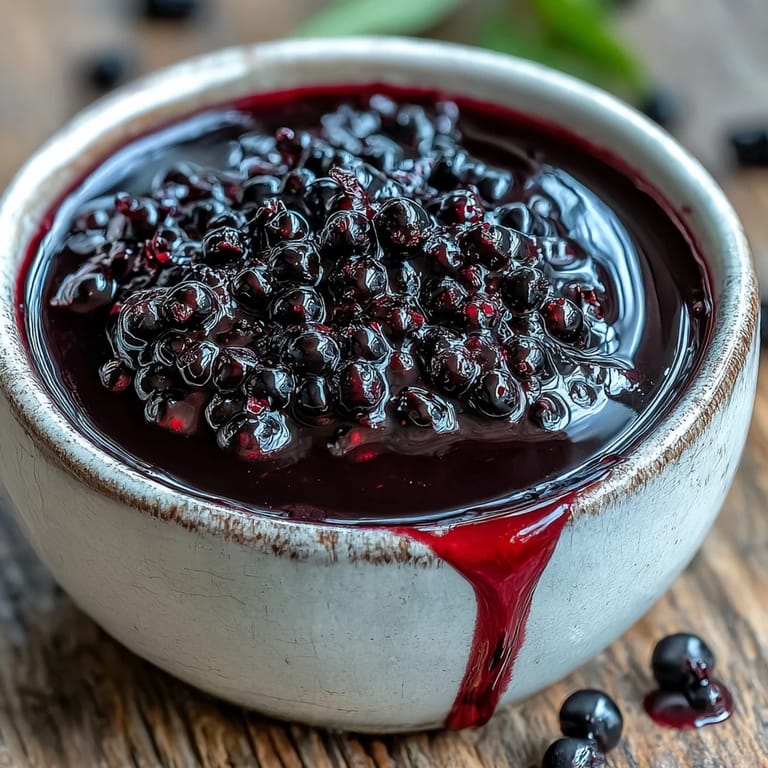
 This sauce reminds me why I love to cook: something this simple can make people pause mid-meal and ask for the recipe. That's a small kind of magic.
Recipe FAQs
- → What meats pair best with black currant reduction?
Duck, pork, venison, and game meats work exceptionally well. The sauce's tangy-sweet profile cuts through rich, fatty meats while complementing their natural flavors.
- → Can I use frozen black currants?
Yes, frozen currants work perfectly. Thaw them slightly before adding to the saucepan, and they'll break down beautifully during the reduction process.
- → How long can I store this sauce?
The reduction keeps refrigerated for up to 5 days. Gently reheat over low heat, whisking to re-emulsify. Avoid boiling as it may separate the butter.
- → What can I substitute for red wine?
Pomegranate juice or cranberry juice mixed with a splash of vinegar provides similar acidity and depth. Port wine also works beautifully for a sweeter finish.
- → Why strain the sauce before adding butter?
Straining removes skins, seeds, and herb stems for a velvety smooth texture. This ensures the butter emulsifies properly into a glossy, refined sauce.