 Save to Pinterest
 The first time I made asparagus soup was after a particularly bountiful farmers market haul where the vendor practically begged me to take the last bundles of asparagus off his hands. Standing in my kitchen, those vibrant green stalks piled high on my cutting board, I could already smell their grassy sweetness as my knife sliced through them. The rhythmic chopping sound filled my small kitchen while rain tapped against the windowpane, creating the perfect backdrop for a comforting soup afternoon.
Last May, I served this soup as a starter for my sisters birthday lunch on the patio. The weather had turned unexpectedly cool, and everyone arrived shivering in their spring dresses. As I ladled the steaming soup into bowls, the conversation quieted to appreciative murmurs, and my normally food-indifferent brother-in-law actually asked for the recipe. Even my nephew, who claimed to hate anything green, scraped his bowl clean with a piece of crusty bread.
Ingredients
- Fresh asparagus: Look for firm stalks with tight, compact tips - the thinner ones are more tender and perfect for this soup, a lesson I learned after struggling with woody thick ones my first attempt.
- Leek: The subtle onion flavor creates a perfect backdrop without overwhelming the asparagus - just remember to rinse thoroughly between the layers where soil likes to hide.
- Potato: This humble ingredient creates silky body without tons of cream, and Ive found that waxy varieties like Yukon Gold maintain better texture during blending.
- Vegetable broth: The foundation of your soup needs to be good quality - I once used a bargain brand and had to add so many seasonings to compensate that the asparagus flavor got lost.
- Heavy cream: Just enough adds luxurious richness without masking the fresh vegetable flavors - though Ive successfully substituted coconut cream when cooking for dairy-free friends.
Tired of Takeout? 🥡
Get 10 meals you can make faster than delivery arrives. Seriously.
One email. No spam. Unsubscribe anytime.
Instructions
- Build the flavor foundation:
- Melt that butter in your largest saucepan until it starts to foam slightly, then toss in your chopped onion, leek, and potato. Youll know theyre perfectly softened when they become translucent but havent taken on any color.
- Introduce the star ingredient:
- Add those beautiful asparagus stalks and listen for that gentle sizzle as they hit the hot pan. Their color will brighten to an almost electric green, signaling its time for the next step.
- Create the soup base:
- Pour in the vegetable broth, allowing it to deglaze any flavorful bits stuck to the bottom of your pan. The kitchen will fill with a wonderful aroma as everything simmers together into tenderness.
- Prepare the garnish:
- While your soup base simmers, quickly blanch those reserved asparagus tips in boiling water until theyre just tender but still have a slight snap. Their vibrant color will make your finished soup look like it came from a restaurant kitchen.
- Transform into silky smoothness:
- With your immersion blender, watch the transformation as the chunky vegetables become a smooth, velvety puree. I always start slowly to avoid splashing hot soup everywhere - learned that lesson the hard way!
- Enrich and season:
- Stir in the cream and bring everything back to the gentlest simmer - youll see the color lighten and the texture become silkier. This is when the magic of seasoning happens - salt awakens the flavors, pepper adds depth, and that tiny bit of lemon juice makes everything sing.
- Serve with style:
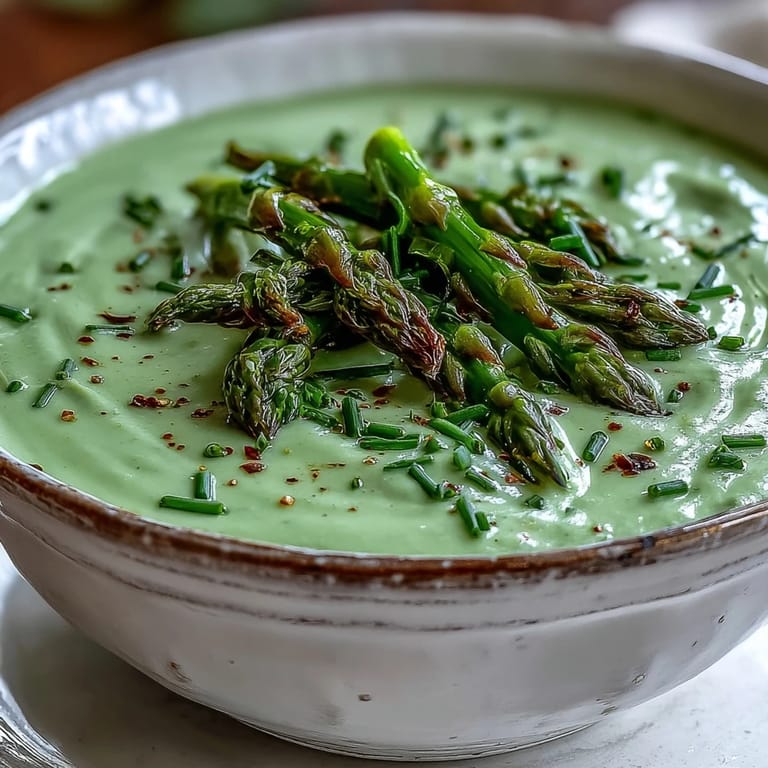
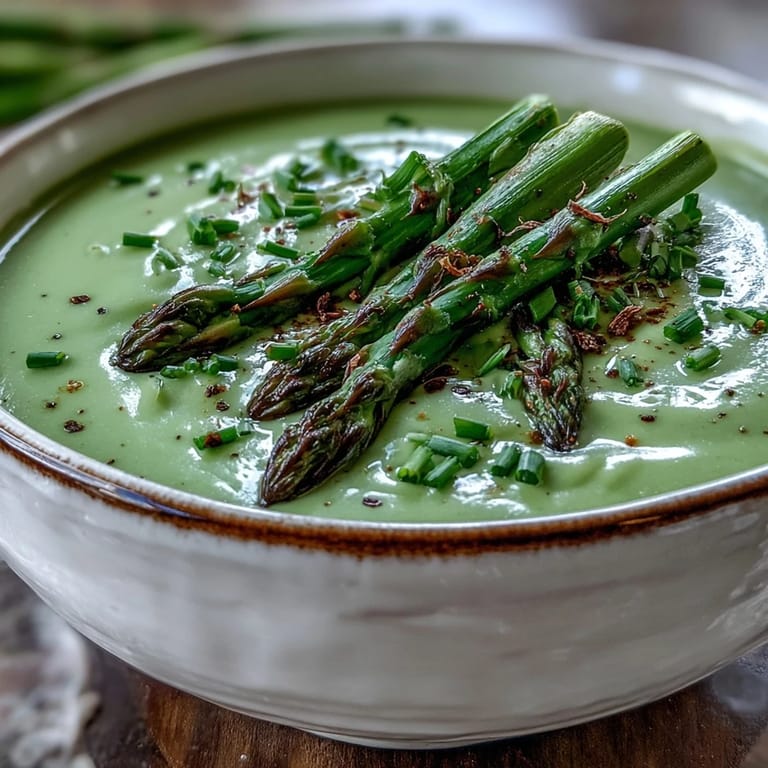
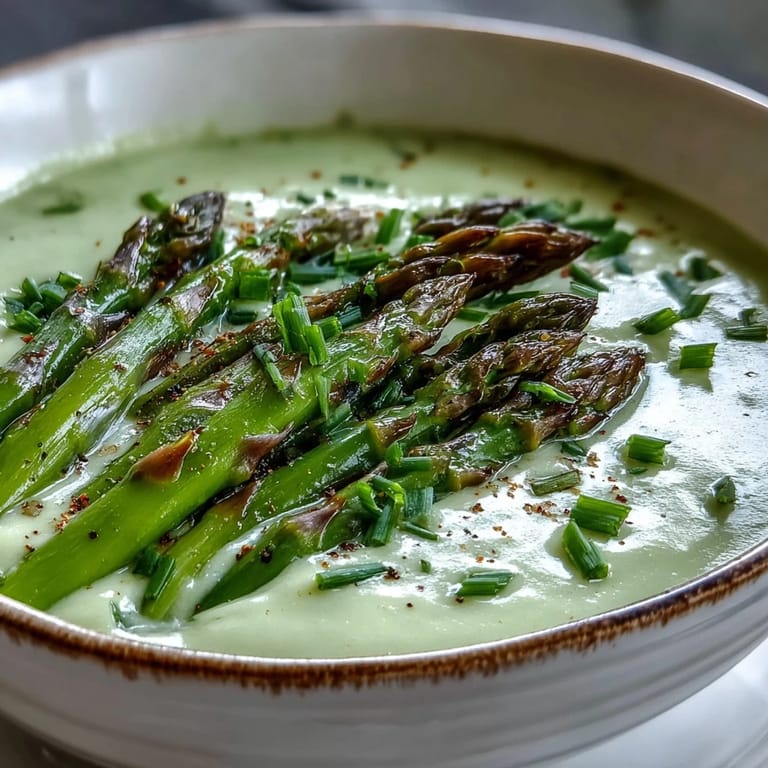
- Ladle the warm soup into bowls and arrange those beautiful blanched tips on top alongside a sprinkle of herbs. The contrast between the smooth soup and the tender-crisp garnishes makes each bite interesting.
 Save to Pinterest
 A few years ago during a particularly rainy spring, this soup became my Thursday night ritual while waiting for my partner to return from his late shift. Id have the table set with a single candle, two steaming bowls, and crusty bread sliced and waiting. No matter how exhausted he was walking through the door, the aroma of this soup always brought a smile to his face as he hung up his wet coat. Those quiet soup nights somehow got us through that difficult season, proving that the simplest foods often carry the most meaning.
Customizing Your Asparagus Soup
Over countless batches, Ive discovered this recipe welcomes thoughtful variations that can match your mood or occasion. For dinner parties, I often drizzle a spiral of white truffle oil on top just before serving, which elevates the earthy notes of the asparagus. When making it just for myself on a busy weeknight, I sometimes toss in a handful of spinach during blending for extra nutrients without changing the character of the soup. And when spring transitions to early summer, adding a few fresh peas creates a lovely sweetness that complements the asparagus beautifully.
Seasonal Considerations
While asparagus soup might seem strictly seasonal, Ive adapted this recipe throughout the year with surprising success. In late summer, I balance the last stalks of asparagus with a bit of zucchini, which maintains the soups creamy character while extending my enjoyment of garden vegetables. During autumn, adding a small amount of roasted butternut squash introduces a subtle sweetness that pairs wonderfully with the nutmeg. Even in winter, when I use frozen asparagus (which I blanch and shock before freezing during peak season), a bit of extra lemon zest brightens the flavor remarkably well, bringing a touch of spring to the coldest months.
Serving Suggestions
Finding the perfect accompaniment for this delicate soup has become something of a hobby for me over the years. A simple grilled cheese sandwich made with Gruyère on sourdough creates a comfort food pairing thats impossible to resist on rainy days. For lighter meals, a small salad with bitter greens like arugula dressed with lemon vinaigrette provides a perfect contrast to the soups creamy texture. For wine enthusiasts, Ive discovered that a crisp Albariño or Pinot Gris brings out the soups herbaceous notes without overwhelming them.
- For a complete spring meal, follow this soup with roasted salmon and a simple fennel salad - the flavors complement each other beautifully.
- Leftover soup makes an incredible sauce for pasta - just reduce it slightly and toss with fettuccine and a bit of the pasta cooking water.
- The soup actually tastes even better the next day, so dont hesitate to make it ahead for stress-free entertaining.
 Save to Pinterest
 This asparagus soup has taught me that sometimes the most elegant dishes are also the most forgiving. Whether youre a kitchen novice or experienced cook, it welcomes your personal touch while delivering reliable comfort with each spoonful.
Recipe FAQs
- → How do I store leftover soup?
Store cooled soup in an airtight container in the refrigerator for up to 3 days. Reheat gently over medium-low heat, stirring occasionally. You may need to add a splash of broth or cream when reheating if it has thickened.
- → Can I freeze this soup?
Yes, freeze the soup before adding the cream. Cool completely, then transfer to freezer-safe containers for up to 3 months. Thaw overnight in the refrigerator, reheat, and stir in fresh cream when serving.
- → What makes this soup gluten-free?
Simply ensure your vegetable broth is certified gluten-free. The soup itself contains no wheat or gluten-containing ingredients, making it naturally safe for those avoiding gluten.
- → How do I achieve the smoothest texture?
Use an immersion blender directly in the pot, or work in batches with a countertop blender. Blend for 2-3 minutes until completely smooth. For extra refinement, pass through a fine-mesh sieve before adding cream.
- → What can I serve with this soup?
Crusty bread, garlic knots, or a fresh green salad make excellent sides. For wine pairing, try a crisp Sauvignon Blanc or Pinot Grigio. The soup also works beautifully as an appetizer before roasted chicken or fish.
- → How do I make this vegan?
Replace butter with olive oil and substitute heavy cream with coconut cream, cashew cream, or your favorite plant-based alternative. The flavor will remain delicious and the texture just as silky.