 Save to Pinterest
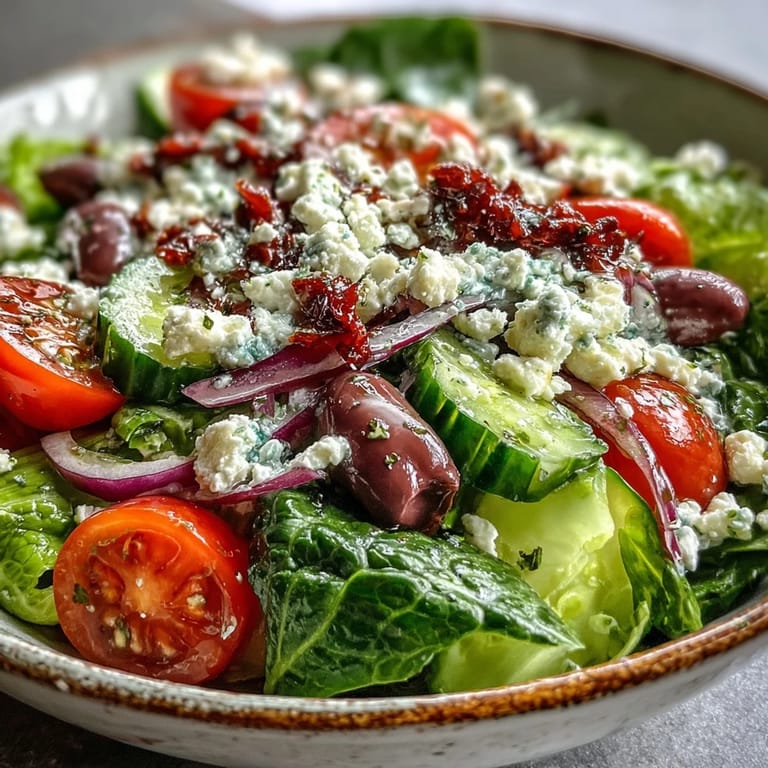
 My neighbor Maria handed me a bowl of this salad one scorching afternoon, and I watched her slice tomatoes with such casual precision that I asked for the recipe on the spot. She laughed and said there was nothing to it—just good ingredients treated with respect. That moment taught me that sometimes the best dishes aren't complicated; they're just honest, which is exactly what this Greek salad is.
Last summer, I brought this to a potluck where nobody expected much from a salad, and I watched people come back for seconds, then thirds. Someone asked if the feta was homemade, which made me realize that quality ingredients don't need apologies or explanations.
Ingredients
- Romaine lettuce: The sturdy base that holds up to the weight of toppings and dressing without wilting into mush.
- Cherry tomatoes: Use the ripest ones you can find—they're sweeter and more forgiving than those mealy supermarket tomatoes.
- Cucumber: English cucumbers have fewer seeds and a more delicate skin, but any crisp cucumber works if it hasn't been sitting in the crisper drawer for weeks.
- Red onion: Slice it thin so it's sharp but not overwhelming, and let it sit for a minute in the vinaigrette to soften its bite.
- Feta cheese: Buy a block and crumble it yourself—the pre-crumbled stuff often has additives that change the texture.
- Kalamata olives: These briny, meaty olives are worth seeking out; they're the backbone of the whole salad's personality.
- Extra-virgin olive oil: This is where you don't compromise—cheap oil tastes thin and bitter, and you notice it immediately in something this simple.
- Red wine vinegar: It adds brightness without the harshness of white vinegar, and a small splash goes a long way.
- Dried oregano: Fresh would be lovely, but dried oregano is actually the traditional choice here and has a deeper, more authentic flavor.
- Garlic: One clove minced fine ensures even distribution of flavor without any bitter raw garlic shocks.
- Dijon mustard: Just a touch helps emulsify the dressing so it coats the greens instead of pooling at the bottom.
- Salt and black pepper: Season to your taste—some feta is saltier than others, so adjust accordingly.
Tired of Takeout? 🥡
Get 10 meals you can make faster than delivery arrives. Seriously.
One email. No spam. Unsubscribe anytime.
Instructions
- Prepare your vegetables:
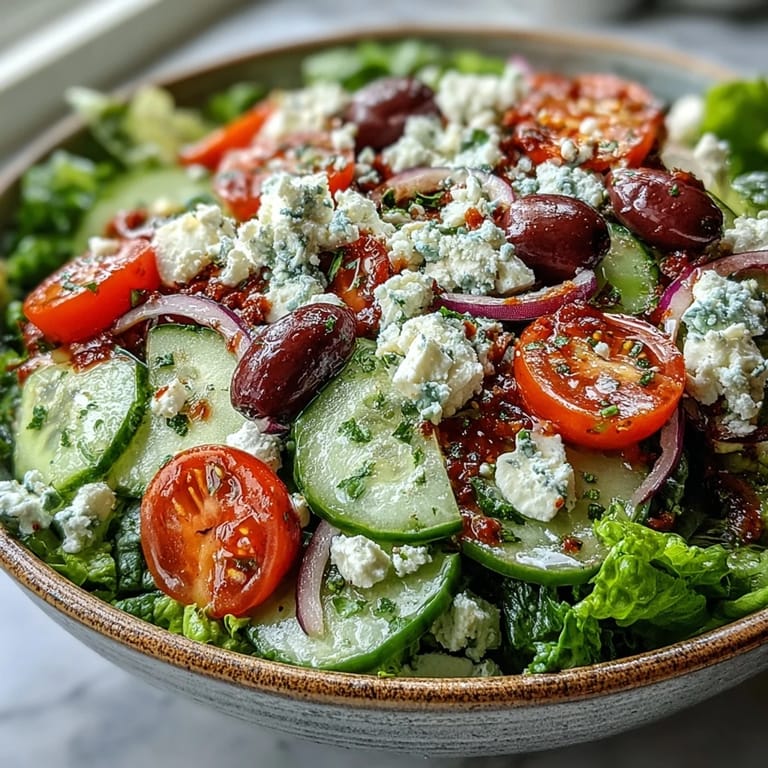
- Chop the romaine into bite-sized pieces and halve those cherry tomatoes lengthwise so they catch the dressing better. Slice your cucumber on a slight angle for a more elegant look, then thinly slice the red onion and let it breathe for a moment.
- Build the salad base:
- Toss the romaine, tomatoes, cucumber, and red onion together in your largest bowl, giving everything a gentle mix so nothing gets bruised. This is where you're creating the foundation for everything else to shine.
- Add cheese and olives:
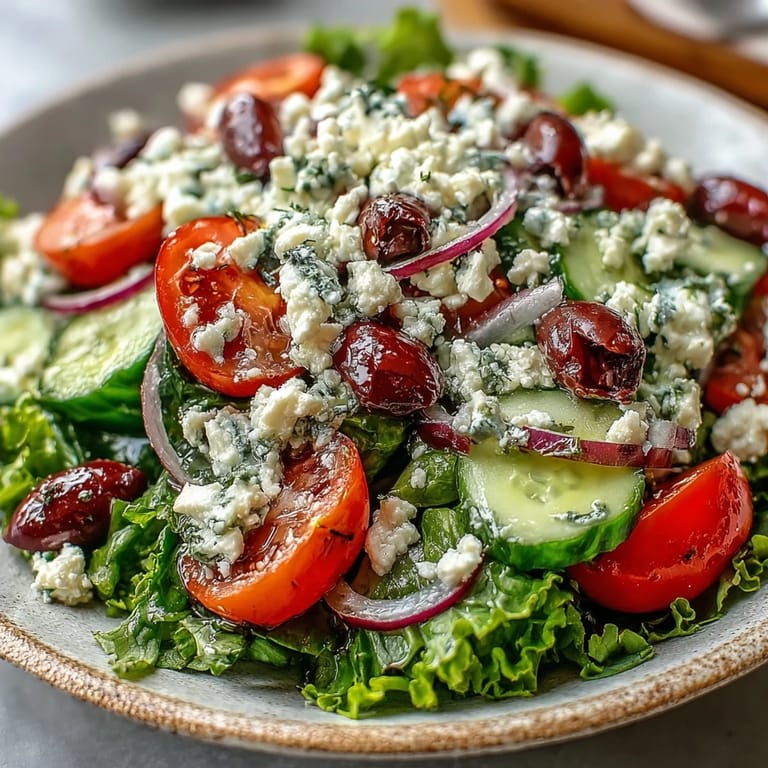
- Scatter the crumbled feta and halved olives across the top, layering them so some goes deep into the greens and some stays visible on the surface. Don't mix them in yet—let them create little pockets of flavor.
- Make the vinaigrette:
- In a small jar or bowl, whisk the olive oil, red wine vinegar, oregano, minced garlic, Dijon mustard, salt, and pepper together until the dressing looks slightly thicker and more cohesive. Taste it straight from the whisk—it should make your mouth water, not pucker.
- Finish and serve:
- Pour the vinaigrette over the salad just before serving, toss gently with your hands or two wooden spoons so everything gets coated but the tomatoes stay intact. Serve immediately while everything is still crisp and cold.
 Save to Pinterest
 There's something about eating this salad that makes you feel like you're doing something right, sitting somewhere sun-filled, thinking clearly. It's not fancy or fussy, but it's exactly what you want when hunger meets heat and you need something that feels both nourishing and light.
The Beauty of Simplicity
This salad taught me that cooking doesn't require tricks or secret techniques—it requires attention. When you're working with five or six main ingredients, each one matters, and there's nowhere to hide behind complexity. The quality of your tomatoes, the age of your oregano, the flavor of your olive oil—these details make the difference between a forgettable salad and one someone asks you about later.
Making It Your Own
While this recipe is perfect as written, it's also incredibly forgiving when you want to play around. I've added sliced bell peppers, fresh dill, even thinly shaved fennel when I was feeling adventurous. Some friends add chickpeas to make it more substantial, others swap in crumbled goat cheese for a tangier twist. The vinaigrette stays the same, and somehow it welcomes whatever else you want to bring to the bowl.
Timing and Storage
The vegetables can all be prepped a few hours ahead and stored separately in the refrigerator, which is helpful when you're cooking for guests and want to minimize last-minute work. The vinaigrette also keeps for days in a jar—actually, it gets better as the garlic and oregano deepen their flavor, so you could make it the night before if that helps you feel more relaxed while cooking.
- Keep everything cold until the moment you assemble; crisp vegetables are the whole point.
- If you do need to make this ahead, dress it no more than 30 minutes before serving.
- Any leftover dressed salad can be drained and turned into a grain bowl the next day.
 Save to Pinterest
 This salad has become my answer for when I want to feel good about what I'm eating without spending hours in the kitchen. It's the kind of dish that reminds you why fresh ingredients, treated simply and respectfully, will never go out of style.
Recipe FAQs
- → What makes Greek salad authentic?
Traditional Greek salad features crisp vegetables like cucumber, tomatoes, and red onion combined with creamy feta cheese and Kalamata olives. The key to authenticity is the simple vinaigrette made with extra-virgin olive oil, red wine vinegar, dried oregano, and fresh garlic. This combination creates the bright, tangy flavors characteristic of Mediterranean cuisine.
- → Can I make Greek salad ahead of time?
For best results, prepare the vegetables and dressing separately up to a day in advance. Store chopped vegetables in an airtight container in the refrigerator. Keep the vinaigrette in a sealed jar. Combine everything just before serving to maintain the crisp texture of the lettuce and prevent sogginess.
- → What can I substitute for feta cheese?
If you need a dairy-free option, try vegan feta alternatives made from almonds or tofu. For a different flavor profile, cotija cheese offers a similar crumbly texture with a milder taste. Fresh goat cheese provides creaminess though it has a tangier flavor profile than traditional feta.
- → How do I properly wash and prepare the vegetables?
Rinse romaine lettuce thoroughly under cold water, then dry completely using a salad spinner or clean towels to remove excess moisture. Cherry tomatoes should be rinsed and patted dry. Peel cucumbers if the skin is thick or waxed, otherwise leave for extra crunch. Slice red onion as thinly as possible for the best texture.
- → Is Greek salad healthy?
This Mediterranean bowl offers numerous nutritional benefits. The vegetables provide essential vitamins, minerals, and fiber while being low in calories. Extra-virgin olive oil delivers heart-healthy monounsaturated fats. Feta adds protein and calcium. With approximately 240 calories per serving, it makes a satisfying yet light meal option.