 Save to Pinterest
 There's something almost meditative about assembling a Buddha bowl, the way each component finds its place like you're building edible art. I stumbled onto this version during a phase when my kitchen felt too quiet on weeknights, and suddenly layering greens, roasted vegetables, and creamy tahini became my favorite kind of therapy. The bowl came together one evening when I had leftover roasted eggplant and an avocado that needed rescuing, and somehow it transformed into something I now make deliberately, not out of necessity. What started as improvisation became ritual.
I brought this to a potluck at my friend's place and watched people circle back to it three times, which tells you something. The woman next to me asked if she could take the recipe, and we ended up talking for an hour about how Mediterranean food tastes like possibility. That conversation stayed with me more than anything else that evening.
Ingredients
- Mixed salad greens: Use whatever makes you happy—arugula has a peppery kick that stands up to the richness of tahini, but spinach and romaine work beautifully too.
- Chickpeas: Canned and drained work fine, though cooking dried ones from scratch feels less wasteful if you have the time.
- Zucchini: Dice it the same size as the eggplant so everything roasts evenly and gets those golden, caramelized edges.
- Red bell pepper: The sweetness balances the earthiness of roasted vegetables, so don't skip it for something milder.
- Red onion: Sliced thin means it softens during roasting instead of staying aggressively sharp.
- Eggplant: This is where the bowl gets meaty texture—cut it small so it gets tender instead of just soft.
- Olive oil: Use the good stuff you actually enjoy tasting, not the cooking-only kind, because you'll taste it in the dressing too.
- Dried oregano and smoked paprika: These two create a flavor foundation that whispers Mediterranean without shouting.
- Avocado: Add it just before eating or it'll turn gray and sad, which defeats the purpose of something this beautiful.
- Kalamata olives: Their brininess is essential—it cuts through the creaminess and wakes everything up.
- Hummus: Homemade tastes revelatory, but good store-bought works when you're tired, and that's okay.
- Tahini: The star of the dressing, so use one you'd taste plain and actually like.
- Lemon juice: Fresh squeezed makes a real difference in brightness that bottled juice can't quite match.
- Garlic: One clove minced fine enough to disappear into the dressing without overpowering it.
- Ground cumin: Just a whisper adds warmth and depth that somehow makes the dressing taste more sophisticated.
Tired of Takeout? 🥡
Get 10 meals you can make faster than delivery arrives. Seriously.
One email. No spam. Unsubscribe anytime.
Instructions
- Heat your oven and prep the vegetables:
- Set the oven to 425°F and while it preheats, dice everything into similar-sized pieces so nothing sits there raw while other pieces char. Uniform sizes mean even cooking, which means everything finishes golden and tender at the same time.
- Season and roast the vegetables:
- Toss your diced vegetables with olive oil, oregano, smoked paprika, salt, and pepper, then spread them single-layer on a baking sheet—crowding them makes them steam instead of roast. About halfway through the 25–30 minute roasting time, give them a gentle toss so they caramelize evenly on all sides.
- Make the tahini dressing:
- While vegetables are roasting, whisk tahini with lemon juice, garlic, cumin, and salt in a bowl, then add water a tablespoon at a time until it reaches that pourable consistency that coats a spoon. Taste it and adjust lemon or salt until it makes you happy—tahini dressing should taste bright and a little assertive.
- Assemble with intention:
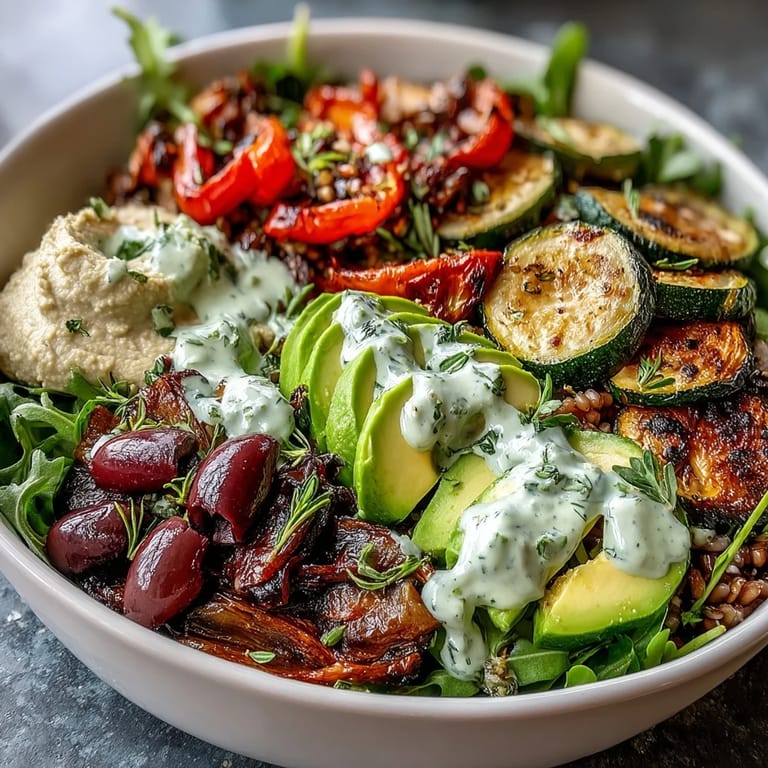
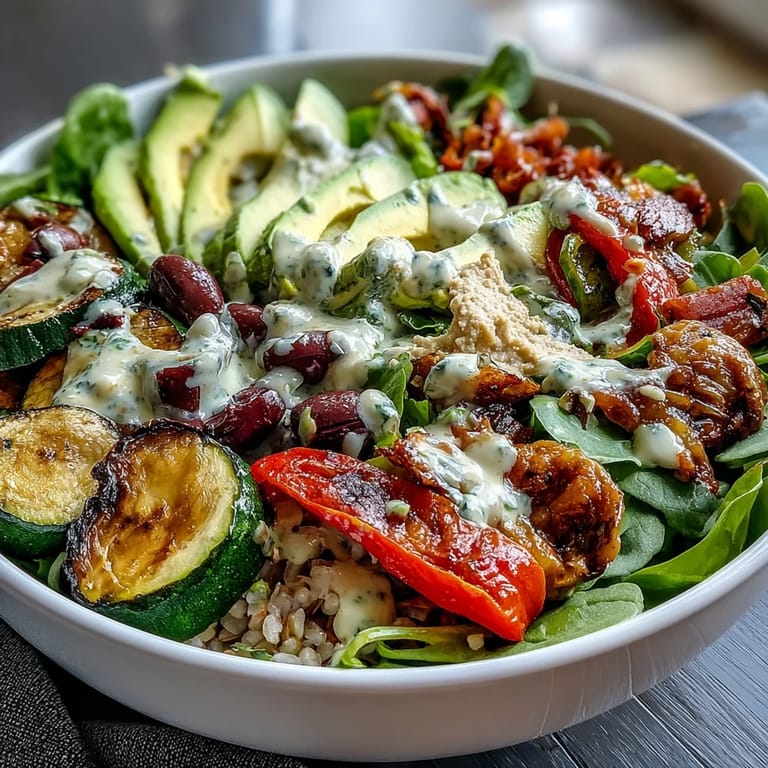
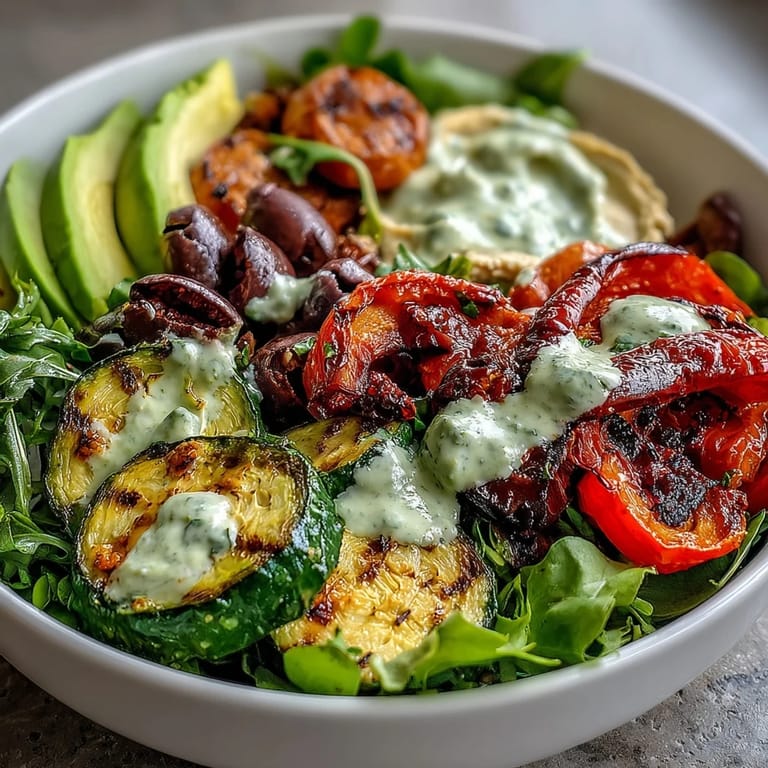
- Divide greens among your bowls, then arrange chickpeas, roasted vegetables, avocado slices, and olives on top like you're creating something meant to be photographed. Add a generous dollop of hummus to each bowl—it's not just a flavor, it's a luxurious texture moment.
- Dress and serve:
- Drizzle the tahini dressing over everything just before you eat, so it clings to the vegetables and greens without making them soggy. Taste a bite and add more salt or lemon if it needs a nudge.
 Save to Pinterest
 There was an afternoon when my mom tried this bowl for the first time and mentioned how it didn't feel like she was missing anything—no meat, no dairy, just pure satisfaction. That single comment somehow validated everything about eating this way.
Why This Bowl Works So Well
Every component serves a purpose beyond nutrition—the greens give you something fresh and alive, the roasted vegetables bring warmth and sweetness, the chickpeas and hummus create that satisfying protein-rich fullness, and the tahini dressing ties everything together with creamy brightness. It's not just balanced; it actually tastes like you spent hours thinking about how to make it delicious, even though the whole thing takes less than an hour. The bowl teaches you that vegan food doesn't have to be complicated or boring—it just needs attention and good ingredients.
Building Your Own Version
Once you understand the structure—greens as your base, roasted vegetables for warmth and texture, protein for staying power, fresh elements for brightness, and a creamy dressing to marry it all—you can riff endlessly. I've made this with roasted sweet potatoes instead of eggplant on mornings when I wanted something slightly sweeter, and with white beans when I didn't have chickpeas on hand. The flexibility is part of why this became my go-to bowl: it works with what you have while still tasting intentional and delicious.
Serving and Storage Secrets
Assemble these bowls right before eating if you can, because wet dressing on greens for hours turns them into sad salad instead of vibrant food. If you're packing this for lunch, keep the dressing separate and add it when you're ready to eat, storing everything else in containers overnight. The roasted vegetables actually taste better after a day in the fridge—the flavors deepen and mellow, which means this bowl gets better with a little time.
- Add cooked quinoa or brown rice under the greens for extra substance if you're feeding hungry people.
- Top with toasted pine nuts or pumpkin seeds for crunch that makes the whole bowl feel more special.
- Serve alongside crusty bread for scooping up tahini dressing when your bowl is empty.
 Save to Pinterest
 This bowl became my quiet anchor during seasons when everything else felt uncertain, proof that something simple and wholesome could also be genuinely delicious. Make it, adjust it, own it.
Recipe FAQs
- → Can I make this ahead of time?
Absolutely. Roast the vegetables and prepare the tahini dressing up to 3 days in advance. Store them in airtight containers in the refrigerator. Assemble bowls fresh when ready to eat, adding avocado just before serving to prevent browning.
- → What can I use instead of tahini?
If you don't have tahini or have a sesame allergy, try cashew butter, almond butter, or Greek yogurt for the dressing base. Each adds a slightly different flavor but still creates a creamy, rich texture.
- → How do I add more protein?
Beyond chickpeas, consider adding grilled tofu, tempeh, or even cooked lentils. If you're not strictly vegan, grilled chicken or falafel make excellent protein additions to this bowl.
- → Can I use different vegetables?
Definitely. This bowl is highly adaptable. Try roasted sweet potatoes, cauliflower, cherry tomatoes, or artichoke hearts. Seasonal vegetables work beautifully here—just adjust roasting times as needed.
- → Is this freezer-friendly?
The roasted vegetables freeze well for up to 3 months. However, fresh greens, avocado, and the tahini dressing don't freeze successfully. Freeze components separately and assemble with fresh ingredients when ready to enjoy.