 Save to Pinterest
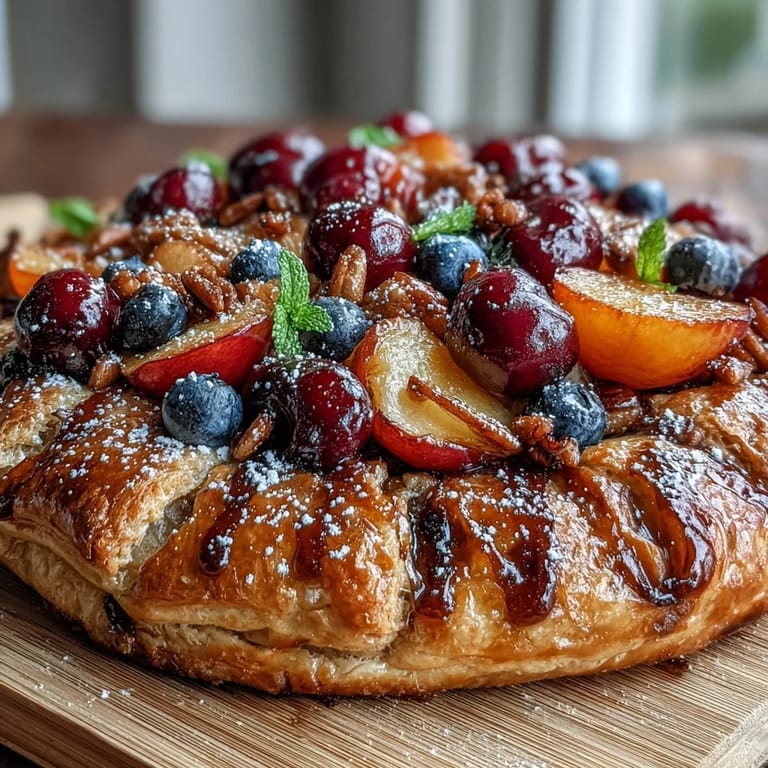
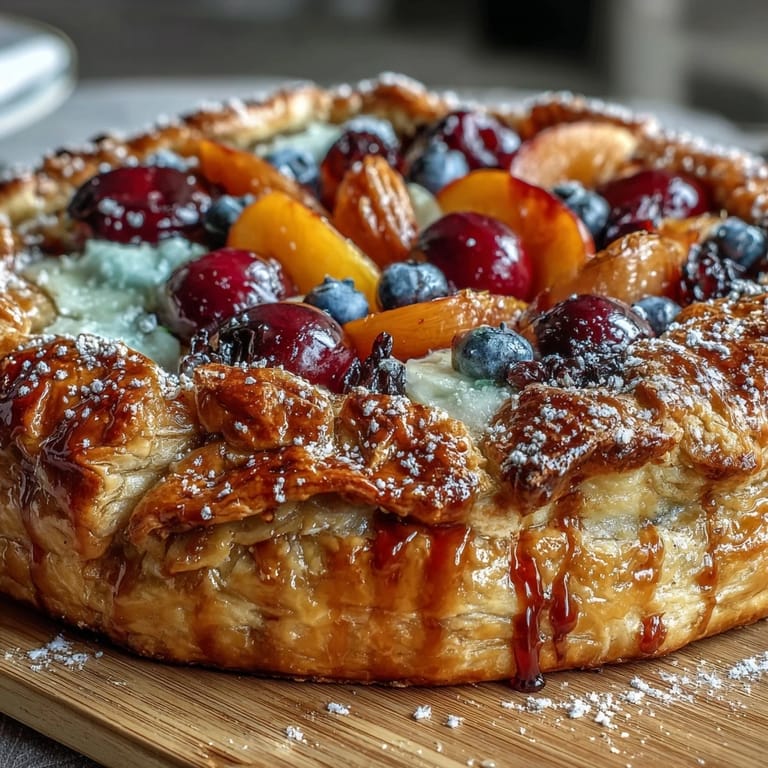
 There's a particular Saturday in July when my farmer's market haul gets ridiculous—more peaches and plums than any reasonable person needs. That's when a galette becomes less a recipe and more a solution, a way to celebrate summer's generosity without fussing too much. The first time I assembled one, I was genuinely surprised how forgiving the whole thing was, how a slightly imperfect fold looked intentionally rustic once it came out of the oven.
I made this for a friend's backyard dinner on a humid evening when nobody felt like sitting inside, and watching people's faces when they bit into the warm pastry with fruit still steaming inside—that's when I understood why rustic galettes have stuck around for centuries. Someone asked if I'd gone to pastry school, which made me laugh harder than it probably should have.
Ingredients
- All-purpose flour (1 1/4 cups): The base of your pastry—make sure it's room temperature before you start, and don't overwork it or your crust will be tough instead of tender.
- Unsalted butter, cold and cubed (1/2 cup for pastry): Cold butter creates those little pockets of steam that make pastry flaky; if it warms up while you're working, stick it back in the freezer for a few minutes.
- Ice water (1/4 cup): The magic ingredient that brings dough together without toughening it; add it slowly and stop as soon as the dough holds together.
- Almond flour (1/2 cup): This is what makes frangipane taste like actual dessert rather than just fruit on pastry—don't skip it or substitute with regular flour.
- Mixed stone fruits (4 cups, pitted and sliced): Peaches, plums, nectarines, apricots, cherries—whatever looks perfect at the market, use that combination.
- Cornstarch (1 tbsp): This prevents your galette from becoming a soggy mess; it absorbs fruit juices without making anything taste starchy.
- Lemon juice (1 tsp fresh): A tiny amount brightens the fruit and balances sweetness.
- Egg for egg wash: Brushing beaten egg on pastry gives you that gorgeous golden-brown color that looks intentional.
- Coarse sugar for topping: It doesn't dissolve the same way granulated sugar does, so you get little pockets of crunch on every bite.
Tired of Takeout? 🥡
Get 10 meals you can make faster than delivery arrives. Seriously.
One email. No spam. Unsubscribe anytime.
Instructions
- Make the pastry dough:
- Whisk flour, sugar, and salt together, then work in cold butter cubes with your fingertips or a pastry blender until the mixture looks like coarse breadcrumbs—some tiny butter pieces should still be visible. Add ice water a few tablespoons at a time, mixing gently until the dough just comes together without being sticky.
- Chill and rest:
- Flatten your dough into a disk, wrap it in plastic wrap, and let it sit in the refrigerator for at least 30 minutes (or up to overnight). This resting time is when the gluten relaxes and the butter stays cold and separate.
- Blend the frangipane:
- Cream softened butter and sugar until pale and fluffy, then beat in your egg followed by almond flour, vanilla, almond extract if using, and a pinch of salt. The mixture should be smooth and spreadable, almost like frosting.
- Toss the fruit:
- Gently combine your sliced stone fruits with sugar, cornstarch, and lemon juice in a bowl, being careful not to break the fruit into pieces. Let it sit for a few minutes so the juices start to release.
- Roll and transfer:
- On a lightly floured surface, roll your chilled dough into a 12-inch circle—it doesn't need to be perfect, rustic is the whole point. Transfer it to a parchment-lined baking sheet.
- Layer and fold:
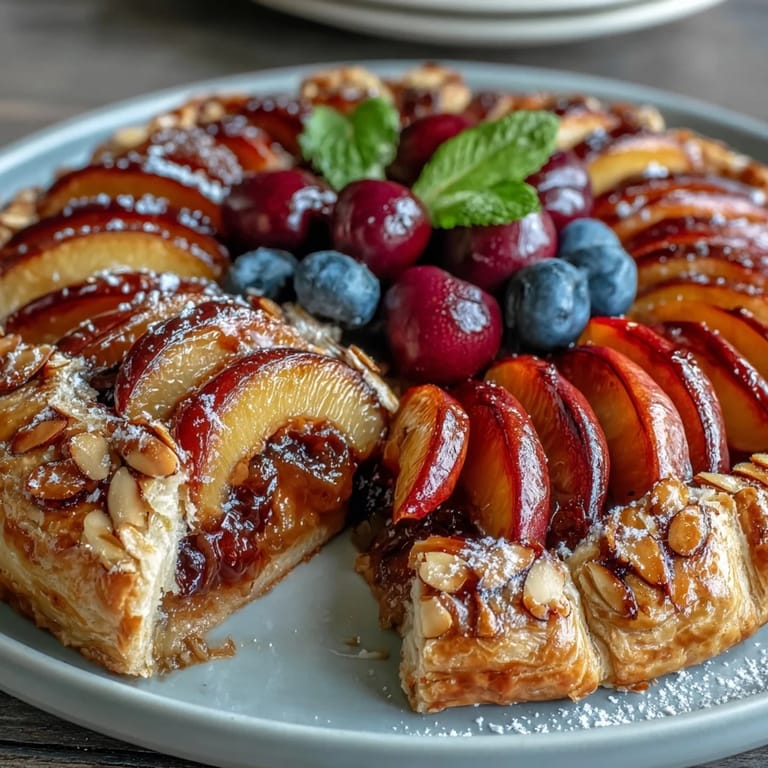
- Spread your frangipane evenly over the dough, leaving a 2-inch border around the edge, then arrange your fruit on top in any pattern that looks good to you. Fold the pastry edge up and over the fruit, pleating naturally as you go.
- Final touches before baking:
- Brush the pastry edges with beaten egg and sprinkle with coarse sugar, then slide everything into a preheated 400°F oven. The egg wash will turn golden, and you'll start smelling toasted almond and caramelizing fruit within minutes.
- Bake until perfect:
- Watch for the pastry to turn deep golden and the fruit to bubble slightly at the edges, which usually takes 35 to 40 minutes. Let it cool for just a few minutes before slicing so the filling sets slightly but the fruit is still warm.
 Save to Pinterest
 There's something deeply satisfying about pulling a galette from the oven—it's the opposite of precious, all slouchy and imperfect and somehow still elegant. My neighbor showed up unannounced that evening, smelled the buttery pastry and caramelized peaches wafting down the street, and ended up staying for an impromptu dessert. That's when I realized this isn't really about technique; it's about the moment when fruit and butter come together and make someone's day a little better.
Why This Works as Summer Dessert
A galette is the opposite of a fancy layer cake—it doesn't demand perfection, which is exactly what you want when it's too hot to stress about kitchen projects. The pastry gets golden and flaky without any special equipment, and the frangipane adds this subtle almond flavor that elevates everything without being overwhelming. Most importantly, it tastes best when it's still slightly warm and the fruit is still steaming, which means you can have dessert on the table within two hours of deciding you want it.
Making It Ahead (Because Life Happens)
You can make both the dough and frangipane the day before, which removes most of the stress from entertaining. The dough actually improves with an overnight rest—the flavor deepens and the gluten fully relaxes, making your pastry even more tender. Just pull everything out of the refrigerator 20 minutes before you assemble the galette so it's not too cold and stiff to work with.
Variations and Last-Minute Thoughts
Once you've made this once, you'll start seeing galettes as a way to use whatever fruit is at its peak—it works equally well with berries, apples, or pears if you adjust the baking time slightly. A pinch of cinnamon or cardamom in the fruit filling adds warmth without changing the essential character of the dessert. Serve it warm or at room temperature, and if you want to be slightly indulgent, a scoop of vanilla ice cream or a dollop of whipped cream melting into the warm filling is absolutely the right call.
- Don't skip the lemon juice: It brightens everything and keeps the dessert from tasting one-note sweet.
- If your fruit looks dry, add an extra tablespoon of cornstarch: It absorbs moisture without changing the taste.
- Coarse sugar on top makes all the difference: It catches the light and adds texture that regular sugar won't.
 Save to Pinterest
 This galette has become my answer to the question of what to bring to a summer gathering when you want to look like you tried but didn't spend the whole day in the kitchen. Slice it warm, watch people's faces, and let the pastry and fruit do the talking.
Recipe FAQs
- → What types of stone fruits work best for this galette?
Peaches, plums, nectarines, apricots, and cherries are excellent choices, offering a balance of sweetness and tartness.
- → How do I prevent the pastry from becoming soggy?
Chilling the dough before rolling and baking ensures a flaky crust. Leaving a border around the filling also helps keep the pastry crisp.
- → Can I prepare the almond frangipane ahead of time?
Yes, the frangipane can be made in advance and refrigerated overnight to save time on baking day.
- → What is the role of lemon juice in the fruit filling?
Lemon juice adds brightness and balances the sweetness, while also helping to slightly thicken the filling when combined with cornstarch.
- → How should I serve the galette for best flavor?
It’s delicious served warm or at room temperature, optionally accompanied by vanilla ice cream or whipped cream for extra richness.