 Save to Pinterest
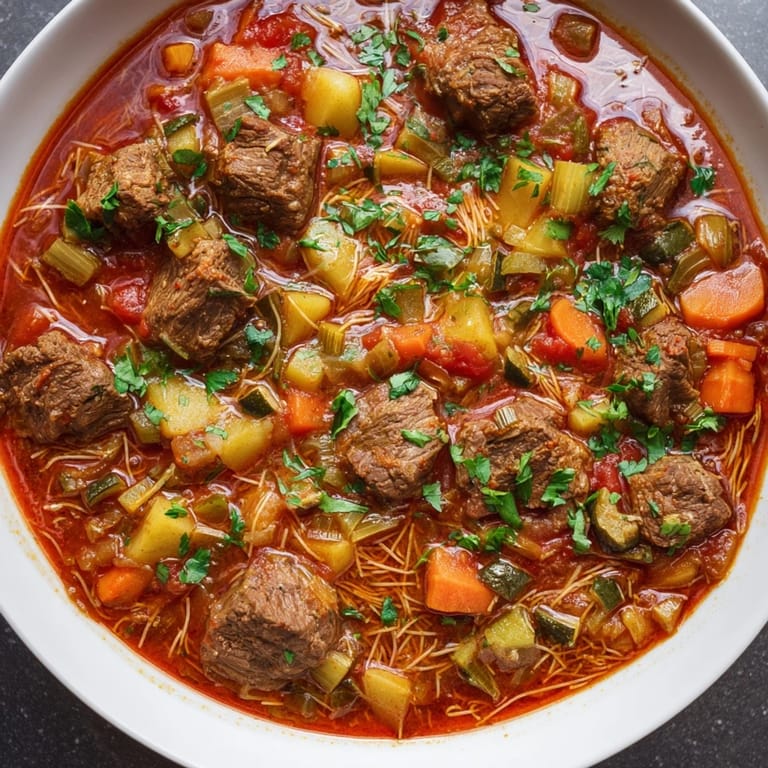
 My aunt's kitchen in Algiers always smelled like this soup simmering on the stove—that first time she let me help, I was mesmerized by how the spices transformed from dusty powder to something deeply aromatic the moment they hit the hot oil. She taught me that chorba isn't just a soup; it's a conversation starter, a way of saying you've got time for the people at your table. Now whenever I make it, that same warmth fills my kitchen, and I'm back there watching her stir the pot with the kind of focus only a true cook possesses.
I served this to my partner on a cold evening when we'd both had the kind of day that only hot soup can fix, and watching them taste it reminded me why comfort food matters—it's not really about the ingredients, it's about the moment you choose to slow down together.
Ingredients
- Lamb shoulder (500 g, cubed): This cut breaks down beautifully during the long simmer, releasing its flavor into every drop of broth; don't rush to use a leaner cut or you'll lose that richness.
- Onion (1 large, finely chopped): The foundation of everything—when you cook it slowly with the lamb, it becomes almost sweet and creates the base no stock can replicate.
- Carrots (2, diced): These add natural sweetness that balances the spices and tomatoes perfectly.
- Celery stalks (2, diced): A subtle flavor builder that most home cooks underestimate but every professional knows is essential.
- Potato (1 medium, peeled and diced): This gives the soup body and makes it feel more like a meal than just broth with vegetables.
- Zucchini (1, diced): Added near the end so it stays tender and bright instead of dissolving into mush.
- Fresh tomato (1 large, peeled and diced) and canned chopped tomatoes (400 g): The fresh one adds brightness while the canned provides concentrated flavor and body.
- Garlic (2 cloves, minced): Never use jarred; fresh garlic transforms completely when cooked with these North African spices.
- Tomato paste (2 tbsp): This is your secret weapon—it deepens the entire soup with umami that makes people ask for your recipe.
- Fresh coriander and parsley (1 bunch each, chopped): Reserve some for garnish because that final fresh herbal note is what lifts the whole dish from good to memorable.
- Ground cumin (1 tsp): Warm and earthy, this is the backbone of the spice blend.
- Ground coriander (1 tsp): Floral and gentle, it adds sophistication without being obvious.
- Paprika (1 tsp): Brings color and a subtle sweetness that rounds out the spice profile.
- Ground cinnamon (1/2 tsp): Just enough to whisper of something warm and slightly sweet in the background.
- Ground black pepper, turmeric, and chili flakes (1/2 tsp, 1/2 tsp, optional): These three layer heat and earthiness—adjust the chili flakes to your taste, not anyone else's.
- Salt (1 1/2 tsp): Start with less and taste as you go; you can always add more but you can't take it out.
- Olive oil (2 tbsp): Use something you'd actually want to eat on bread, not the cheapest option you can find.
- Water or low-sodium beef stock (1.5 L): If you use stock, taste it first—some brands are saltier than others.
- Vermicelli or small soup pasta (60 g): This adds texture and turns soup into something more substantial; cook it just until tender or it absorbs all the broth.
Tired of Takeout? 🥡
Get 10 meals you can make faster than delivery arrives. Seriously.
One email. No spam. Unsubscribe anytime.
Instructions
- Sear the lamb until golden:
- Heat oil in your pot until it shimmers, then add the lamb cubes in a single layer—don't crowd the pan or they'll steam instead of brown. Let them sit for a minute before stirring, and after about five minutes you'll see a beautiful crust forming that holds all the flavor.
- Build your aromatic base:
- Once the lamb is browned, add your chopped onion, garlic, carrots, celery, and potato, stirring occasionally for about five minutes until the onion turns translucent and everything smells absolutely incredible.
- Wake up the spices:
- Stir in the tomato paste and all your spices, then let them toast for a couple of minutes—this is when the magic happens, when powder becomes fragrant and alive.
- Add your tomatoes and vegetables:
- The fresh diced tomato, canned tomatoes, and zucchini go in now, giving everything a good stir so nothing sticks to the bottom.
- Simmer low and slow:
- Pour in your water or stock, bring it to a boil, then turn the heat way down, cover the pot, and let it bubble gently for a full hour—this is when the lamb becomes impossibly tender and the broth develops real depth. Skim off any gray foam that rises to the top in the first few minutes.
- Add the pasta:
- About ten to twelve minutes before serving, stir in your vermicelli and let it cook until just tender, tasting it to make sure it's not mushy.
- Finish with fresh herbs:
- At the very end, stir in your chopped parsley and coriander, taste for salt and spices, and adjust as needed—this is your last chance to make it perfect.
- Serve with love:
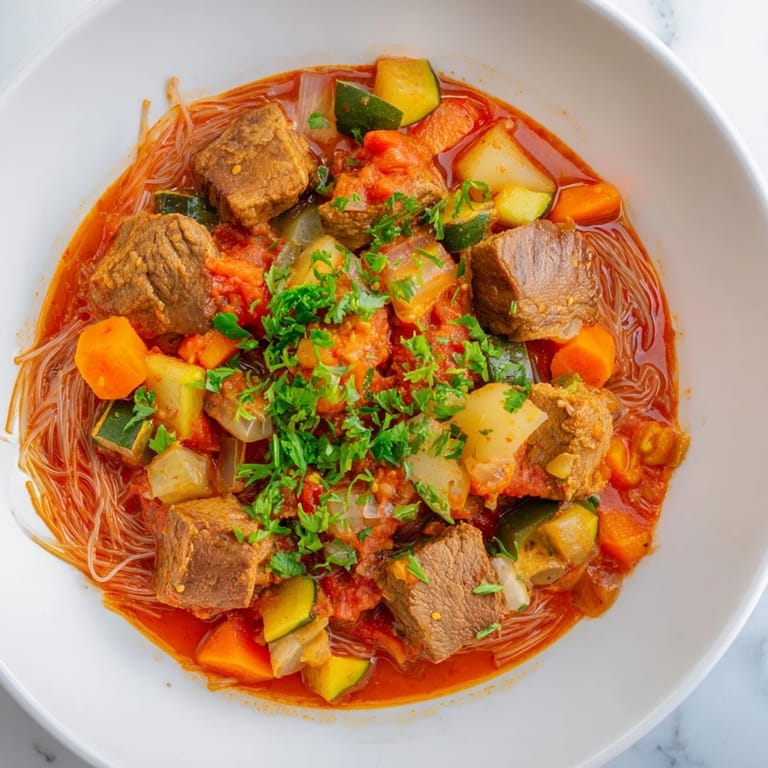
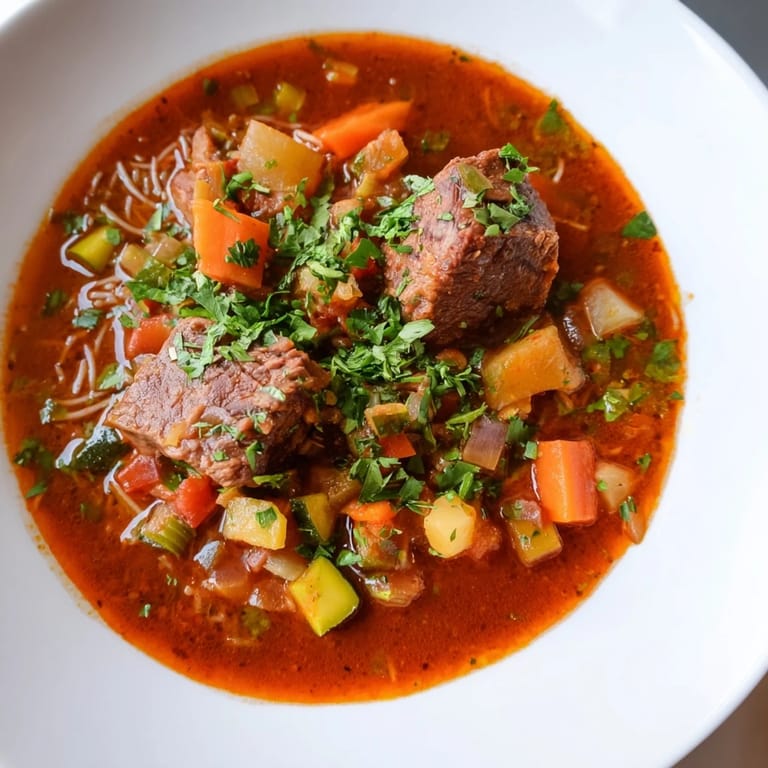
- Ladle into bowls, scatter reserved herbs over the top, and set out lemon wedges so everyone can squeeze in as much brightness as they want.
 Save to Pinterest
 There's something sacred about watching someone's face change on that first spoonful of this soup—you see them taste the lamb, then the spices, then everything together, and suddenly they understand why this recipe has survived generations.
Making It Your Own
This recipe is honest enough to welcome your additions without losing its soul. I've made it with chicken when I had that instead of lamb, with chickpeas stirred in for extra protein, even with a handful of spinach at the end because that's what was in my fridge. The soup doesn't mind—it adapts and still tastes like home. Some people swear by serving it with crusty bread for soaking, others prefer flatbread, and I've seen it served over rice like a stew. Find what makes your version special.
The Lemon Factor
Never underestimate what a squeeze of fresh lemon does in the final moments—it wakes up the spices, brightens the broth, and makes the whole bowl taste more alive. I learned this the hard way by forgetting the lemon one time and thinking something was off the entire meal until someone added it near the end and suddenly everything clicked into place.
Timing and Temperature
This soup tastes best served piping hot, but it also gets better if you let it sit overnight and reheat it the next day—the flavors somehow deepen and find new ways to talk to each other. The initial prep takes about twenty minutes if you're organized with your chopping, and then it's mostly hands-off time while the pot does the work.
- Make it ahead and reheat gently on low heat, stirring occasionally so nothing scorches on the bottom.
- If serving after a day or two, add the pasta fresh just before serving since it tends to get soft if cooked into leftovers.
- Double the recipe and freeze half if you want future-you to have an easy dinner that tastes like someone who cared just made it.
 Save to Pinterest
 This is the soup that taught me cooking isn't about following instructions perfectly; it's about tasting as you go, adjusting for your preferences, and making it taste like your kitchen. Serve it to the people who matter and watch what happens.
Recipe FAQs
- → What cuts of meat work best for this dish?
Lamb shoulder cubes are ideal due to their tenderness and flavor release during slow cooking.
- → Can I substitute the lamb with another protein?
Yes, chicken can be used as a lighter alternative while maintaining the dish's rich character.
- → Which spices are essential for authentic flavor?
Ground cumin, coriander, paprika, cinnamon, turmeric, and chili flakes create the signature aromatic profile.
- → What type of pasta is traditionally included?
Vermicelli or small soup pasta adds texture and absorbs the broth’s flavors beautifully.
- → How can the dish be enhanced before serving?
A squeeze of lemon juice and fresh herb garnish brighten and balance the deep flavors.
- → Are there common allergens to consider?
Vermicelli contains wheat; celery is also present. Check pasta ingredients for gluten sensitivity.