 Save to Pinterest
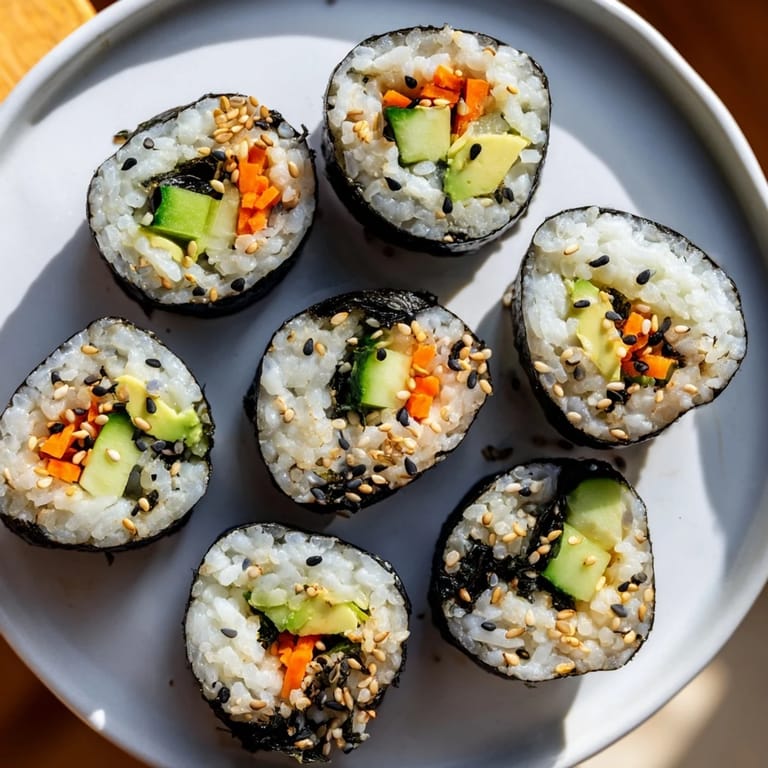
 There's something almost meditative about rolling sushi at home, and I discovered this by accident when my roommate left behind a bamboo mat and a craving for something fresh. Avocado and cucumber sounded too simple at first, but that first bite—creamy, crisp, cool—made me understand why the best dishes often hide in plain sight. Now, whenever I want something that feels both indulgent and light, I reach for these rolls without hesitation.
I made these for a friend who'd just moved into their first apartment, and we spread the ingredients across their bare kitchen counter like we were planning something important. Watching them take that first bite and smile—really smile—reminded me that sometimes the simplest food carries the most meaning.
Ingredients
- Sushi rice (1 cup): The foundation of everything; rinse it until the water runs completely clear so each grain stays separate and tender, not gluey.
- Water (1 ½ cups): The ratio matters more than you'd think—too much water and your rice turns into porridge.
- Rice vinegar (2 tbsp): This is what transforms plain rice into something alive; don't skip it or substitute with regular vinegar.
- Sugar and salt (1 tbsp and ½ tsp): They balance the vinegar's sharpness and bring the rice to life.
- Avocado (1 ripe one): Buy it a day ahead if it's too firm; room temperature avocado slices without bruises make all the difference.
- Cucumber (½ large): Julienne it thin so it doesn't overpower the roll, and pat it dry so moisture doesn't make the roll soggy.
- Carrot (1 small, optional): Adds brightness and crunch if you're in the mood for a little extra sweetness.
- Sesame seeds (1 tbsp, toasted): Toast them yourself if you can—the warmth releases something special that store-bought sometimes misses.
- Nori sheets (4): The seaweed should feel crisp and smell fresh, never musty; keep them in an airtight container after opening.
- Soy sauce or tamari: Use the good stuff if you can; cheap soy sauce tastes thin and overly salty.
Tired of Takeout? 🥡
Get 10 meals you can make faster than delivery arrives. Seriously.
One email. No spam. Unsubscribe anytime.
Instructions
- Prepare the rice:
- Rinse your sushi rice under cold water, stirring gently with your fingers until the water runs clear—this removes excess starch and prevents mushiness. This takes patience, but it's non-negotiable.
- Cook with precision:
- Bring rice and water to a boil uncovered, then cover tightly, reduce heat to low, and let it simmer for 18-20 minutes until the water vanishes. The covered rest period afterward matters just as much as the cooking.
- Season the rice:
- While the rice is still warm, gently fold in the vinegar mixture using a wooden spoon or rice paddle, cutting down and turning rather than stirring. Work carefully so the grains stay whole.
- Cool and prepare:
- Spread the seasoned rice on a clean plate or shallow bowl to cool to room temperature—this usually takes 10-15 minutes. Patience here prevents soggy rolls later.
- Assemble the mat:
- Line your bamboo mat with plastic wrap so cleanup is easier and nothing sticks where it shouldn't. Place nori shiny side down, and this matters—the shiny side becomes the outside of your roll.
- Layer the rice:
- With wet hands (water prevents sticking), spread a quarter of the cooled rice evenly across the nori, leaving a clean 1-inch border at the top. Don't press hard—let the rice sit gently.
- Add your vegetables:
- Arrange avocado, cucumber, and carrot in a thin line along the bottom edge of the rice where the mat starts. Sprinkle sesame seeds now if you're using them, and keep the fillings sparse—overstuffing is the enemy of a tight roll.
- Roll with intention:
- Lift the mat's bottom edge and fold it over the fillings, pressing gently as you roll away from you. The mat does the work if you let it.
- Seal the seam:
- When you reach the bare nori border at the top, dampen it lightly with water and press to seal. This glues everything together without needing glue.
- Slice cleanly:
- Use a sharp knife dipped in water, wiping between cuts, and slice each roll into 6-8 pieces with one smooth downward motion. Sawing back and forth crushes the roll.
 Save to Pinterest
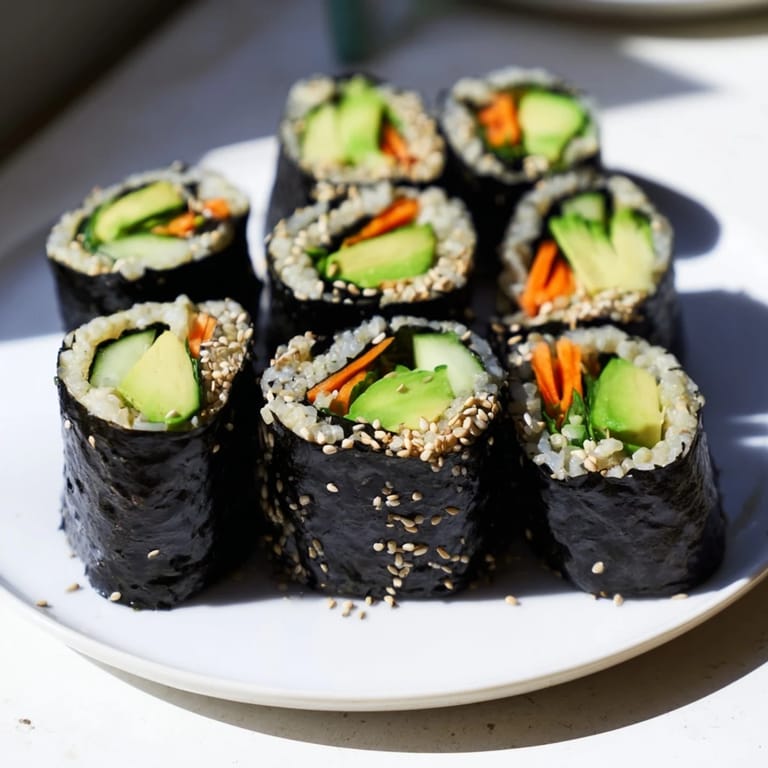
 The first time someone asked me to make these for a dinner party, I panicked, thinking I'd somehow mess up the simplicity. But standing there with freshly made rolls on a wooden board, surrounded by little bowls of soy sauce and pickled ginger, I realized that simple food served with care is what people actually remember.
The Secret to Perfect Rice
Getting the rice right is truly everything—I've learned this the expensive way by overcooking it, under-rinsing it, and seasoning it while it was too hot. The moment you taste rice that's been treated gently, you understand why Japanese cooks spend years perfecting this one step. If your rice turns out soft and sticky instead of tender and separate, your next batch will be better; there's no shame in learning this particular skill through small failures.
Why These Rolls Taste So Good
There's almost no cooking involved here—it's more about assembly and respect for ingredients. The avocado should be perfectly ripe, the cucumber should be crisp, and the seaweed should taste fresh and oceanic, not stale. When these three things come together with seasoned rice, you get something that tastes expensive and complicated but takes no more skill than paying attention to what you're doing.
Making These Your Own
These rolls are a canvas, and once you've made them a few times, you'll start seeing possibilities. Some people add a thin stripe of sriracha, others use mango instead of avocado, and I once made a version with crispy tofu that surprised everyone. The formula stays the same—good rice, quality nori, clean vegetables, and careful rolling—but the vegetables can shift with what you love or what's in season.
- Try adding pickled radish or bell pepper if you want something with more bite.
- A thin layer of hummus or mashed edamame adds protein without changing the roll's delicate balance.
- Keep the fillings minimal and aligned—thick, messy rolls are harder to seal and slice neatly.
 Save to Pinterest
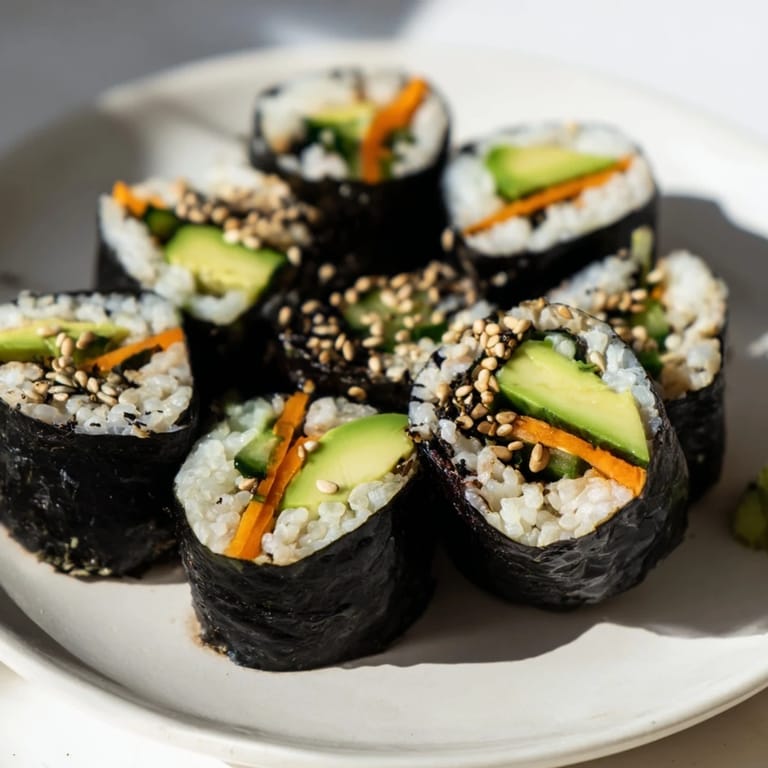
 There's a comfort in making sushi at home that restaurants can never replicate—it's the quiet confidence of knowing exactly what went into every piece. I hope these rolls bring you that same small joy.
Recipe FAQs
- → What type of rice is best for these rolls?
Short-grain sushi rice is preferred for its sticky texture, helping the rolls hold together well.
- → Can I add other vegetables to these rolls?
Yes, you can include bell pepper, radish, or julienned carrot to add crunch and variety.
- → How do I properly roll these veggie rolls?
Use a bamboo mat and press gently while rolling to form a tight, compact roll with the fillings evenly distributed.
- → Are these rolls suitable for gluten-free diets?
Yes, they are gluten-free if using tamari instead of soy sauce and avoiding any gluten-containing additives.
- → What can I serve alongside these rolls?
Light dipping sauces like tamari or soy sauce, pickled ginger, and wasabi complement the fresh flavors well.