 Save to Pinterest
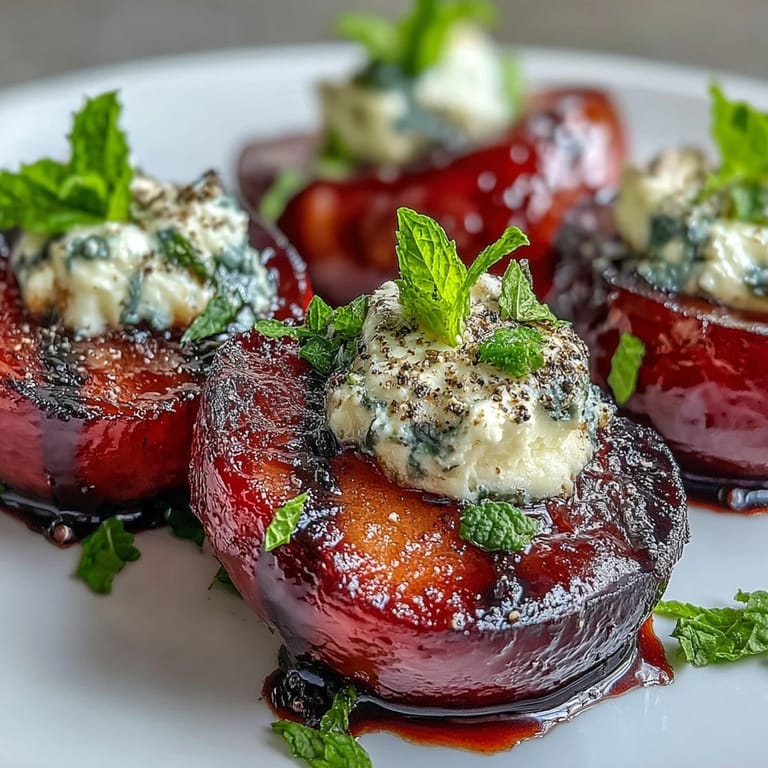
 I was standing at a farmers market in late August when a woman pressed a plum into my hand and said, Grill it. I thought she was joking. But that night, I brushed those plums with olive oil, set them on a hot grill pan, and watched them caramelize into something I didn't expect: smoky, sweet, and impossibly elegant. I added goat cheese because it was in my fridge, drizzled on some balsamic I'd reduced by accident while distracted by a phone call, and suddenly I had a dish that felt like I knew what I was doing.
The first time I made these for friends, someone asked if I'd taken a cooking class. I hadn't. I'd just learned that heat and fruit have a conversation most people never let happen. One guest ate three servings and admitted she didn't even like goat cheese before that night. Another scraped the plate with her finger when she thought no one was looking.
Ingredients
- Plums: Choose ripe but firm plums so they hold their shape on the grill without turning to mush, and always pit them cleanly to create a little well for the cheese.
- Olive oil: Brushing the cut sides prevents sticking and helps those gorgeous grill marks develop without tearing the flesh.
- Goat cheese: Let it soften at room temperature for at least 20 minutes so it spreads or pipes easily and melts just slightly into the warm fruit.
- Balsamic vinegar: Use a decent quality vinegar because reducing it concentrates every flavor, and cheap stuff will taste sharp instead of sweet.
- Honey: This balances the acidity and helps the glaze thicken to that syrupy consistency that clings to the plums.
- Fresh mint or basil: Mint adds brightness, basil adds a peppery sweetness, and both make the dish smell like a garden.
- Black pepper: Just a few grinds add a subtle bite that makes the sweetness more interesting.
Tired of Takeout? 🥡
Get 10 meals you can make faster than delivery arrives. Seriously.
One email. No spam. Unsubscribe anytime.
Instructions
- Heat the grill:
- Preheat your grill or grill pan to medium high heat so it's hot enough to sear without scorching. You want to hear a sizzle when the plums hit the surface.
- Prep the plums:
- Brush the cut sides with olive oil, making sure every inch is coated so they release easily and develop those dark caramelized stripes.
- Grill cut side down:
- Place the plums cut side down and leave them alone for 3 to 4 minutes until grill marks appear and the fruit starts to soften. Flip them gently and grill another 2 to 3 minutes, then remove.
- Make the glaze:
- Combine balsamic vinegar and honey in a small saucepan, bring to a gentle boil, then reduce to a simmer. Stir occasionally for 3 to 4 minutes until it coats the back of a spoon, then let it cool slightly.
- Assemble and serve:
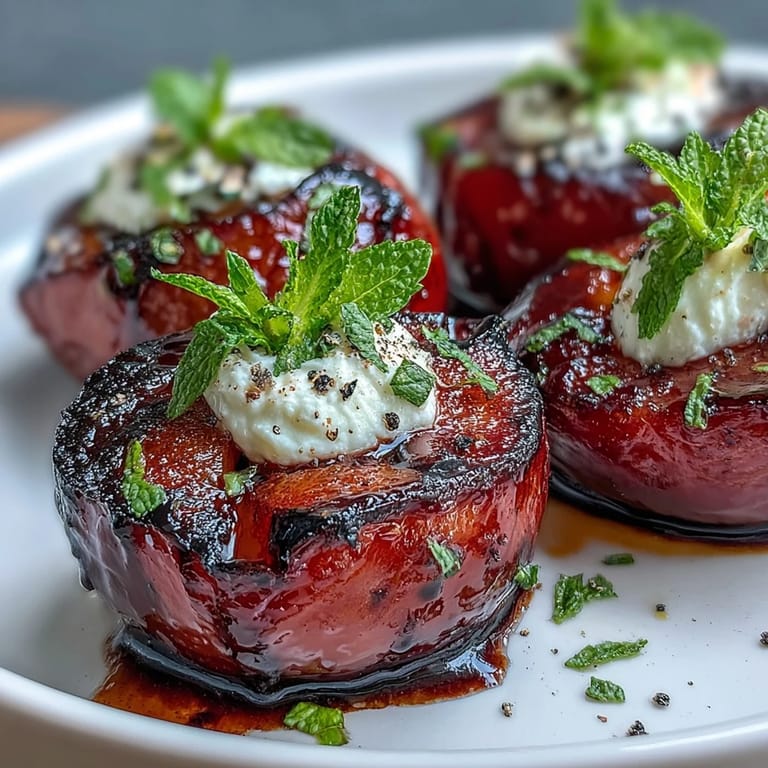
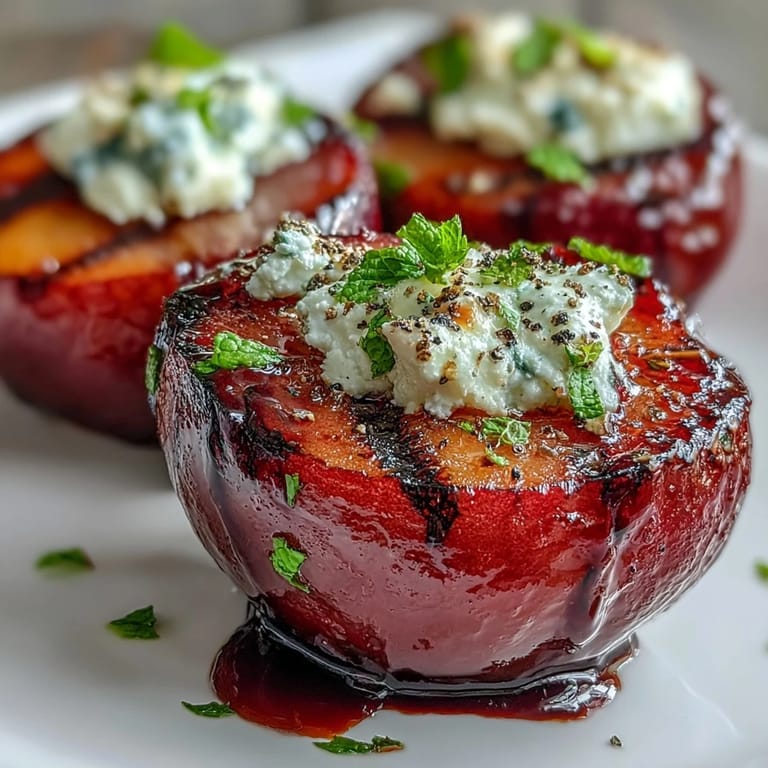
- Arrange the grilled plums cut side up on a platter, add a dollop of goat cheese to each half, drizzle with the glaze, and finish with mint or basil and black pepper. Serve immediately while the plums are still warm.
 Save to Pinterest
 There was a dinner party where I served these as a surprise course between the salad and the main. No one said anything for a few seconds, then someone whispered, Wait, is this dessert? It wasn't, but it could have been. That's the magic of a dish that refuses to be just one thing.
Choosing Your Plums
I've tried this with every kind of plum I could find, and the truth is that firm, slightly tart varieties like Santa Rosa or Black Amber hold up best. Overly sweet plums can turn cloying once the honey glaze hits. Press the flesh gently: it should yield just a bit but not feel soft all the way through. If the skin wrinkles under your thumb, save that one for eating raw.
The Glaze Matters More Than You Think
A thin balsamic drizzle is forgettable. A properly reduced glaze clings to the fruit, pools in the cheese, and tastes like something you simmered for hours. I learned to test it by dragging a spoon through the pan: if it leaves a clean trail that doesn't immediately fill back in, it's ready. Let it cool for a minute before drizzling or it will slide right off the plums and onto the plate.
Variations and Swaps
When plums aren't in season, peaches and apricots work beautifully, though apricots cook faster and need closer watching. I've used ricotta when I didn't have goat cheese, and it was milder but still lovely. For a vegan version, cashew cream or almond ricotta does the job, though you lose some of that tangy funk.
- Try a sprinkle of crushed pistachios for crunch and color.
- Swap honey for maple syrup if you want a deeper, woodsier sweetness.
- Add a tiny pinch of smoked sea salt right before serving for an unexpected edge.
 Save to Pinterest
 This is the kind of recipe that makes people think you're showing off, but really you're just paying attention to what heat does to sugar and fruit. Serve it confidently, and no one will ever guess how easy it was.
Recipe FAQs
- → Can I use other stone fruits instead of plums?
Yes, peaches, nectarines, or apricots work wonderfully. Choose fruits that are ripe but still firm enough to hold their shape on the grill.
- → How do I know when the balsamic glaze is ready?
The glaze should coat the back of a spoon and have a syrupy consistency. It will thicken further as it cools, so avoid over-reducing.
- → Can I make this ahead of time?
The balsamic glaze can be prepared up to 3 days in advance and stored in the refrigerator. Grill the plums just before serving for the best texture and flavor.
- → What can I use instead of goat cheese?
Ricotta, mascarpone, or burrata all pair beautifully with grilled plums. For a dairy-free option, use cashew-based cream cheese or almond ricotta.
- → Do I need an outdoor grill?
No, a grill pan on the stovetop works perfectly. You can also broil the plums cut-side up for 4-5 minutes until caramelized.
- → What wine pairs well with this dish?
A chilled Sauvignon Blanc, Prosecco, or rosé complements the sweet and tangy flavors beautifully. For dessert service, try a light Moscato.