 Save to Pinterest
 My food processor was still warm from blending tahini when a friend texted asking what to bring for brunch. I glanced at the eggplant charring under the broiler, the cucumbers waiting on the counter, and realized I was already halfway to something better than a single dish. That morning turned into my first real grazing board, a mess of bowls and vegetables that somehow looked like I knew what I was doing. Everyone stood around the table, dipping and talking, and nobody sat down for an hour.
The first time I served this to my neighbors, I panicked because I forgot to buy enough pita and had to toast leftover sandwich bread into rough chips. They ended up fighting over those crispy bits, and now I make both on purpose. Sometimes the mistakes teach you more than the plan.
Ingredients
- Hummus: Whether you blend your own or buy a good tub, this is your creamy anchor, so taste it first and adjust lemon or garlic to your preference.
- Tzatziki sauce: The trick is squeezing every drop of water out of the grated cucumber or it turns into soup instead of a thick, tangy dip.
- Baba ganoush: Roasting the eggplant until the skin blisters and the flesh collapses gives you that smoky depth you cannot fake with shortcuts.
- Roasted red pepper dip: A store-bought jar works beautifully here, but if you have time, char your own peppers and blend them with a little olive oil and garlic.
- Cucumber: Slice it thick enough to scoop dip without snapping, and leave the skin on for color and a bit of bite.
- Cherry tomatoes: Halving them makes them easier to grab and releases just enough juice to mingle with the olive oil on the board.
- Bell pepper: Any color works, but I lean toward red or yellow because they add sweetness and do not taste grassy like green sometimes can.
- Assorted olives: Buy the good ones from the deli counter if you can, briny and firm, not the canned black ones that taste like tin.
- Feta cheese: Crumble it yourself from a block rather than buying pre-crumbled; it stays creamier and does not have that weird coating.
- Mixed nuts: Toasting them for a few minutes wakes up their flavor, but watch them closely because they go from golden to burnt in seconds.
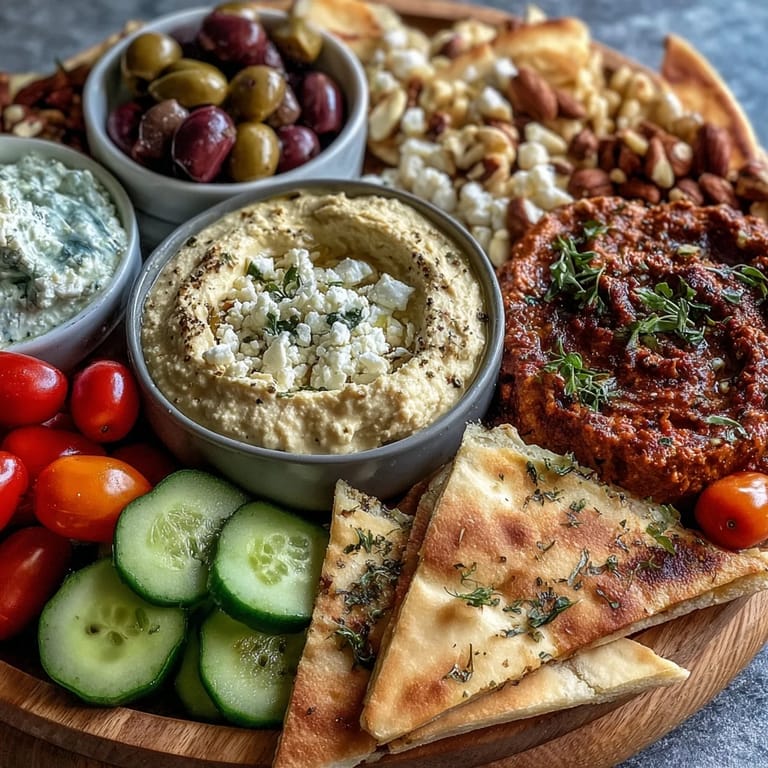
- Pita breads and flatbreads: Warm them in the oven for a minute so they are soft enough to tear but sturdy enough to hold a generous smear of hummus.
- Olive oil: Use something you would actually want to taste on its own, because that final drizzle ties everything together.
- Fresh herbs: Oregano, parsley, or even mint add a bright, grassy note that cuts through the richness of the dips.
Tired of Takeout? 🥡
Get 10 meals you can make faster than delivery arrives. Seriously.
One email. No spam. Unsubscribe anytime.
Instructions
- Blend the hummus:
- Toss drained chickpeas, tahini, lemon juice, garlic, and salt into your food processor and let it run until the mixture turns silky. Drizzle in cold water a tablespoon at a time if it looks too thick, and taste it before you stop, adding more lemon or salt if it feels flat.
- Mix the tzatziki:
- Grate the cucumber, pile it into a clean towel, and twist hard to wring out the liquid, then stir it into Greek yogurt with garlic, dill, olive oil, and salt. Let it sit in the fridge for at least an hour so the flavors can get to know each other.
- Roast and blend the baba ganoush:
- Prick the eggplant with a fork, roast it whole until it collapses and the skin chars, then scoop out the soft flesh and blend it with tahini, olive oil, lemon juice, and salt. The smokier the eggplant, the better this tastes, so do not rush the roasting.
- Spoon the dips into bowls:
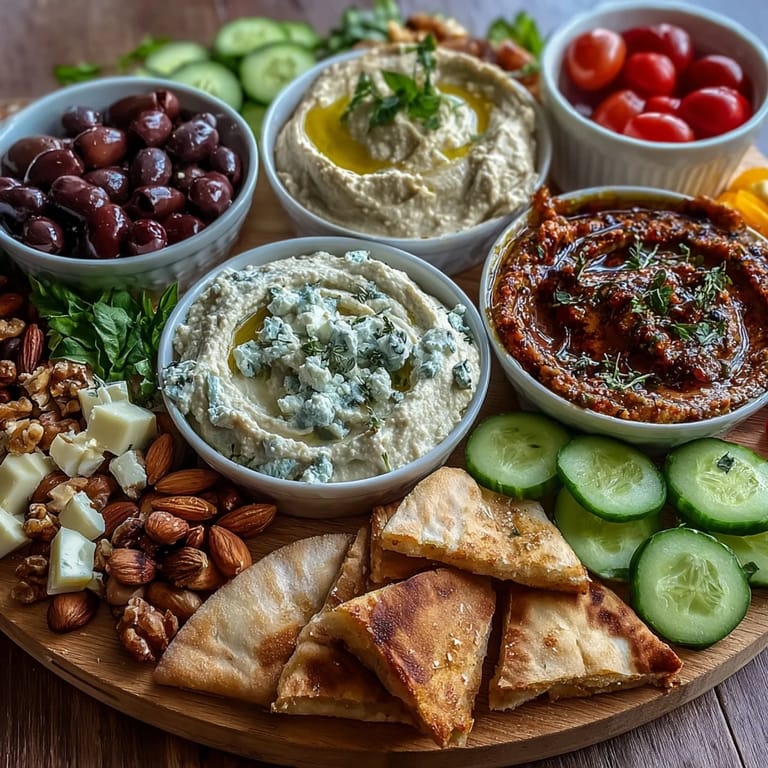
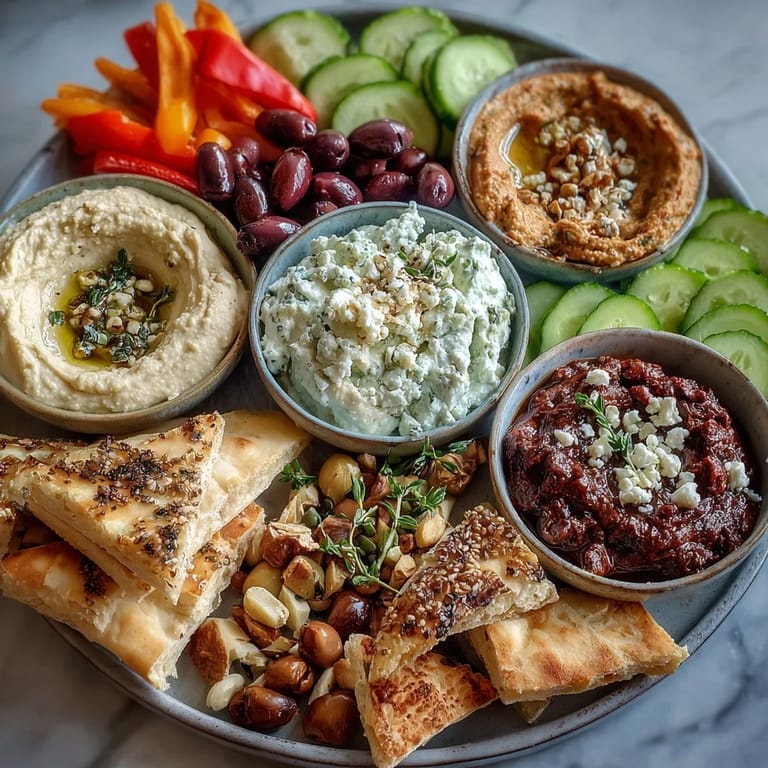
- Use small bowls or ramekins so each dip has its own space and guests can see what they are reaching for. I like mismatched bowls because it feels more relaxed than matching everything.
- Arrange the dips on the board:
- Place them first, scattered across your platter, leaving room around each one for vegetables and bread.
- Add the fresh vegetables:
- Tuck cucumber slices, tomato halves, and pepper strips into the gaps between bowls, clustering them in little piles rather than lining them up. It looks more natural and inviting that way.
- Scatter the olives and feta:
- Drop them into open spaces, letting some tumble against the vegetables and some sit near the dips.
- Fill sections with nuts:
- Pour them into corners or along the edges, giving people something crunchy to grab between bites of creamy dip.
- Arrange the breads:
- Fold or stack the pita and flatbread pieces around the outer edge of the board, close enough to reach but not covering the other ingredients.
- Drizzle and garnish:
- Finish with a generous drizzle of olive oil over the dips and vegetables, then scatter fresh herbs across the whole board. The oil pools in little spots and catches the light, making everything look even better.
- Serve and enjoy:
- Set the board in the middle of the table and step back, because people will start reaching before you finish talking.
 Save to Pinterest
 I once made this for a birthday brunch and forgot to label the dips, so everyone started guessing which was which before tasting. It turned into a game, and people were laughing and arguing over whether the pale one was hummus or tzatziki. Now I never label them on purpose.
Make Ahead Magic
All three homemade dips taste better the next day after the flavors settle, so I usually make them the night before and store them covered in the fridge. The morning of, I just pull them out, let them come to room temperature while I chop vegetables, and assemble everything in about ten minutes. It is the kind of recipe that rewards a little planning without punishing you if you forget.
Swaps and Additions
If you cannot find good eggplant, swap baba ganoush for another jar of roasted red pepper dip or even a lemony white bean spread. I have added marinated artichokes, sun-dried tomatoes, and even pickled turnips when I had them, and the board just gets more interesting. Do not be afraid to use what you have or what looks good at the market that morning.
Serving and Pairing
This works as a full brunch if you add some hard-boiled eggs and maybe a little smoked salmon on the side, or it can be the centerpiece of a mezze spread with more dips and salads. I have served it with cold white wine, sparkling water with lemon, and even iced mint tea, and all of them worked. The important part is having enough napkins, because people will hover and graze longer than you expect.
- Set out small plates so guests can build their own combinations without crowding the board.
- Refill the pita halfway through if you are serving a crowd, because it always goes faster than you think.
- Save any leftover dips for lunch the next day, spread on toast or stuffed into a wrap with the remaining vegetables.
 Save to Pinterest
 The best part about this board is watching people relax around it, building little bites and talking with their hands full. It turns brunch into something easy and warm, exactly the way it should feel.
Recipe FAQs
- → How far in advance can I prepare the components?
Prepare all dips up to 2 days ahead and store in airtight containers. Slice vegetables the night before and keep chilled. Warm breads just before serving for best texture.
- → What vegetables work best for this board?
Cucumber, cherry tomatoes, and bell peppers provide excellent crunch. Consider adding radishes, carrots, or endive for additional variety and color.
- → Can I make this board vegan-friendly?
Simply omit the feta cheese or substitute with a plant-based alternative. Ensure store-bought dips and breads contain no dairy or honey.
- → What beverages pair well with this spread?
Crisp white wines like Sauvignon Blanc or Assyrtiko complement the Mediterranean flavors beautifully. Sparkling water with fresh lemon offers a refreshing non-alcoholic option.
- → How do I store leftovers?
Keep dips refrigerated in sealed containers for up to 5 days. Store vegetables separately to maintain crispness. Refresh breads in a warm oven before serving again.