 Save to Pinterest
 There's a moment in late autumn when the farmer's market suddenly stocks these tiny, almost black berries—black currants—and I found myself staring at a bottle of their juice, wondering what on earth I'd do with something so intensely tart. A friend mentioned she'd been drizzling it over roasted beets, and something just clicked. That evening, I whipped up this vinaigrette on a whim, tasted it, and immediately understood why she'd been raving about it. Now I make it constantly, keeping a jar in the fridge like liquid gold.
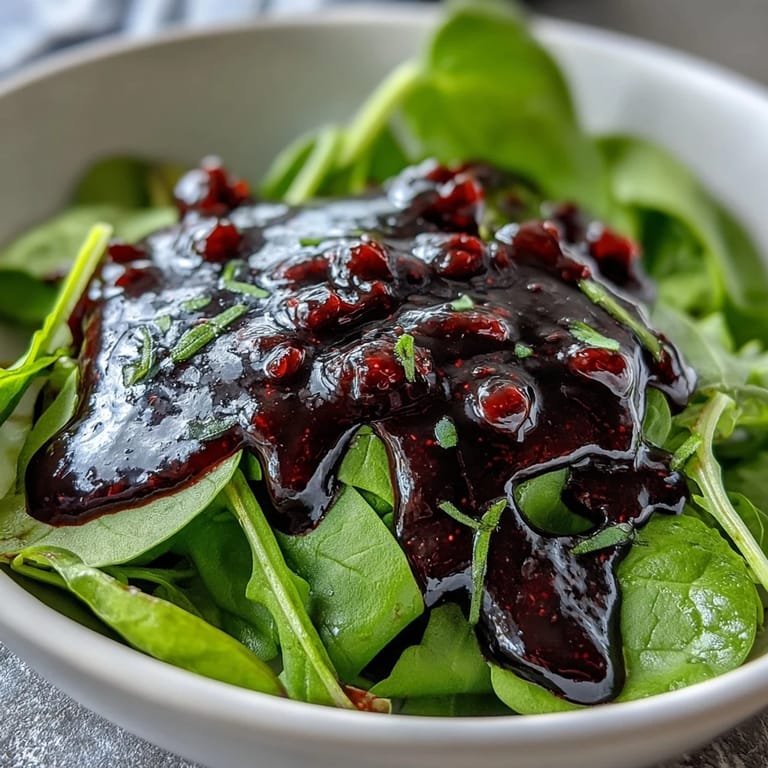
I made this for a potluck salad once, layering it over spinach and roasted sweet potatoes, and a neighbor asked for the recipe before she'd even finished her plate. That's when I realized this wasn't just a nice dressing—it was the kind of thing people remember. Now whenever someone brings a salad to gather anywhere I'm involved, I quietly hope it's been dressed with black currant vinaigrette.
Ingredients
- Black currant juice, unsweetened: This is the star, bringing a deep, almost wine-like tartness that no other juice quite matches—seek out the unsweetened version or you'll end up with candy dressing.
- Red wine vinegar or apple cider vinegar: Either works beautifully, though red wine vinegar leans more elegant while apple cider brings a rounder sweetness if you prefer that softness.
- Fresh lemon juice: A squeeze of brightness that keeps the dressing from tasting one-dimensional and muddy.
- Extra virgin olive oil: Don't skimp here—good oil makes the difference between something slick and something silky.
- Dijon mustard: Just enough to act as an emulsifier and add a whisper of sharpness without overpowering the berries.
- Honey or maple syrup: Use this sparingly to balance tartness if your palate leans sweeter, but honestly, I often skip it.
- Shallot, finely minced: The key is mincing it small so you get flavor without big chunks that announce themselves.
- Sea salt and freshly ground black pepper: Season conservatively at first—you can always add more, but you can't take it back.
Tired of Takeout? 🥡
Get 10 meals you can make faster than delivery arrives. Seriously.
One email. No spam. Unsubscribe anytime.
Instructions
- Bring all the tart elements together:
- Pour the black currant juice, vinegar, and lemon juice into a medium bowl, then add the mustard, honey if you're using it, minced shallot, salt, and pepper. Whisk everything together until the honey dissolves and you can see no streaks of mustard remaining—this takes about thirty seconds of real whisking.
- Emulsify with olive oil:
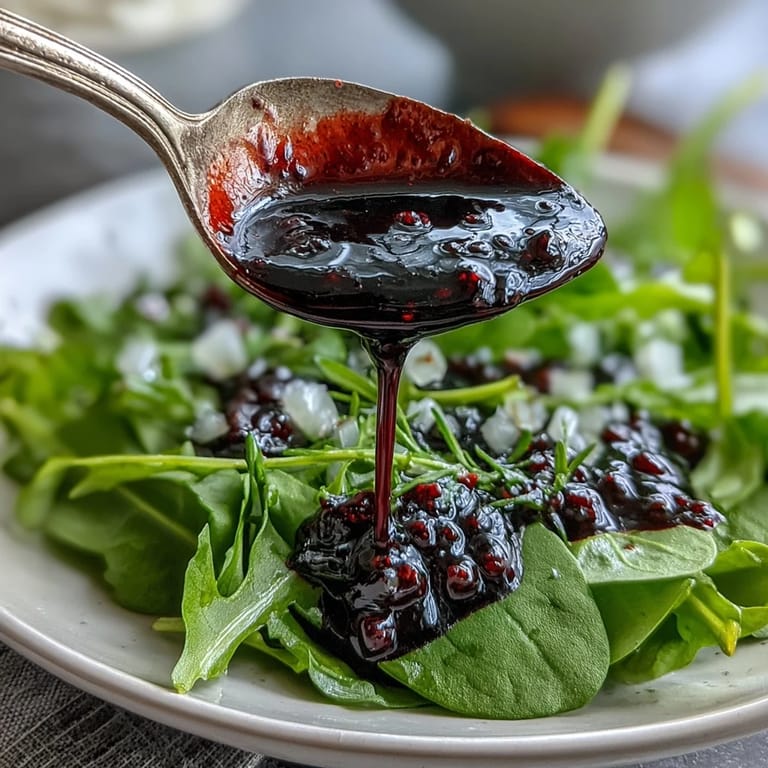
- This is where patience matters. Start drizzling the olive oil in slowly—maybe a teaspoon at a time—while whisking constantly in the same direction. You'll feel it thicken slightly as the oil incorporates, which means the emulsion is holding.
- Taste and adjust:
- Take a clean spoon, dip it in, taste on a piece of lettuce if you have it, and ask yourself honestly if you want it brighter (more lemon), sharper (more vinegar), sweeter (a bit of honey), or earthier (more salt). Make small adjustments one at a time.
- Store or serve immediately:
- Use it right away over whatever you're salading, or pour it into a jar with a tight lid and refrigerate. It'll keep perfectly for a week, though the shallot will become more pronounced as it sits, which some people love and others prefer to strain out first.
 Save to Pinterest
 There was an afternoon when my daughter tasted this dressing for the first time and declared it tasted like autumn in a bowl—that little observation stuck with me. Now whenever I make it, I think about how sometimes the simplest five-minute projects create the most memorable flavors.
The Science of Emulsification
What's actually happening when you whisk oil and vinegar together is that the mustard's compounds are helping oil droplets stay suspended in the vinegar instead of immediately separating back into two lonely layers. The shallot and salt play roles too, but the Dijon is doing the heavy lifting. Understanding this made me stop being nervous about the whisking and start approaching it with actual intention instead.
Where This Dressing Really Shines
I've used it on everything from basic mixed greens to warm roasted beet salads with goat cheese, and it performs differently on each one. On delicate lettuce, it's a tart whisper; on bitter greens like endive, it's a perfect counterpoint; on roasted vegetables, it becomes almost like a glaze, clinging to the caramelized edges. The magic is that it doesn't fight what you put it on—it just makes it better, which is honestly all a good dressing should do.
Making It Your Own
Once you've made this a few times, you'll start noticing where you'd tweak it for your own taste, and that's exactly when it becomes your recipe instead of something you're following. I've seen people add a touch of balsamic for depth, or swap the shallot for red onion if they're in a sharper mood, or even add a pinch of smoked paprika just because they had it on their mind.
- If black currant juice is nowhere to be found, pomegranate or cranberry juice will give you that same bold tartness and dark color.
- For a silkier mouthfeel, strain the finished vinaigrette through a fine mesh sieve to catch all the minced shallot pieces.
- Make a double batch and keep it in the coldest part of your refrigerator—having it on hand means salads become dinner more often than they should.
 Save to Pinterest
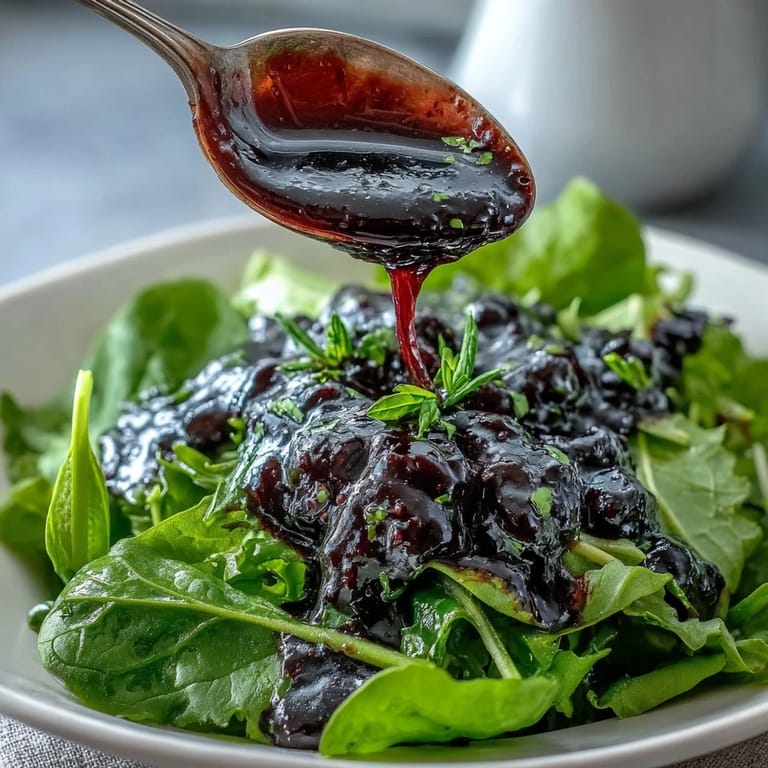
 There's something deeply satisfying about having a vinaigrette that tastes like you spent an afternoon thinking about flavors when you actually spent five minutes at the counter. Keep making it, and soon enough it'll be one of those recipes you don't need to think about at all.
Recipe FAQs
- → What does black currant vinaigrette taste like?
Black currant vinaigrette has a distinctive tart, tangy flavor with deep berry notes. The natural acidity of black currant juice is balanced by olive oil and optional sweetener, creating a complex dressing that's both bold and refreshing.
- → Can I substitute black currant juice?
Yes, you can replace black currant juice with pomegranate juice, cranberry juice, or even tart cherry juice. Each alternative will provide a similar tart profile while maintaining the beautiful color and balanced acidity.
- → How long does homemade vinaigrette last?
This vinaigrette keeps well in the refrigerator for up to one week when stored in a jar with a tight-fitting lid. The oil may solidify slightly when cold—simply bring to room temperature and shake vigorously to recombine before using.
- → Why is Dijon mustard used in vinaigrette?
Dijon mustard acts as an emulsifier, helping the oil and vinegar blend into a smooth, cohesive dressing. It also adds subtle sharpness and depth that complements the tart black currant flavor.
- → What salads pair best with this vinaigrette?
This vinaigrette shines over bitter greens like arugula or spinach, mixed green salads with goat cheese, and roasted vegetable salads. It also complements earthy ingredients like beets, walnuts, and hearty grains like farro or quinoa.