 Save to Pinterest
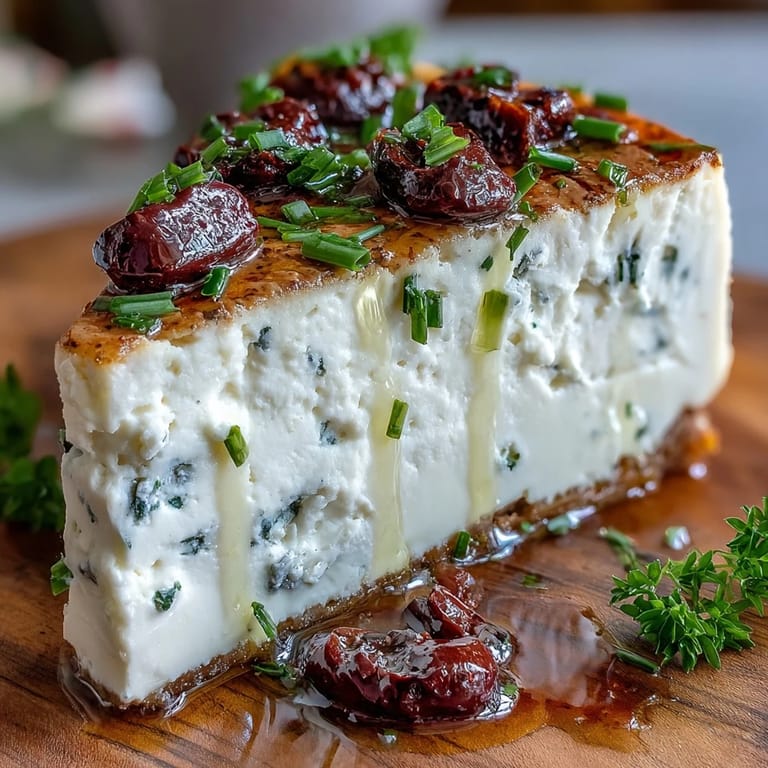
 My neighbor showed up one evening with a wedge of something that looked like dessert but smelled like a Mediterranean afternoon. She called it her party trick, a savory cheesecake that nobody ever guessed until they tasted it. I made it the following weekend and watched every single person pause mid-bite with that same confused, delighted expression. Now I bake it whenever I need something that starts conversations instead of just filling plates.
I brought this to a potluck where three other people had brought hummus. By the end of the night, my pan was scraped clean and I had four requests for the recipe. One friend admitted she thought it was going to be weird, then ate three pieces standing by the table. That kind of win makes you feel like a kitchen genius, even when all you did was follow instructions and trust the process.
Ingredients
- Plain breadcrumbs: They create a sturdy, savory base that soaks up the butter and oregano without getting soggy during baking.
- Unsalted butter: Melted butter binds the crust together and adds richness without competing with the salty olives and cheese.
- Dried oregano: A hint of oregano in the crust sets the Greek tone before anyone even tastes the filling.
- Ground black pepper: Just a pinch adds a quiet warmth that wakes up the breadcrumbs.
- Cream cheese: Softened cream cheese is the creamy backbone that makes this feel indulgent and smooth on the tongue.
- Ricotta cheese: Ricotta lightens the texture and keeps the filling from feeling too dense or heavy.
- Grated Parmesan cheese: Parmesan brings a sharp, nutty depth that plays beautifully with the olives and herbs.
- Large eggs: Eggs bind everything together and give the cheesecake its signature set, sliceable structure.
- Dried thyme: Thyme adds an earthy, slightly floral note that feels right at home with Mediterranean flavors.
- Lemon zest: Fresh zest brightens the whole filling and cuts through the richness with a gentle citrus lift.
- Whole milk: A splash of milk loosens the batter just enough to pour smoothly and bake evenly.
- Pitted Kalamata olives: Chopped Kalamatas deliver that bold, briny punch that makes this cheesecake unforgettable.
- Fresh chives: Chives add a mild onion flavor and little green flecks that look as good as they taste.
- Salt and black pepper: Seasoning the filling properly is what turns good into great, balancing all the bold flavors.
- Sliced Kalamata olives for garnish: A few slices on top signal exactly what kind of flavor adventure people are about to experience.
- Fresh parsley: Chopped parsley adds color and a fresh, grassy note right before serving.
- Extra virgin olive oil: A drizzle of good olive oil finishes the dish with fruity richness and a glossy sheen.
Tired of Takeout? 🥡
Get 10 meals you can make faster than delivery arrives. Seriously.
One email. No spam. Unsubscribe anytime.
Instructions
- Prep the pan:
- Preheat your oven to 325°F and lightly grease a 9-inch springform pan or line it with parchment. This step prevents sticking and makes releasing the cheesecake later almost effortless.
- Make the crust:
- Stir together breadcrumbs, melted butter, oregano, and pepper in a small bowl until the crumbs look like wet sand. Press the mixture firmly into the bottom of the pan so it holds together during baking.
- Bake the crust:
- Slide the crust into the oven for 8 minutes to set it and give it a light toast. Let it cool slightly while you make the filling so the hot crust does not scramble the eggs.
- Beat the cheeses:
- In a large bowl, beat cream cheese, ricotta, and Parmesan until smooth and creamy with no lumps. Add the eggs one at a time, mixing well after each so the batter stays silky.
- Add the flavors:
- Stir in thyme, lemon zest, milk, chopped olives, chives, salt, and pepper until everything is evenly distributed. The filling should smell bright and savory, with little purple olive pieces throughout.
- Pour and smooth:
- Pour the filling over the cooled crust and smooth the top with a spatula. The batter will be thick but pourable, settling into an even layer on its own.
- Bake until set:
- Bake for 25 to 28 minutes, watching for a center that is set but still has a slight wobble when you gently shake the pan. Overbaking will make it dry, so pull it when it still looks a little soft in the middle.
- Cool completely:
- Remove from the oven and let it cool to room temperature on the counter. Refrigerate for at least 2 hours so it firms up and slices cleanly.
- Garnish and serve:
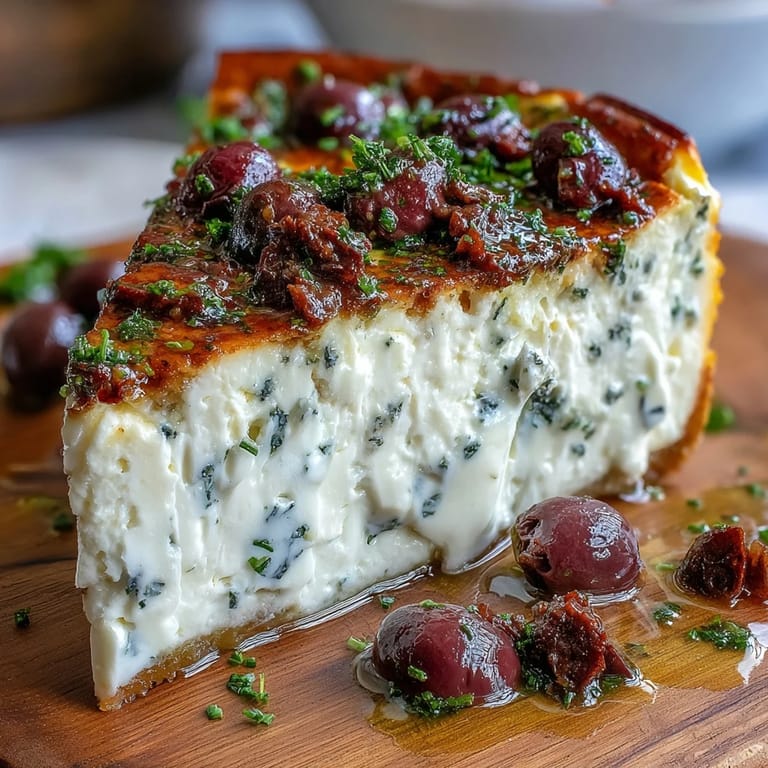
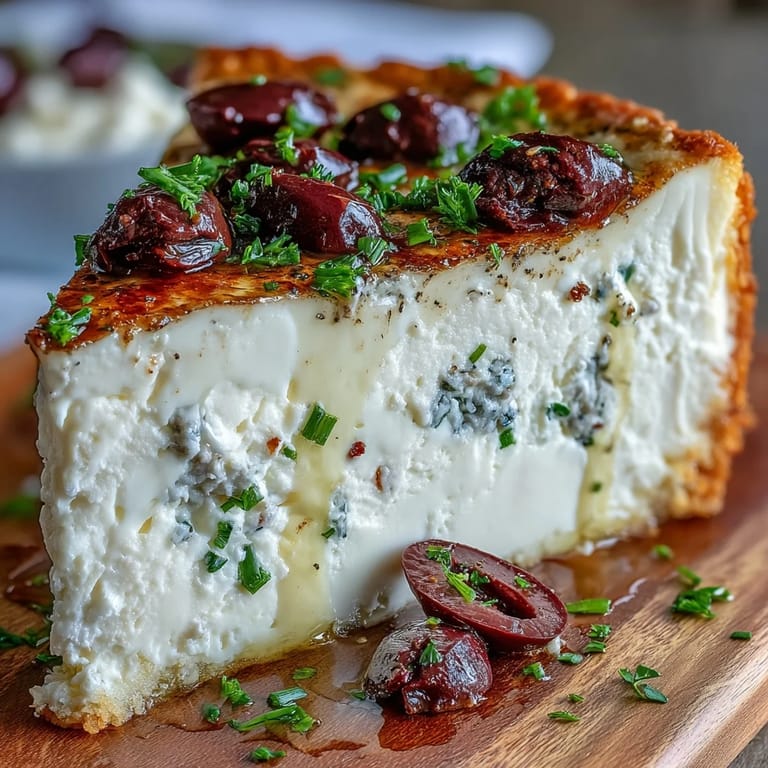
- Before serving, top with sliced olives, chopped parsley, and a drizzle of olive oil. Slice into small wedges or squares and watch people try to figure out what they are eating.
 Save to Pinterest
 I served this at a birthday dinner where half the guests claimed they did not like olives. By dessert time, those same people were asking if there were leftovers. Something about the creamy filling and the herbs makes the olives taste less aggressive and more like they belong. It turned into one of those dishes that gets requested by name, which is the highest compliment any recipe can get.
Serving Suggestions
This cheesecake works best as an appetizer alongside crackers, toasted baguette slices, or sturdy vegetable sticks like cucumber and bell pepper. I have also served it as part of a meze platter with hummus, stuffed grape leaves, and marinated feta, where it held its own beautifully. It is rich enough that small slices go a long way, so cut it into thin wedges or bite-sized squares depending on the crowd.
Make Ahead Tips
You can bake this cheesecake up to two days in advance and keep it covered in the fridge until you are ready to serve. The flavors actually deepen overnight as the herbs and olives meld into the creamy filling. Just wait to add the garnish until right before serving so the parsley stays bright and the olive oil looks fresh and glossy.
Variations and Substitutions
If you want to make this gluten-free, swap the breadcrumbs for gluten-free crumbs or crushed gluten-free crackers. You can also fold in sun-dried tomatoes, roasted red peppers, or even crumbled feta for extra Mediterranean flair. Some people love adding a handful of toasted pine nuts to the filling for a little crunch and richness.
- Try green olives instead of Kalamata for a milder, less briny flavor.
- Swap thyme for fresh dill or basil if you want a different herbal angle.
- Use goat cheese in place of some of the cream cheese for a tangier, more rustic taste.
 Save to Pinterest
 This savory cheesecake has become my secret weapon for gatherings where I want to bring something memorable without spending all day in the kitchen. It is proof that a little creativity and good ingredients can turn a simple idea into something people talk about long after the party ends.
Recipe FAQs
- → Can I make this appetizer ahead of time?
Yes, this appetizer is perfect for advance preparation. You can make it up to 2 days ahead, cover it tightly, and refrigerate until ready to serve. Add the garnish just before serving for the freshest presentation.
- → What can I substitute for Kalamata olives?
You can use other brined olives like Niçoise or Castelvetrano olives. Each variety will bring a slightly different flavor profile, but all work well with the creamy cheese base.
- → How do I prevent cracks in the cheesecake?
Avoid overmixing the filling once eggs are added, and don't overbake. The center should be slightly wobbly when you remove it from the oven. Gradual cooling also helps prevent cracking.
- → Can I freeze this appetizer?
While possible, freezing is not recommended as it may affect the texture of the cheese filling. For best results, prepare fresh or refrigerate for up to 2 days.
- → What's the best way to serve this cheesecake?
Serve chilled or at room temperature, cut into small wedges or squares. Pair with crispy crackers, crostini, or fresh vegetable crudités for a complete appetizer spread.
- → How can I make this gluten-free?
Simply substitute the plain breadcrumbs with gluten-free breadcrumbs or crushed gluten-free crackers. The rest of the ingredients are naturally gluten-free.