 Save to Pinterest
 Last summer, my neighbor handed me a basket of black currants from her garden with a slightly apologetic smile, admitting she had no idea what to do with them. I'd never worked with them before, but something about their deep purple color and sharp aroma made me curious. That afternoon, I stumbled upon the concept of granita and decided to experiment, transforming those tart berries into something that would later become my go-to palate cleanser on hot evenings. What started as a happy accident turned into a dessert so simple, yet so elegant, that I now make it whenever I want to feel like I'm sitting at a little Italian café.
The first time I served this to friends at a dinner party, I ladled it into tiny vintage coupes I'd found at a flea market, and the table went quiet for a moment before someone said, "This tastes like purple." I knew exactly what they meant. There's something about black currant's intensity that makes people pause and actually taste instead of just eating, and that moment made me realize granita wasn't just a dessert but a small act of generosity.
Ingredients
- Fresh or frozen black currants (500 g): These berries are slightly tart with an earthy undertone, so don't be tempted to add extra sugar thinking you're balancing it out, you'll lose that signature bite that makes granita so refreshing.
- Granulated sugar (150 g): The amount is calibrated to sweetness without drowning the currant flavor, trust this ratio even if you think it seems modest.
- Water (400 ml): Use filtered water if your tap water is heavily chlorinated, since you'll taste it in something this pure and simple.
- Freshly squeezed lemon juice (1 tablespoon): This brightens everything and prevents the mixture from feeling cloying, squeeze it just before using for maximum impact.
Tired of Takeout? 🥡
Get 10 meals you can make faster than delivery arrives. Seriously.
One email. No spam. Unsubscribe anytime.
Instructions
- Prepare and rinse the currants:
- Gently rinse your black currants under cool water, patting them dry if they're fresh. If you're using fresh ones with stems, pull them off one by one while listening to a podcast or music, there's no rushing this part and it's oddly satisfying.
- Simmer the mixture:
- Combine the currants, sugar, and water in a medium saucepan and bring it to a gentle simmer over medium heat, stirring now and then as the sugar dissolves. You'll notice the kitchen filling with a deep, slightly tart aroma within a few minutes, and the currants will start bursting after about 10 minutes total.
- Cool and blend:
- Once the berries have released their color and the liquid looks like ruby wine, remove the pan from heat and let it cool for a few minutes. Pour everything into a blender and blend until completely smooth, watching the streaks of color swirl together.
- Strain for silky texture:
- Pour the puree through a fine-mesh sieve set over a bowl, using the back of a spoon to press the mixture and extract every drop of juice. This step takes patience, but it's what separates a grainy granita from one with that signature crystalline, almost silky texture.
- Add brightness and freeze:
- Stir in the fresh lemon juice once the strained mixture has cooled slightly, then pour everything into a shallow metal baking dish and slide it into the freezer. Metal conducts cold better than glass or ceramic, so this matters more than you might think.
- Fluff and freeze in intervals:
- After 45 minutes, the edges will start to crystallize while the center remains liquid, this is your cue to grab a fork and scrape and break up those frozen edges, stirring them back into the center. Repeat this every 30 to 45 minutes for about 4 hours total, and yes, this constant attention is exactly what creates that light, fluffy texture instead of a solid ice block.
- Serve immediately:
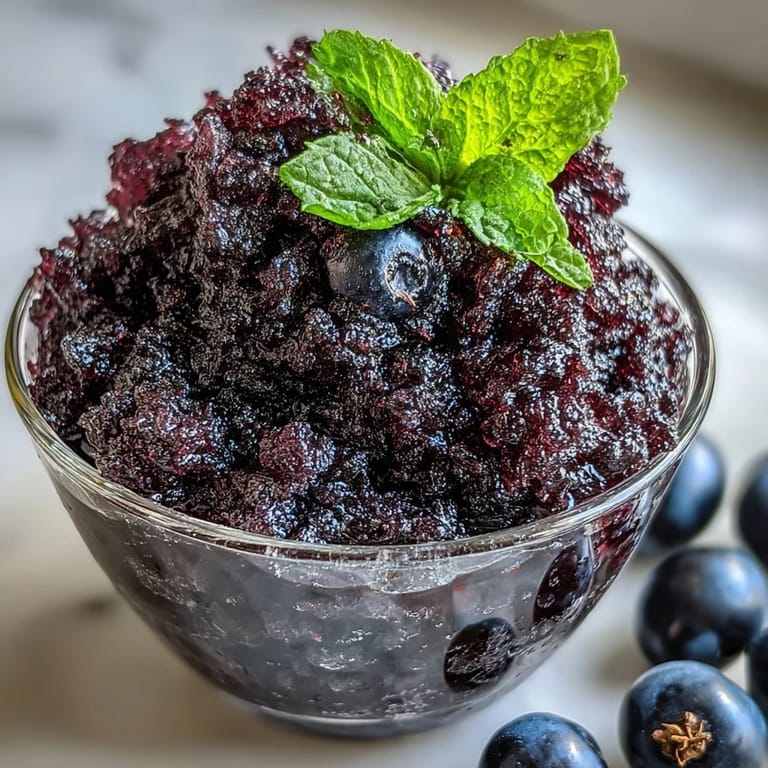
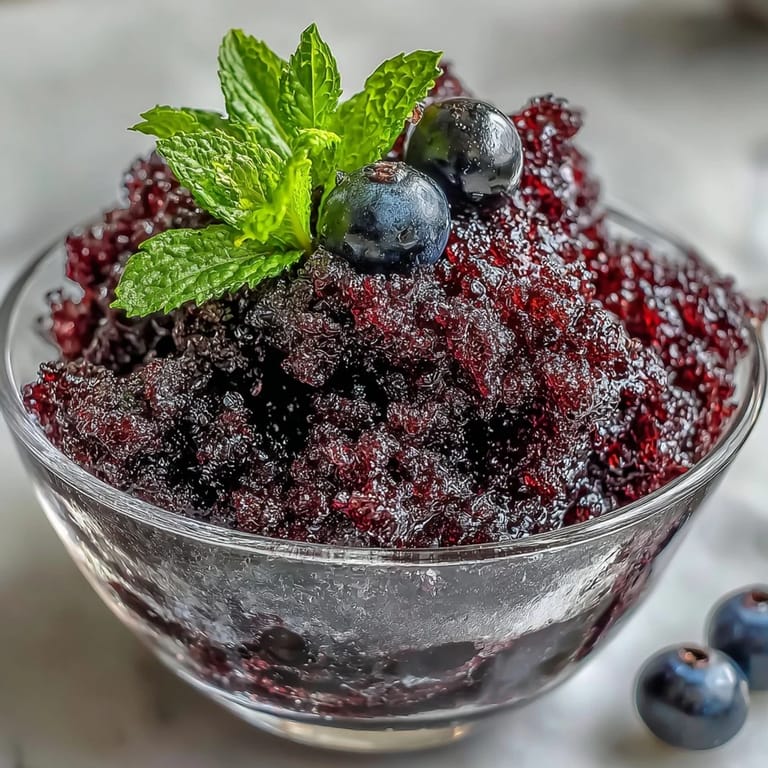
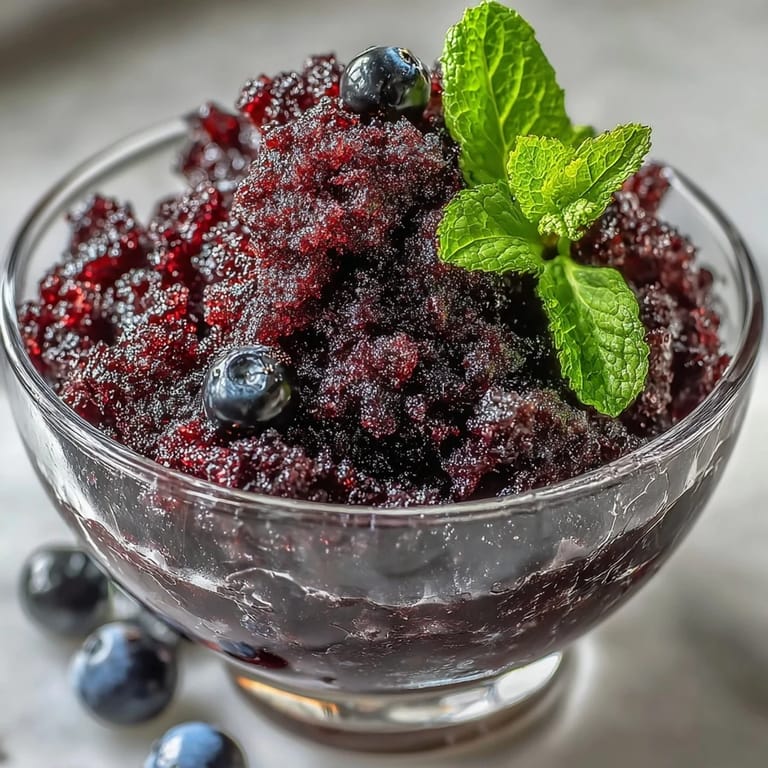
- Once the granita is completely frozen and looks like colored shaved ice, scoop it into chilled glasses or bowls and serve right away. Granita is best enjoyed the moment it reaches that perfect consistency, it's not meant to sit around.
 Save to Pinterest
 There was a moment during a heat wave when a friend showed up unexpectedly, looking completely melted, and I pulled this granita out of the freezer knowing it would be exactly what she needed. Watching her take that first spoonful and close her eyes, I understood that sometimes the simplest things offer the most comfort.
The Story Behind Black Currant Granita
Granita is a humble Sicilian creation, born in a region where summer temperatures demand creative ways to stay cool. Unlike gelato's creaminess or sorbet's smooth density, granita embraces its icy nature, celebrating rather than hiding the crystals that form as it freezes. Black currants are particularly northern European, so pairing them with this Italian technique feels like a delicious cultural crossroads, a reminder that good food belongs everywhere.
Choosing Your Black Currants
Fresh black currants have a short season, usually mid-summer, and they're worth hunting for at farmers markets or specialty grocers if you can. Frozen ones work beautifully and are often more convenient, they thaw slightly during cooking and release their juice just as readily as fresh berries. Either way, avoid currants packed in syrup, you want the pure fruit without added sweetness clouding the flavor.
Variations and Personal Touches
Once you've mastered the basic version, this recipe invites experimentation in the most gentle way. Some friends have added a splash of crème de cassis for an adult twist, while others have stirred in a touch of vanilla extract or a whisper of lavender. I've even made it with a mixture of black currants and fresh raspberries when I had them both on hand, the result was slightly less tart but no less captivating.
- For an elegant presentation, top each serving with fresh mint leaves or a few whole black currants to echo the main ingredient.
- If you want to make it ahead, the granita keeps for up to 2 days in the freezer, just fluff it with a fork before serving to restore its fluffy texture.
- Serve in pre-chilled glasses or bowls, cold dishes will keep the granita at its perfect consistency longer.
 Save to Pinterest
 Black currant granita has taught me that sometimes the most memorable desserts are the ones that don't require cream or chocolate or hours of careful tempering. This one asks only for patience, a fork, and the willingness to check your freezer a few times, in return offering something that tastes like pure summer.
Recipe FAQs
- → What makes granita different from sorbet?
Granita has a coarser, more crystalline texture compared to sorbet's smooth consistency. This comes from the unique freezing method—scraping the mixture with a fork every 30-45 minutes creates fluffy ice crystals rather than a solid block. The texture is lighter and more refreshing, perfect for cleansing the palate between courses or cooling down on hot days.
- → Can I use frozen black currants?
Absolutely. Frozen black currants work beautifully and are often more accessible than fresh. Thaw them slightly before cooking to help release their juices. The freezing process actually helps break down cell walls, making the fruit easier to puree and strain. Just adjust cooking time if needed—frozen fruit may need an extra minute or two to reach the same bursting point as fresh.
- → How long does it keep in the freezer?
You can store this for up to 2 days in the freezer. The texture is best within the first 24 hours when crystals are lightest. If it becomes too solid, let it sit at room temperature for 5-10 minutes, then fluff vigorously with a fork to restore the signature granita texture before serving. Avoid storing longer than 2 days as ice crystals can become large and icy.
- → Why is straining important?
Straining removes the seeds and skins, creating that velvety-smooth base essential for proper granita texture. Black currants have particularly tough skins and numerous seeds that would make the final product gritty and unpleasant. Press firmly through the sieve to extract maximum flavor—you'll be surprised how much liquid remains in the pulp.
- → What's the best way to serve granita?
Serve in chilled glass bowls or dessert glasses to maintain the frozen texture. Garnish with fresh mint leaves or whole black currants for visual appeal. For elegant entertaining, consider small portions as an intermezzo between courses. The contrast of temperatures and flavors makes it sophisticated enough for dinner parties yet simple enough for casual summer meals.