 Save to Pinterest
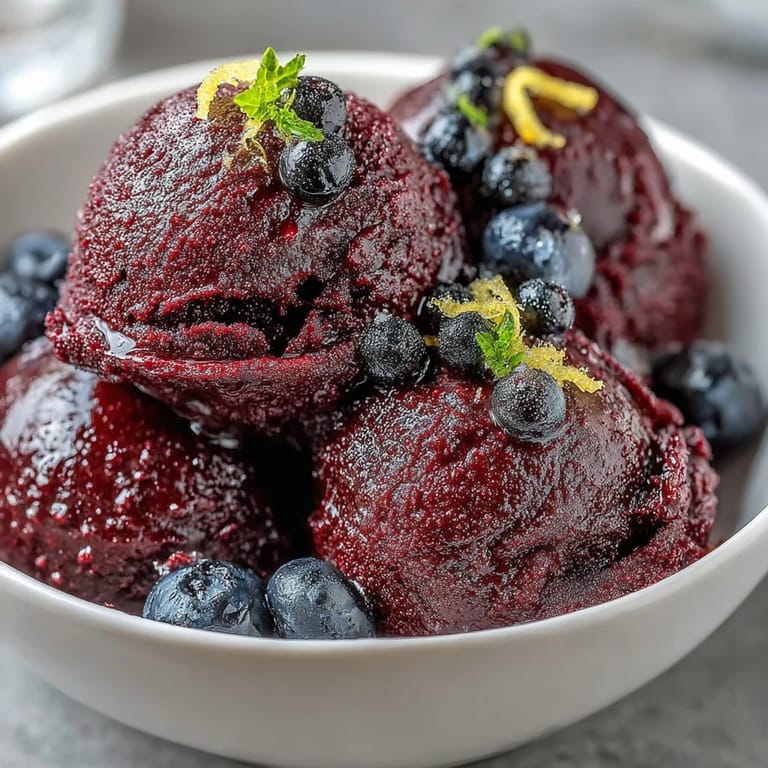
 Last summer, I found myself at a farmers market with a pint of black currants I'd never actually cooked with before. The vendor mentioned they were tart enough to make your face scrunch, perfect for something frozen. That afternoon, I decided to turn them into sorbet, and the first spoonful—that electric tartness hitting my tongue followed by just enough sweetness—made me understand why people get obsessed with this fruit. It's become my go-to dessert when I want something that feels both elegant and impossibly simple.
I'll never forget bringing this to a dinner party where someone mentioned they were vegan. Instead of scrambling, I realized this sorbet was already perfect for them—crisp, bright, and completely plant-based without feeling like a compromise. Watching everyone go back for second helpings, regardless of dietary preferences, taught me that the best food is the kind that doesn't need apologies or explanations.
Ingredients
- Fresh or frozen black currants (500 g): These berries are the star, packed with tartness that keeps the sorbet from tasting cloying or one-dimensional; frozen ones work beautifully if fresh aren't available, and honestly sometimes they're even easier to blend.
- Granulated sugar (200 g): This sweetens the mixture just enough to balance the natural acidity without masking the complex berry flavor; I've learned that less is better here, since you can always taste and adjust.
- Water (250 ml): Creates a light, elegant texture that lets the black currant flavor shine through instead of getting buried in cream.
- Freshly squeezed lemon juice (2 tbsp): Adds brightness and depth, making the black currants taste even more like themselves; fresh juice matters here because it's the final note your palate lands on.
Tired of Takeout? 🥡
Get 10 meals you can make faster than delivery arrives. Seriously.
One email. No spam. Unsubscribe anytime.
Instructions
- Prepare your berries:
- Rinse the black currants under cool running water and pick through them gently, removing any stems or leaves; this only takes a few minutes and makes all the difference in the final texture.
- Make a simple syrup:
- Combine the sugar and water in a medium saucepan and bring to a gentle simmer over medium heat, stirring occasionally until every grain of sugar disappears into clear liquid, about 3-4 minutes. The stirring isn't just for show—it ensures the syrup will be smooth and consistent.
- Soften the berries:
- Add the black currants to the hot syrup and let them simmer for 5 minutes, until they start to burst and release their deep color into the liquid. You'll notice the syrup turning from clear to a gorgeous dark purple, which is exactly what you want.
- Blend until velvety:
- Remove from heat and let cool for just a minute or two, then use a stick blender to puree the mixture directly in the saucepan (less cleanup) or carefully transfer to a regular blender and blend until completely smooth. The texture should be uniform with no visible berry bits.
- Strain out the solids:
- Press the purée through a fine-mesh sieve into a clean bowl, using the back of a spoon to push it through while discarding the seeds and skins left behind; this step is what gives sorbet its silky, elegant mouthfeel instead of a grainy one.
- Add brightness with lemon:
- Stir in the freshly squeezed lemon juice and taste the mixture; if it needs more sweetness, add a bit more sugar and stir until it dissolves. This is your moment to adjust, so trust your palate.
- Chill thoroughly:
- Cover the mixture and refrigerate for at least 2 hours until it's completely cold; you can actually chill it overnight, and sometimes I do because the flavors seem to deepen.
- Churn into sorbet:
- Pour the cold mixture into your ice cream maker and churn according to the manufacturer's instructions, typically 20-30 minutes, until it reaches a thick, slushy consistency. The machine is doing the work of breaking up ice crystals as they form, which is why this step matters.
- Freeze to firmness:
- Transfer to a freezer-safe container and freeze for at least 2 hours until firm enough to scoop; if you're patient, overnight freezing makes it even better.
- Serve with care:
- Let the sorbet sit at room temperature for 2-3 minutes before scooping so it's not rock-hard; this small moment of softening makes scooping easy and lets the flavors bloom on your tongue.
 Save to Pinterest
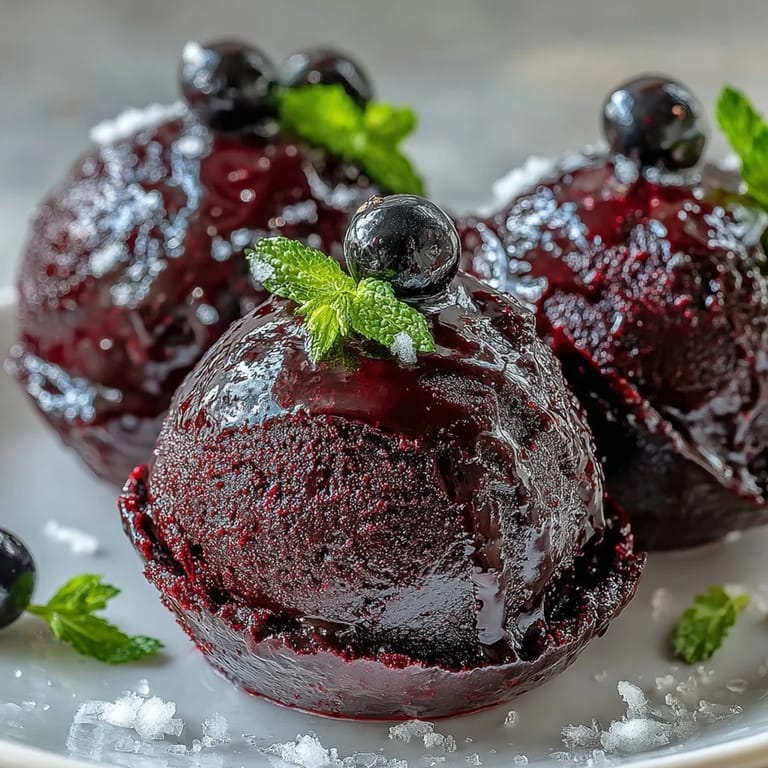
 There's something quietly magical about watching someone taste this sorbet for the first time—that moment of surprise when they realize something so refined came from just berries, sugar, and water. It changed how I think about desserts, proving that simplicity and sophistication aren't opposites.
When Black Currants Aren't Available
I've experimented with blackberries, raspberries, and even marionberries when black currants weren't in season, and while each has its own character, they shift the flavor profile noticeably. Blackberries make it earthier and deeper; raspberries brighten it toward pink and floral; marionberries add an almost wine-like sophistication. The method stays exactly the same, so feel free to experiment and discover your own favorite variation—the technique is really what matters here.
Taking It Beyond Plain
Once I mastered the basic recipe, I started playing with optional additions that respect rather than mask the black currant flavor. A splash of crème de cassis before churning adds an elegant boozy depth that makes adults pause mid-spoonful; a whisper of cardamom or a pinch of black pepper brings unexpected warmth. The key is restraint—these are whispers, not shouts, meant to complement rather than compete with what makes this sorbet special in the first place.
Serving Ideas That Make It Shine
The beauty of black currant sorbet is that it plays well with almost everything—serve it alongside lemon shortbread for a textural contrast, or pair it with fresh berries and a drizzle of honey for something summer-bright. I've also served it in a wine glass with a splash of prosecco for an unexpected palate cleanser between courses, which always gets compliments. Here are a few more ways I like to present it:
- Nestled between two thin vanilla wafers for an elegant, portable treat.
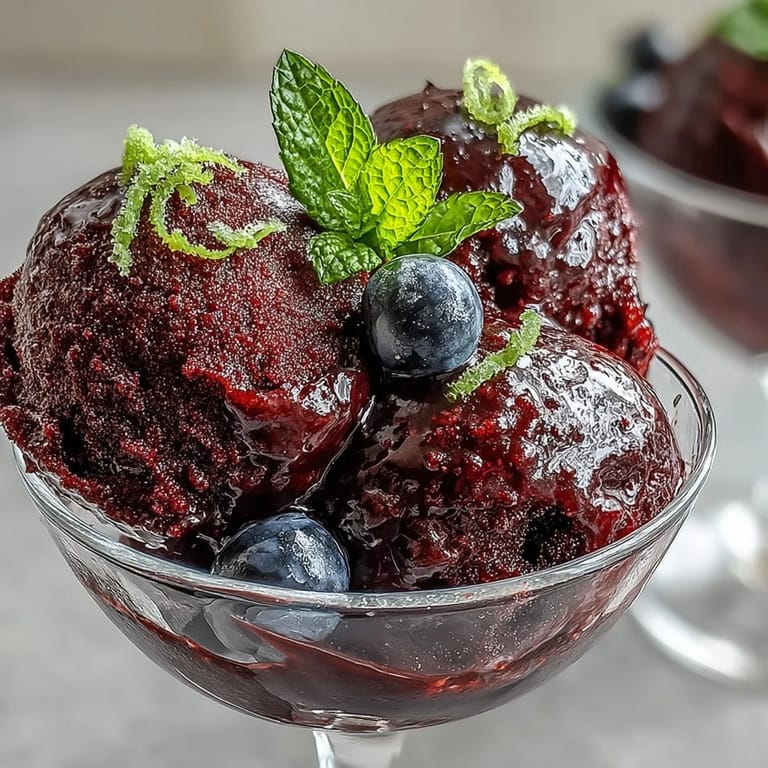
- Topped with a few fresh black currants and a mint leaf for a simple, restaurant-plated moment.
- As a palate cleanser in tiny scoops after a rich dinner, where its tartness cuts through heaviness beautifully.
 Save to Pinterest
 Making black currant sorbet taught me that sometimes the most impressive desserts come from standing back and letting good ingredients speak for themselves. Once you've made this once, you'll find yourself reaching for it all summer long.
Recipe FAQs
- → Can I use frozen black currants instead of fresh?
Absolutely. Frozen black currants work wonderfully and are often more readily available. Simply thaw them slightly before adding to the simmering syrup. No need to defrost completely.
- → How long does the sorbet keep in the freezer?
Properly stored in an airtight container, this sorbet maintains optimal texture for about 2-3 weeks. For best results, let it soften 5-10 minutes before scooping after extended storage.
- → What can I substitute for granulated sugar?
Honey or maple syrup work as alternatives, though they'll slightly alter the flavor profile. Use about 160g honey for the equivalent sweetness. Coconut sugar also adds pleasant caramel notes.
- → Do I really need an ice cream maker?
Not necessarily. Pour the chilled base into a shallow container and freeze, stirring vigorously every 30 minutes for about 3 hours. The texture will be slightly grainier but still delicious.
- → Can I reduce the sugar amount?
Sugar does more than sweeten—it lowers the freezing point for scoopable texture. Reducing below 150g may result in an icy, hard-to-scoop final product. For less sweetness, try adding a pinch of salt to enhance flavor perception.
- → What other fruits work well with this method?
Raspberries, blackberries, and tart cherries all adapt beautifully to this technique. Adjust sugar based on fruit natural sweetness—tart berries need more while sweet fruits require less.