 Save to Pinterest
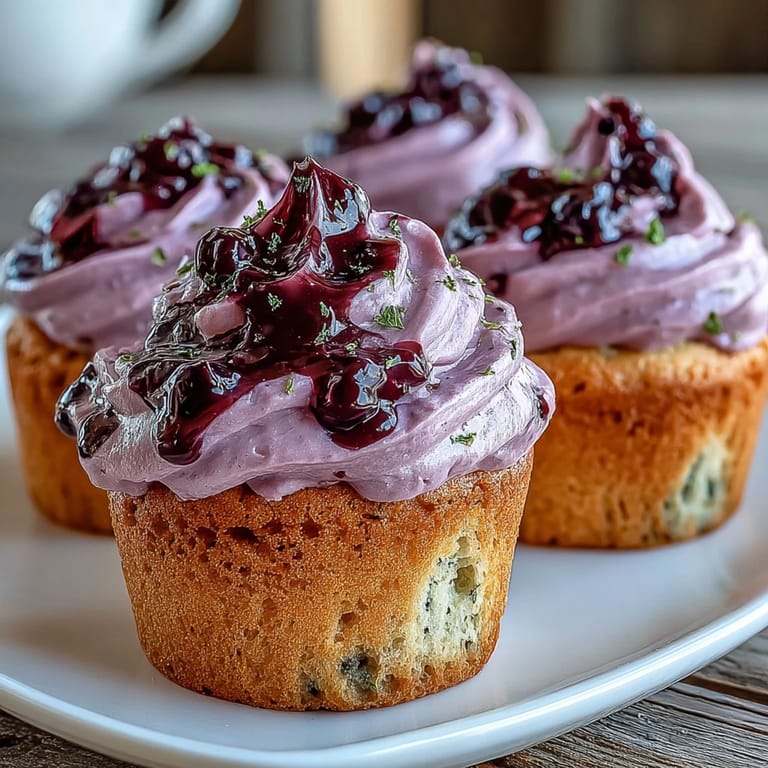
 My cousin brought a tin of Italian olive oil back from Tuscany one autumn, the kind with peppery notes that made you sit up straighter when you tasted it. I'd been baking the same vanilla cupcakes for years, and something about that bottle made me want to try something different. The result was these impossibly tender olive oil cupcakes, and when I topped them with a black currant frosting that tasted like jam meets fancy French pastry, I realized I'd stumbled onto something that felt both sophisticated and completely unfussy.
I made these for my book club one winter evening, and someone asked if I'd bought them from that bakery across town. The silence when I admitted I'd made them in my kitchen that morning felt like the highest compliment. My friend Sarah ate three and asked me to bring them to her daughter's engagement tea, which is how I learned these cupcakes actually belong in moments that matter.
Ingredients
- All-purpose flour (1 1/2 cups): The foundation here, so make sure it's fresh—old flour can make your cupcakes taste slightly stale even when they're not.
- Baking powder and baking soda (1 tsp and 1/2 tsp): These work together to give you that tender crumb, but measure carefully because too much makes them taste metallic.
- Fine sea salt (1/4 tsp): This tiny amount amplifies the olive oil flavor in a way that surprises people.
- Granulated sugar (3/4 cup): Don't skip the creaming step with eggs—it incorporates air that makes these cupcakes light.
- Large eggs (2): Room temperature eggs blend more smoothly into the batter without creating pockets of unmixed egg white.
- Extra virgin olive oil (1/2 cup): This is the star, so use something you actually enjoy tasting—not the cheapest bottle, but not the $60 one either.
- Whole milk (1/2 cup): Room temperature milk prevents the batter from seizing when mixed with the oil.
- Pure vanilla extract (1 tsp): Real vanilla matters here because imitation can taste sharp against the black currant.
- Lemon zest (from 1 lemon, optional): This adds brightness that makes the black currant frosting sing instead of feel heavy.
- Unsalted butter for frosting (1/2 cup): Softened butter creams faster and creates a smoother frosting than cold butter.
- Cream cheese (4 oz): The tang here balances the jam perfectly, but it needs to be truly soft or you'll get lumps.
- Powdered sugar (2 cups, sifted): Sifting matters because lumpy powdered sugar is nearly impossible to beat out smoothly.
- Black currant jam or puree (1/4 cup): I prefer puree because it distributes more evenly than chunky jam, but either works if you beat it in thoroughly.
- Lemon juice (1 tsp): This cuts through the sweetness of the frosting and prevents it from tasting one-dimensional.
- Pinch of salt for frosting: Salt in frosting seems counterintuitive until you taste how it rounds out all the flavors.
Tired of Takeout? 🥡
Get 10 meals you can make faster than delivery arrives. Seriously.
One email. No spam. Unsubscribe anytime.
Instructions
- Heat your oven and prepare:
- Preheat to 350°F and line your muffin tin with paper liners—this matters because it keeps the cupcakes from browning too much on the edges and makes them easier to frost later. If you want to be fancy, lightly spray the liners with cooking spray so they peel away cleanly.
- Mix your dry ingredients:
- Whisk flour, baking powder, baking soda, and salt together in a bowl—this distributes the leavening evenly throughout so you don't get dense pockets. The whisking also aerates the flour slightly, which contributes to that tender crumb.
- Cream eggs and sugar:
- Beat eggs and sugar together for about two minutes until the mixture turns pale and ribbony. This step is worth the two minutes because it's where the lift comes from—you're literally incorporating air into the batter.
- Add the olive oil smoothly:
- Whisk the olive oil in gradually while beating, which creates an emulsion instead of a separated, greasy batter. If you dump it all in at once, the eggs and oil won't play nicely together.
- Bring in the wet ingredients:
- Stir in milk, vanilla, and lemon zest, which should take just a few stirs until everything looks combined. The milk needs to be room temperature or the batter might seize up slightly.
- Fold in the dry mixture gently:
- This is where patience matters—fold the dry ingredients into the wet mixture with a spatula using broad strokes, stopping as soon as you don't see white streaks of flour. Overmixing develops gluten and creates tough, dense cupcakes instead of tender ones.
- Fill the liners:
- Divide batter so each liner is about two-thirds full, using a small ice cream scoop or spoon to keep portions even. Consistent sizing means they all bake at the same rate.
- Bake until set:
- Bake for 16 to 18 minutes—your cupcakes are done when a toothpick comes out clean and the tops spring back slightly when you touch them. The kitchen will smell like warm olive oil and vanilla, which is how you know you're on the right track.
- Cool carefully:
- Let them sit in the pan for five minutes so they set slightly, then turn them out onto a wire rack to cool completely. Frosting warm cupcakes makes the frosting melt and slide off.
- Make the frosting:
- Beat softened butter and cream cheese together until smooth and creamy with no lumps, which takes about two minutes. Take your time here because lumps in the frosting show when you frost the cupcakes.
- Add sugar gradually:
- Sprinkle powdered sugar in slowly while beating until the mixture looks light and fluffy and tastes sweet but not grainy. Adding it all at once creates a gritty frosting that never quite smooths out.
- Fold in the black currant magic:
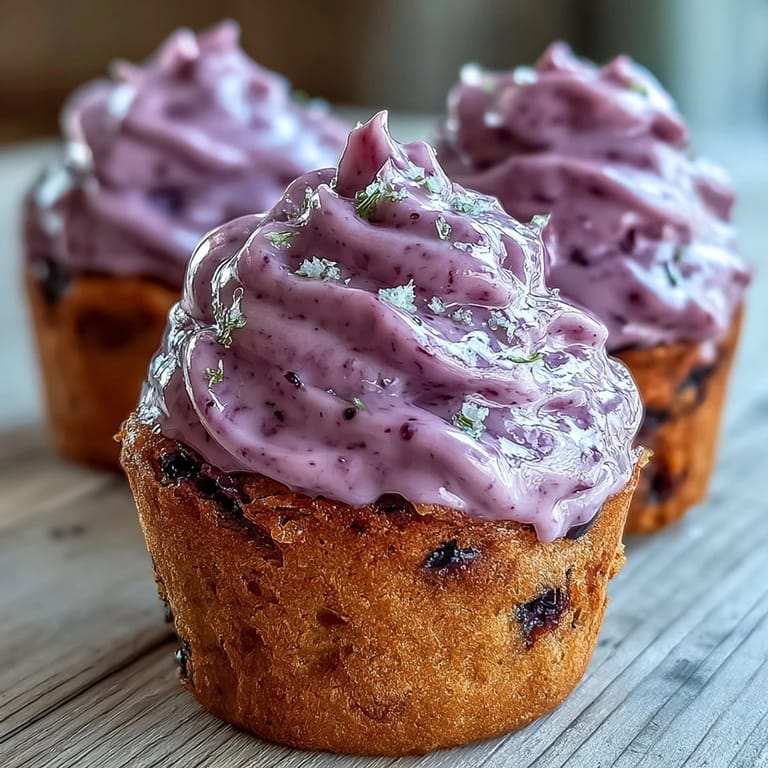
- Mix in jam, lemon juice, and salt, beating until fully incorporated and the frosting turns a beautiful dark pink. The beating ensures even distribution so every cupcake tastes the same.
- Frost generously:
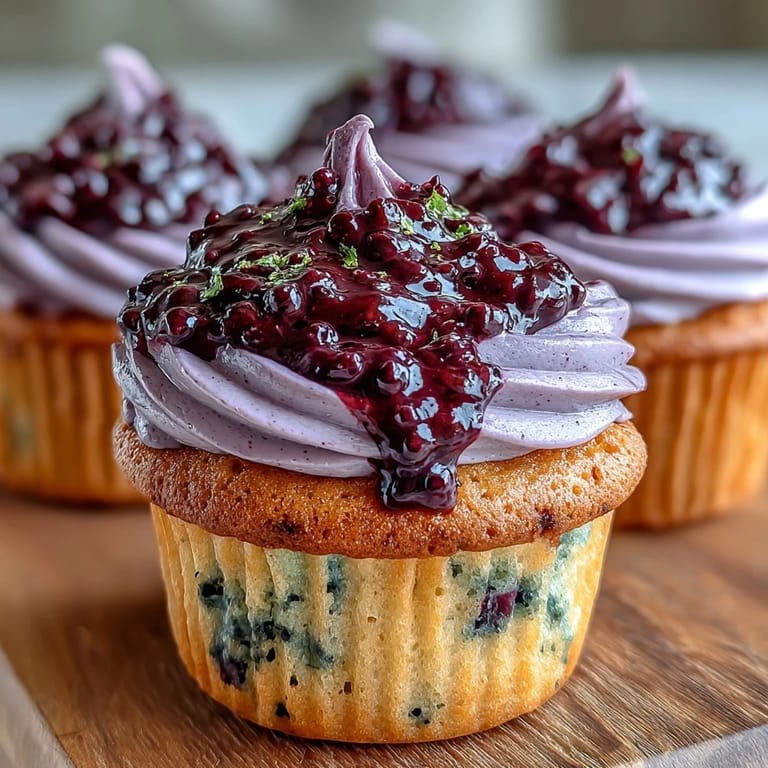
- Once cupcakes are completely cool, top each with a generous dollop of frosting using a small offset spatula or the back of a spoon. Garnish with fresh black currants or a tiny curl of lemon zest if you're feeling fancy.
 Save to Pinterest
 I'll never forget watching my five-year-old nephew try one at a birthday brunch—he'd never had black currant before, and his eyes went wide when he bit into the frosting. He declared it tasted like a fancy party in his mouth, which might be the most honest review a cupcake has ever received. That's when I understood these aren't just cupcakes, they're an experience disguised as afternoon tea.
Choosing Your Olive Oil Matters
The type of olive oil you use will change the entire personality of these cupcakes. A light, buttery olive oil creates a more delicate, subtle backdrop for the black currant, while a peppery or grassy oil adds complexity that makes people pause and wonder what flavor they're tasting. I've made these with everything from supermarket standard to single-estate oils, and honestly, somewhere in the middle is perfect—something flavorful enough to taste intentional but not so distinctive that it overshadows everything else. Save your expensive oils for dressing, and use a good-quality extra virgin olive oil that tastes pleasant when you eat it straight from a spoon.
The Black Currant Frosting Evolution
Black currant isn't a flavor most people encounter regularly in American baking, which means your guests will be genuinely curious about what they're tasting. The first time I made this frosting, I used a heavy hand with the jam and it became too tart and runny, so I learned that quarter-cup is the sweet spot where you get real black currant flavor without overwhelming everything. If you can't find black currant jam or it's wildly expensive in your area, blackberry and raspberry work beautifully as substitutes—they bring similar tartness and elegance, though the flavor profile shifts slightly toward familiar territory.
Serving Suggestions & Storage
These cupcakes have a shelf life longer than most because the olive oil keeps them moist—they stay tender for three days in an airtight container at room temperature, or up to five days if you refrigerate them. Serve them slightly cool rather than straight from the fridge, and pair them with Earl Grey tea, a sparkling rosé, or even a dry Riesling if you're feeling celebratory. They're elegant enough for a formal tea service but casual enough to pack into a picnic basket, which makes them the rare dessert that works for both cozy mornings and fancy occasions.
- Store covered at room temperature for maximum tenderness, or refrigerate if your kitchen is particularly warm.
- Bring them to room temperature for thirty minutes before serving so the frosting softens slightly.
- Make cupcakes a day ahead and frost them the morning of serving for the freshest-tasting frosting.
 Save to Pinterest
 These olive oil cupcakes with black currant frosting have become the recipe I'm known for, the one people ask me to bring to their gatherings or request the recipe for after tasting them. There's something about the combination of sophisticated flavors and approachable technique that makes them feel like your own little kitchen secret worth sharing.
Recipe FAQs
- → Can I taste the olive oil in these cupcakes?
A mild extra virgin olive oil adds subtle fruity notes without overpowering the flavor. Choose a light, delicate variety rather than a robust peppery one for best results.
- → What can I substitute for black currant jam?
Blackberry or raspberry jam work beautifully as alternatives. Both provide similar tartness and deep purple color. You can also use black currant puree if available.
- → How should I store these cupcakes?
Store unfrosted cupcakes at room temperature for up to 2 days in an airtight container. Once frosted, refrigerate and bring to room temperature 30 minutes before serving for best texture.
- → Why use olive oil instead of butter?
Olive oil creates exceptionally moist, tender baked goods with a longer shelf life. It also adds subtle fruity complexity and pairs beautifully with the tangy black currant frosting.
- → Can I make these gluten-free?
You can try a 1:1 gluten-free flour blend, though the texture may differ slightly. The olive oil helps maintain moisture, which is beneficial when adapting for gluten-free baking.
- → What beverages pair well with these?
Off-dry sparkling wine, Earl Grey tea, or even a light rosé complement the fruity olive oil notes and tangy frosting beautifully.