 Save to Pinterest
 The first time I made butternut squash mac and cheese was on a rainy October afternoon when I had half a squash sitting on my counter and a craving for something warmer than my usual routine. I'd always loved the earthiness of roasted squash, and the thought of swirling that golden sweetness into a creamy cheese sauce felt like discovering something I'd been missing all along. That first batch came out richer and more comforting than any standard mac and cheese I'd made before, and it's been my go-to ever since.
I made this for a dinner party on a cold November evening, and watching my friends go back for thirds told me everything I needed to know about this dish. Someone asked if it was homemade, and there was genuine surprise when I said yes—apparently, creamy squash sauce sounds more complicated than it actually is. Since then, it's become the recipe people request when they know autumn is coming.
Ingredients
- Elbow macaroni or small shells: 340 g (12 oz) — Small pasta shapes hold the sauce better than larger ones, so don't skip the shells if you have them.
- Butternut squash: 500 g (1 lb), peeled and cubed — Buy one already cut if you want to save time; the quality doesn't change, just your sanity does.
- Olive oil: 1 tbsp — For roasting the squash until it caramelizes at the edges.
- Salt and black pepper: 1/2 tsp salt, 1/4 tsp pepper — For the squash; you'll adjust again in the sauce.
- Unsalted butter: 2 tbsp — Use real butter here, not margarine; it makes a real difference in the sauce.
- All-purpose flour: 2 tbsp — This creates the roux that thickens everything.
- Whole milk: 480 ml (2 cups) — Don't use skim; the fat content matters for silkiness.
- Sharp cheddar cheese: 120 g (1 cup), grated — Freshly grated if possible; it melts faster and smoother.
- Gruyère or fontina cheese: 60 g (1/2 cup), grated — Gruyère adds a subtle nuttiness that elevates the whole dish.
- Nutmeg: 1/8 tsp — Just a whisper; this is the secret ingredient that makes people ask what's in it.
- Dijon mustard: 1/2 tsp — Adds depth without tasting mustard-y at all.
- Panko breadcrumbs (optional topping): 30 g (1/4 cup) — For a crispy finish if you're feeling fancy.
- Melted butter (optional topping): 1 tbsp — Tossed with the panko for golden crunch.
- Parmesan cheese (optional topping): 2 tbsp, grated — Adds a salty bite to the top.
Tired of Takeout? 🥡
Get 10 meals you can make faster than delivery arrives. Seriously.
One email. No spam. Unsubscribe anytime.
Instructions
- Roast the squash until golden:
- Preheat your oven to 200°C (400°F) and toss the cubed butternut squash with olive oil, salt, and pepper. Spread everything on a baking sheet and roast for 20–25 minutes, stirring halfway through if you think about it, until the edges turn caramelized and the flesh is completely tender.
- Cook the pasta while squash roasts:
- Bring a large pot of salted water to a boil and cook your pasta according to package directions until it's just al dente—slightly firm to the bite, not mushy. Drain it and set it aside while you work on the sauce.
- Blend the squash into silk:
- Once the squash is cool enough to handle, transfer it to a blender or food processor along with 1/2 cup of the milk and blend until completely smooth—no chunks, no texture. You're creating the foundation of your sauce here.
- Make a golden roux:
- Melt the butter in a large saucepan over medium heat, then stir in the flour and let it cook for 1–2 minutes until it smells a bit toasty and turns lightly golden. This is the moment where you can really smell the butter doing its work.
- Build the sauce slowly:
- Gradually whisk in the remaining 1 1/2 cups of milk, stirring constantly and watching as the sauce thickens before your eyes, which takes about 3–4 minutes. The key is patience and constant whisking so you don't end up with lumps.
- Add the squash and cheese magic:
- Pour in the blended squash, then stir in the grated cheddar and Gruyère along with the nutmeg and Dijon mustard, stirring until everything melts and becomes silky. Taste it and adjust salt and pepper to your liking.
- Bring it all together:
- Add the cooked pasta to the sauce and toss everything until every piece is coated in that creamy, golden cheese sauce. This is where the dish really comes together.
- Optional crispy topping:
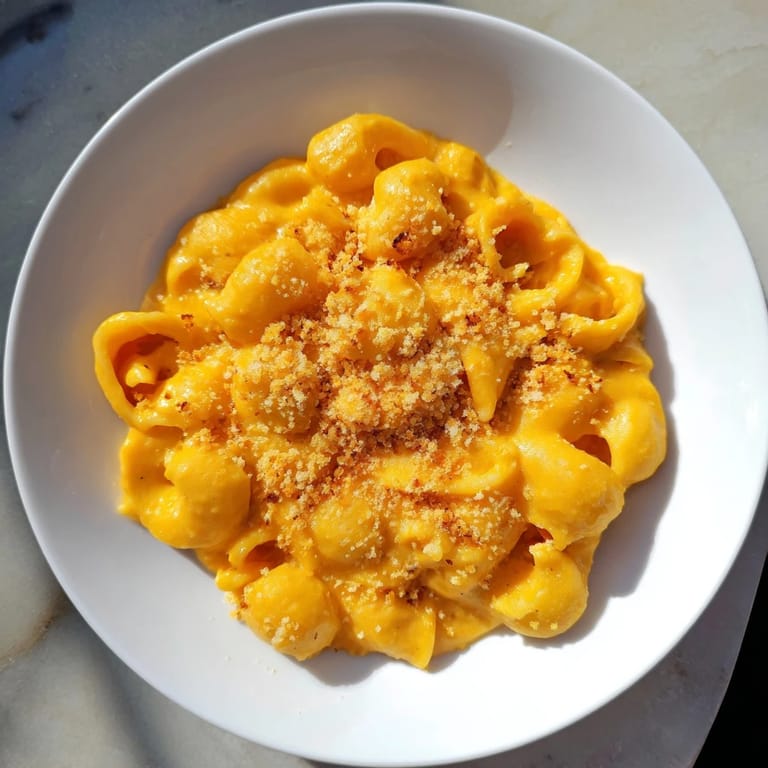
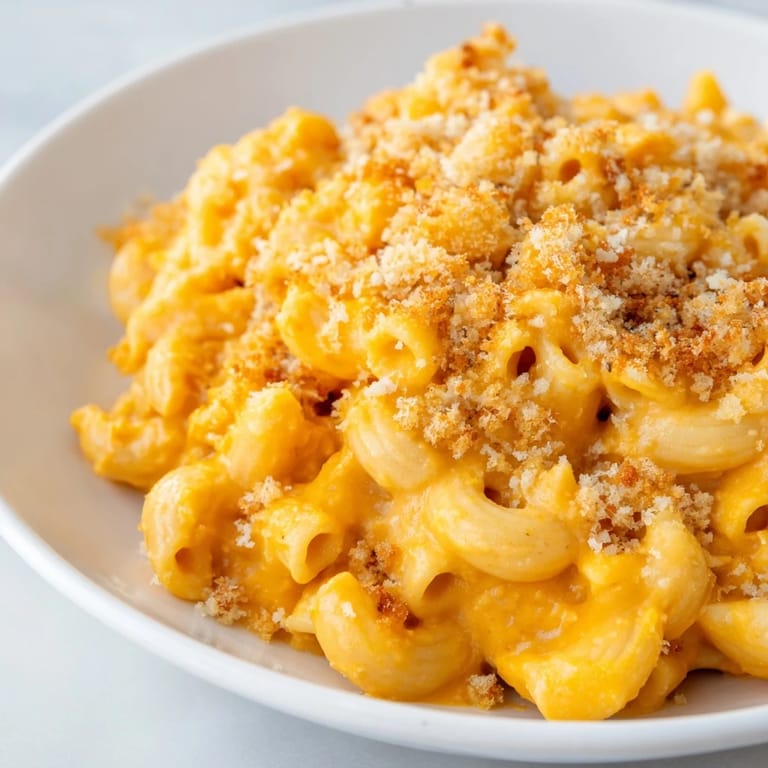
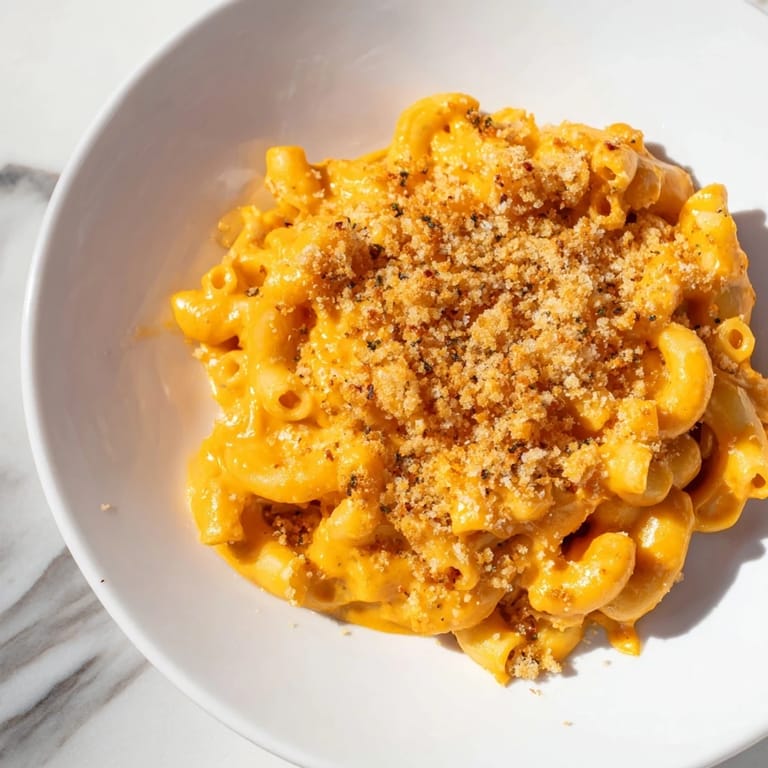
- If you want a textured finish, transfer the mac and cheese to a lightly buttered baking dish and mix the panko with melted butter and parmesan. Sprinkle it over the top and broil for 2–3 minutes until the breadcrumbs turn golden and crispy.
- Serve while it's warm:
- Scoop it into bowls or plates while it's still hot, and if you're feeling generous, top with extra cheese or some chopped fresh herbs.
 Save to Pinterest
 There was a moment during that first dinner party when everyone went quiet for a second, just eating and enjoying, and I realized that food like this—simple but thoughtful—creates space for real conversation and connection. Since then, I've made it for new neighbors, friends going through rough times, and family gatherings where we needed something warm and unpretentious.
Why Roasted Squash Changes Everything
The difference between this mac and cheese and the regular version is the roasted squash—it's not just an ingredient, it's a flavor anchor that makes everything taste more intentional. When squash is roasted, the natural sugars concentrate and caramelize, creating this subtle sweetness that plays beautifully against the sharp cheddar and nutty Gruyère. I learned this the hard way by trying to use raw squash once, and the result was watery and one-dimensional.
Building Layers of Flavor
The Dijon mustard and nutmeg are there for a reason—they're not strong enough to taste like themselves, but together they create this invisible depth that makes people say 'this is really good' without being able to pinpoint why. The combination of two cheeses matters too; sharp cheddar alone would be bright and one-note, but Gruyère adds a subtle earthiness that grounds everything. I used to think I was overcomplicating it, but once I understood how each ingredient was doing its job, the recipe became more intentional than just following steps.
Endless Variations and Customizations
One of the joys of this dish is how flexible it is without losing its soul—I've added sautéed spinach on nights when I wanted something greener, swapped Gruyère for fontina when I was in a milder mood, and once threw in crispy bacon just to see what would happen (it was transcendent). Some people stir in cooked chicken to make it more of a complete meal, others add a pinch of smoked paprika for something a bit smoky. The butternut squash base is sturdy enough to handle additions without falling apart.
- Try adding sautéed kale or spinach for a pop of color and nutrition.
- Crispy bacon bits or cooked chicken can turn this into a heartier main course.
- A small pinch of smoked paprika or cayenne adds complexity if you want warmth without heat.
 Save to Pinterest
 This is the kind of dish that tastes like autumn in a bowl, familiar but with just enough elegance to feel like you tried. Serve it with a crisp white wine like Chardonnay, or just on its own on a night when comfort is the main course.
Recipe FAQs
- → Can I substitute the cheeses used in this dish?
Yes, you can replace Gruyère with fontina or mozzarella for a milder flavor, maintaining a creamy texture.
- → How do I make the squash puree smooth?
Roast the butternut squash until tender, then blend it with some milk until smooth for a creamy sauce base.
- → Is a crispy topping necessary?
The panko and parmesan topping adds a crunchy contrast but can be skipped for a softer dish.
- → Can I add vegetables to this dish?
Sautéed spinach or kale can be stirred in for added greens and texture.
- → What pasta types work best here?
Elbow macaroni or small shell pasta hold the sauce well and complement the creamy texture.
- → Is this suitable for a vegetarian diet?
Yes, this dish is vegetarian but contains dairy and gluten.