 Save to Pinterest
 There's something about autumn that makes me crave butternut squash soup, but it wasn't until I nearly burned a pan of onions that I figured out the real magic of this dish. I was rushing through dinner prep, distracted by the smell of squash already caramelizing in the oven, when I realized I'd been standing there with a wooden spoon in my hand for longer than intended. The onions had turned golden instead of translucent, and something shifted—that deeper, richer sweetness became the whole foundation of the soup. Now I slow down on purpose, let the layers build, and the result tastes like a kitchen moment turned into comfort.
I made this for a friend who had just moved into a new apartment with no furniture yet, just boxes and a kitchen table. We sat there with mismatched bowls and spoons, and this soup was the first real meal she'd had in that space. Watching her close her eyes on the first spoonful was all the confirmation I needed that this recipe belonged in regular rotation.
Ingredients
- Butternut squash (1 large, about 2.5 lbs): The star that deserves your best knife work; roasting draws out sugars and creates a silky base that blending alone can't achieve.
- Yellow onion (1 medium): Take your time sautéing it until it's truly soft and translucent, not rushed—this builds flavor you can actually taste.
- Garlic (2 cloves, minced): A minute in the hot pan is all it needs before the squash goes in, or it turns bitter.
- Vegetable broth (4 cups): The liquid foundation; homemade tastes noticeably better, but good quality store-bought works fine.
- Olive oil (2 tbsp total): One tablespoon for roasting the squash until it's caramelized at the edges, one for building flavor in the pot.
- Sea salt (1 tsp) and black pepper (1/4 tsp): Taste as you go—the right seasoning happens at the very end, not the beginning.
- Ground nutmeg (1/2 tsp): This tiny amount does the heavy lifting; it's what makes people pause and ask what that warm spice is.
- Dried sage (1 tsp, or 1 tbsp fresh): Fresh sage is worth seeking out if you can find it, but dried works when it has to.
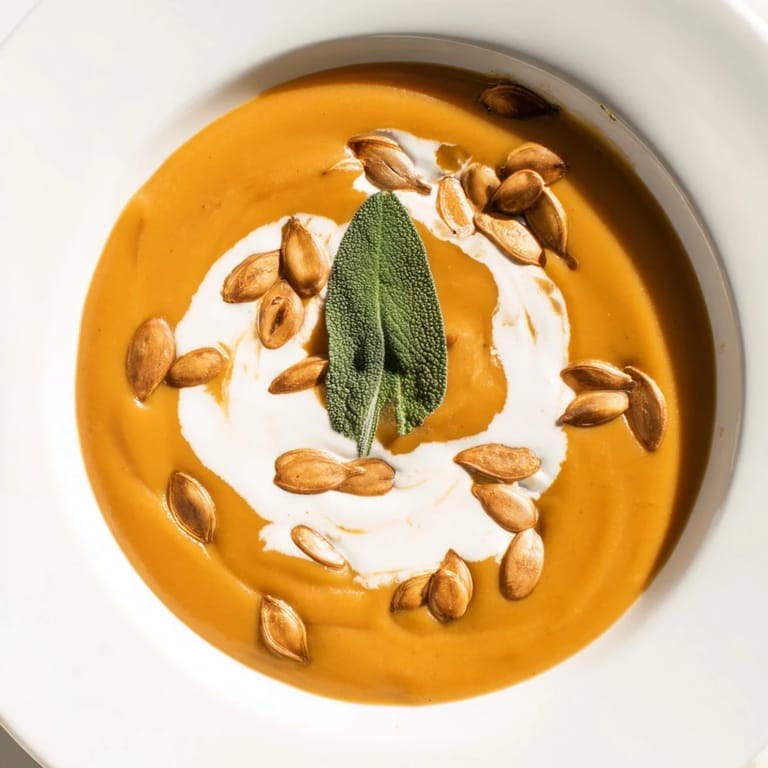
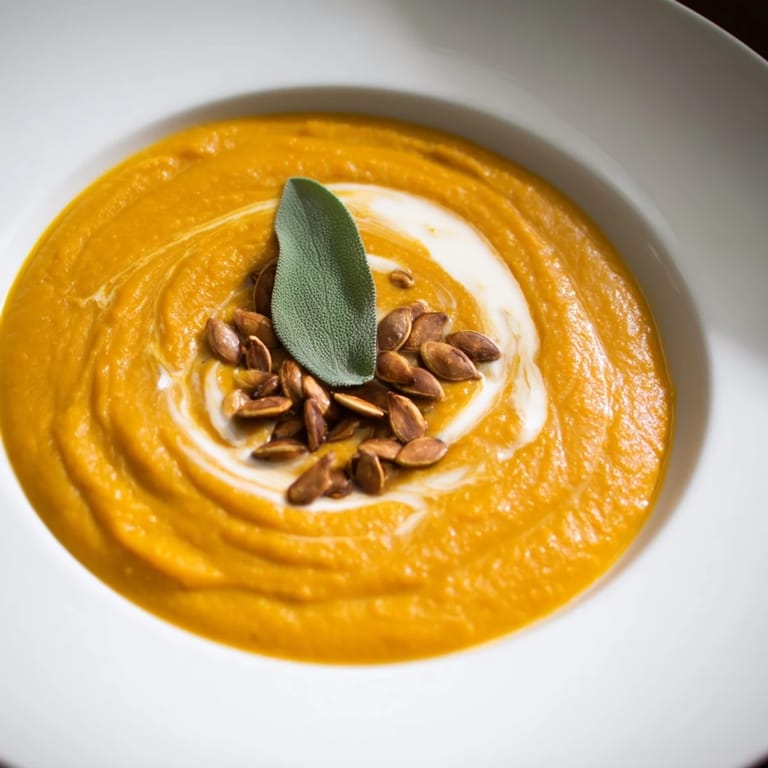
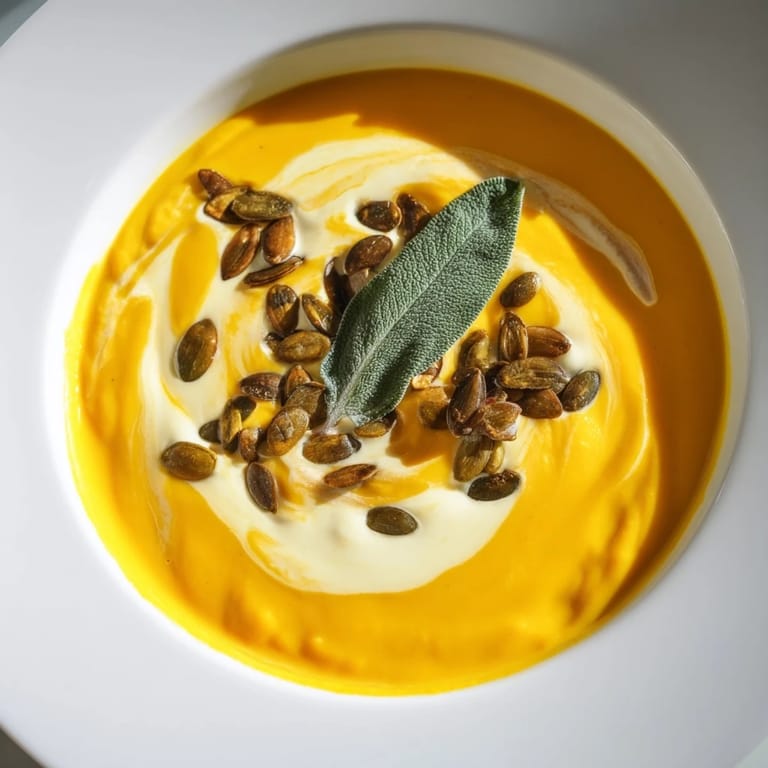
- Heavy cream or coconut milk (1/4 cup, optional): A drizzle swirled on top adds richness and creates those beautiful patterns in the bowl.
- Roasted pumpkin seeds and fresh sage leaves: The finishing touches that remind you this came from somewhere real.
Tired of Takeout? 🥡
Get 10 meals you can make faster than delivery arrives. Seriously.
One email. No spam. Unsubscribe anytime.
Instructions
- Heat your oven and prep the squash:
- Set the oven to 400°F. While it warms, carefully peel and seed your squash—a sharp chef's knife and a sturdy cutting board make this easier, and don't rush it. Toss the cubes with a tablespoon of olive oil, half a teaspoon of salt, and a pinch of pepper.
- Roast until caramelized:
- Spread the squash on a parchment-lined baking sheet in a single layer and roast for 30 to 35 minutes, stirring halfway through. You're looking for the edges to turn golden brown and slightly crispy; that's where the flavor lives. The smell will tell you when it's getting close.
- Build the aromatics:
- While the squash roasts, heat the remaining tablespoon of olive oil in a large pot over medium heat. Add the chopped onion and let it soften for 4 to 5 minutes, stirring occasionally—this is not the time to multitask. Add the minced garlic and cook for one more minute until fragrant.
- Combine and simmer:
- Add the roasted squash to the pot along with the sage and nutmeg, then pour in all 4 cups of vegetable broth. Bring it to a boil, then lower the heat and let it bubble gently for about 10 minutes—this isn't about cooking anything further, it's about letting the flavors meet and recognize each other.
- Blend to silky smoothness:
- Remove from heat and use an immersion blender to process the soup until it's completely smooth, working in batches if you're using a countertop blender instead. This step transforms separate ingredients into something that feels unified and velvety.
- Taste and adjust:
- Taste a spoonful and season with more salt and pepper if needed—this is where you make it yours. Some days you'll want more sage, other days the soup tells you to stop.
- Serve with intention:
- Ladle into warm bowls and drizzle with cream or coconut milk, scatter pumpkin seeds across the top, and add a fresh sage leaf if you have one. This is the moment where it becomes more than soup.
 Save to Pinterest
 My daughter asked for this soup three nights in a row last November, and I realized it had become the thing we make when we need to feel grounded. It's one of those recipes that doesn't ask much of you but gives back comfort in every spoonful.
Why Roasting Changes Everything
I used to make butternut squash soup by simmering raw cubes directly in the broth, wondering why it tasted thin and pale compared to restaurant versions. The roasting step wasn't a luxury—it was the missing piece. When you roast the squash first, the edges caramelize, the natural sugars concentrate, and something almost nutty develops underneath the sweetness. It's the difference between eating soup and tasting a small miracle in a bowl.
The Blending Moment
There's a point when the immersion blender is running and you feel the transformation happening beneath the blade—the soup going from chunky to silky, from separate ingredients to something unified. That moment is worth paying attention to. Don't stop before the soup is completely smooth; lumps will remind you that you rushed. This is where technique meets care.
Variations and Personal Touches
This recipe is sturdy enough to handle your own additions without falling apart. Some evenings I add a whisper of cayenne pepper if I want warmth that's a little sharper. Other times I stir in a splash of apple cider for brightness, or swap some of the broth for coconut milk if I'm cooking for someone who doesn't eat dairy. The sage and nutmeg are the guardrails; everything else is yours to play with.
- A swirl of good olive oil on top adds richness that cream sometimes can't quite deliver.
- If you have fresh thyme, toss a sprig into the pot while it simmers; it plays beautifully with the sage.
- Serve with crusty bread or oyster crackers, or eat it on its own—both choices are exactly right.
 Save to Pinterest
 This soup reminds me that simple recipes done with attention are worth making again and again. It's the kind of dish that gets better the more you cook it, because you learn where your own instincts belong in the recipe.
Recipe FAQs
- → What is the best way to roast butternut squash?
Cut the squash into even cubes, toss with olive oil, salt, and pepper, and roast at 400°F for 30–35 minutes until caramelized and tender.
- → Can I make the dish dairy-free?
Yes, substitute cream with coconut milk for a smooth, plant-based finish without altering the flavor balance.
- → How does sage contribute to the flavor profile?
Sage adds an earthy, slightly peppery aroma that complements the natural sweetness of roasted squash and the warmth of nutmeg.
- → What tools are needed for blending?
Use an immersion blender directly in the pot or a countertop blender to achieve a silky, smooth texture.
- → How can I add a spicy kick?
Incorporate a pinch of cayenne pepper during cooking to introduce subtle heat without overpowering the dish.