 Save to Pinterest
 The first time I attempted to impress someone with a dessert that wasn't just dumped onto a plate, I landed on this checkerboard idea during a lazy Sunday afternoon. I had some cream cheese I needed to use, a half-melted chocolate bar, and honestly, a desire to make something that looked intentional. The magic happened when I realized that mixing different textures on purpose—crunchy next to soft, sweet beside salty—could actually make people stop mid-conversation and pick up another piece. It felt like edible architecture, but easier to execute and much more forgiving.
I made this for a dinner party where one guest brought their new partner, and the whole table got quiet when I set down the tray. Not the awed silence I'd hoped for, but the kind where people lean in closer to study something. They started picking up squares strategically, comparing notes on textures like wine tasters, and somehow that made it feel like the dessert had its own personality. That's when I knew this recipe had something special going for it.
Ingredients
- Crisp shortbread cookies or graham crackers, crushed (80 g): These form your foundation and deliver that satisfying crunch; shortbread gives elegance while graham offers a slightly earthier base, so pick based on your mood.
- Unsalted butter, melted (30 g): Just enough to bind the crumbs without making them greasy—too much and you'll have a compressed brick instead of distinct layers.
- Cream cheese, softened (80 g): This should be genuinely soft before you start, or you'll spend five minutes beating it and wondering why life is difficult.
- Powdered sugar (30 g): Keeps the cream cheese layer from tasting like pure tang; don't skip sifting it if you have lumps.
- Vanilla extract (1 tsp): A small anchor that ties the soft layer together without announcing itself loudly.
- Dark chocolate, chopped (100 g): Buy quality here because there's nowhere to hide once it becomes ganache; I learned this the hard way with leftover baking chocolate.
- Heavy cream (60 ml): The magic ingredient that transforms chocolate from bitter to silky; heating it matters more than you'd think.
- Salted caramel sauce (80 g): Store-bought is your friend, though homemade feels special if you have thirty minutes and patience.
- Flaky sea salt: A light hand here prevents the salty layer from tasting like a potato chip, but enough to make your taste buds sit up and pay attention.
- Fresh raspberries, optional (16 small ones): They add a tart punctuation mark to the crunchy squares and look deliberately elegant on the plate.
Tired of Takeout? 🥡
Get 10 meals you can make faster than delivery arrives. Seriously.
One email. No spam. Unsubscribe anytime.
Instructions
- Crush and bind your base:
- Mix your crushed cookies with melted butter until the mixture resembles damp sand, then press it firmly and evenly into your parchment-lined baking dish. The key is using even pressure across the surface so every bite has that consistent crunch; I use the bottom of a measuring cup and work in sections. Pop it in the fridge for 15 minutes so it sets and holds its shape.
- Whip the cream cheese layer:
- Beat softened cream cheese with powdered sugar and vanilla until completely smooth and fluffy, which takes about two minutes and feels oddly satisfying to watch transform. Taste it before moving on—it should taste like sweet clouds with a hint of vanilla, not tangy.
- Melt chocolate into ganache:
- Heat heavy cream until small bubbles form around the edges, then pour it over your chopped chocolate and wait exactly two minutes without stirring. The residual heat does the work, and stirring too early creates a grainy mess; when you finally stir, it transforms into something glossy and luxurious within seconds.
- Prepare your caramel:
- If you're making it from scratch, do this before assembly because timing matters; store-bought works beautifully if you're keeping sanity in check. Either way, have it at room temperature so it spreads smoothly onto your base.
- Mark your grid:
- Remove the chilled base and use a ruler and sharp knife to lightly score a 4x4 grid into the surface, creating 16 equal squares. Light marks are all you need—these are guides, not trenches, and you're just preventing yourself from eyeballing something that should be intentional.
- Fill the squares strategically:
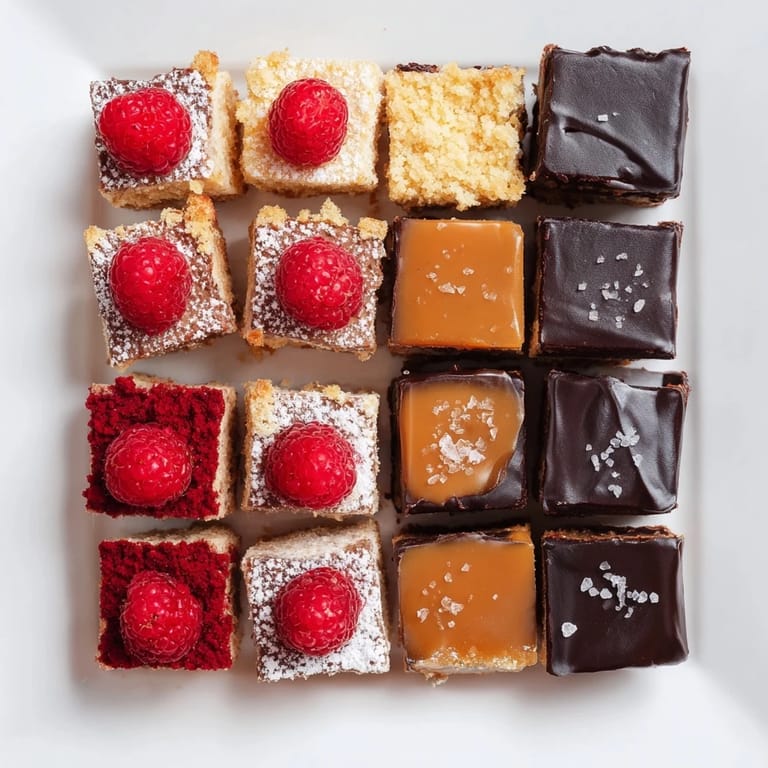
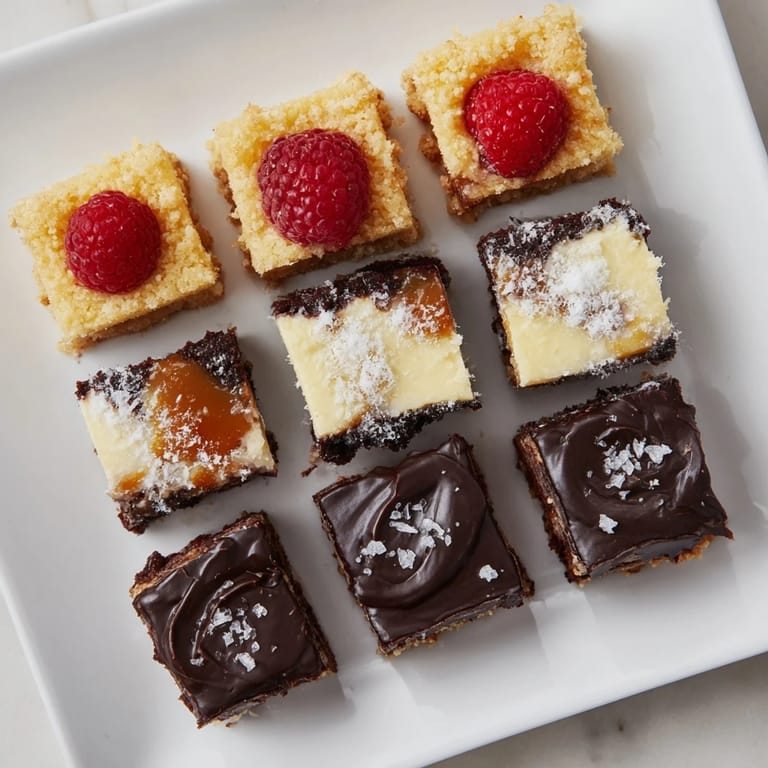
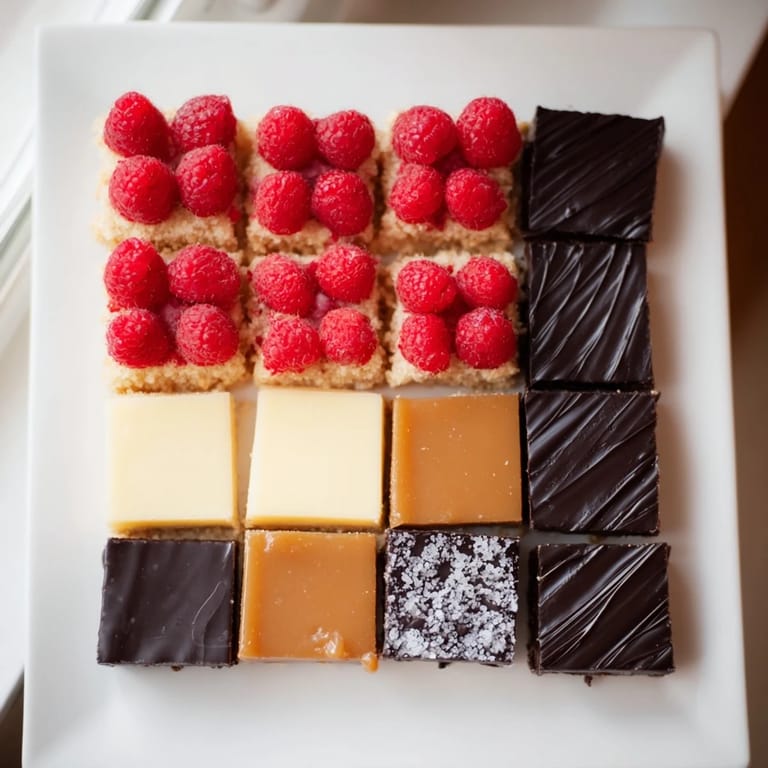
- Assign each texture to four squares arranged so no two identical textures touch (like a visual game of chess), filling the cream cheese squares first, then chocolate, then caramel with a pinch of salt. Leave the four remaining corner-ish squares bare and top each with a raspberry if you have them, because the contrast is stunning.
- Chill to set everything:
- Give it 30 minutes in the refrigerator so each layer firms up and the flavors settle into themselves. This isn't optional if you want clean cuts.
- Slice and serve:
- Use a sharp, dry knife and slice along your grid lines with a gentle sawing motion rather than pressing down like you're angry at the dessert. Serve slightly chilled so the chocolate isn't too soft and the cream cheese holds its shape.
 Save to Pinterest
 My neighbor tasted one of these squares and said it was like playing four different games at once, which somehow became the best compliment I could have received. That moment made me realize this dessert isn't just about precision and texture—it's about giving people permission to slow down and actually taste each component instead of rushing through another plate of something.
The Texture Game
When I first made this, I was thinking about restaurant plating and how high-end desserts always seem to have this architectural quality that home cooking rarely attempts. I realized that the checkerboard pattern gives you permission to slow down and experience each layer as its own story—the shortbread doesn't compete with the chocolate, and neither one fights with the cream cheese. It's like inviting four different flavors to a party and seating them where they actually get along instead of making them all fight for attention.
Adapting to What You Have
The beauty of this dessert is that it genuinely adapts without losing its identity, which I discovered when I once substituted mascarpone for cream cheese because I forgot to buy the right thing. The result was richer and more decadent, and suddenly I preferred it that way. I've also swapped white chocolate for dark, added cardamom to the cream cheese layer, and used crushed digestive biscuits instead of shortbread—each time it shifts the mood without breaking the structure. The checkerboard concept is flexible enough to accommodate your pantry while staying true to its playful nature.
Serving and Pairing
These squares feel at home at a dinner party, but they're equally welcome as an afternoon treat with coffee or as a small indulgence after a meal where you want something final but not overwhelming. I find they pair beautifully with a glass of Moscato d'Asti because the slight sweetness and fizz don't compete with the salty caramel or the dark chocolate. A few things to remember when serving: arrange them on a board or platter so guests can see the checkerboard pattern (it matters visually), serve them slightly chilled so each layer holds its shape, and expect people to comment on how intentional and thoughtful they look even though you made them on a whim.
- Prep everything before assembly so you're not scrambling with softening cream cheese while your chocolate cools.
- A thin offset spatula is worth its weight in gold here, though a butter knife works if that's what you have.
- Make these a day ahead if you're entertaining—they only get better as the layers meld slightly overnight.
 Save to Pinterest
 This dessert became my answer to the question of how to make something look like you spent hours in the kitchen when you actually spent an hour and felt like you were playing the whole time. It's proof that intentional doesn't have to mean complicated.
Recipe FAQs
- → What is the base layer made of?
The base consists of crushed crisp shortbread cookies blended with melted butter, pressed into a firm layer and chilled for stability.
- → How is the soft layer prepared?
The soft layer combines cream cheese, powdered sugar, and vanilla extract whipped until smooth to provide a creamy texture.
- → How do you make the sweet layer?
The sweet layer is a dark chocolate ganache made by pouring heated cream over chopped chocolate, then stirred until smooth and glossy.
- → What adds the salty notes?
Salted caramel sauce, topped with flaky sea salt, provides the salty dimension within the checkerboard squares.
- → How is the checkerboard pattern achieved?
The chilled crunchy base is scored into 16 equal squares. Each texture—crunchy, soft, sweet, salty—is arranged so similar layers do not touch, creating an alternating checkerboard effect.