 Save to Pinterest
 My coworker brought a Korean beef bowl to lunch one Tuesday, and the kitchen filled with this incredible aroma of garlic and gochujang that made everyone stop what they were doing. I watched her eat it methodically, mixing the spicy beef through the rice, pausing to bite into a crisp pickle, and I knew I had to learn how to make it. What started as a curious craving became my go-to weeknight dinner, the kind of meal that feels indulgent but comes together faster than ordering takeout.
The first time I made this for friends, I got nervous about the heat level and accidentally added an extra tablespoon of gochujang. Instead of disaster, it became the best version I've ever made, and now that's my standard. Everyone circled back to my kitchen asking what I'd changed, and I learned that sometimes mistakes are just discoveries you haven't framed correctly yet.
Ingredients
- Lean ground beef (1 lb): The foundation here, and lean cuts prevent greasiness that would muddy all those bright flavors you're building.
- Gochujang (3 tbsp): This Korean chili paste is where the soul lives, bringing heat and umami depth that regular hot sauce can't touch.
- Fresh garlic and ginger: These two wake up your palate and add complexity that makes people ask what's in this.
- Soy sauce and sesame oil: Together they create a savory richness that coats every grain of rice.
- Rice vinegar (for the sauce and pickles): The acid balances the heat and richness, keeping every bite interesting.
- Brown sugar: Just enough to round out the heat without making it sweet, trust the restraint here.
- Carrot and daikon radish: Pickling these vegetables while you cook the beef means they're ready exactly when you need them, adding crunch and tang.
- Cucumber, radish, and kimchi: These toppings are your textural insurance policy, keeping the bowl from feeling one-note.
- Toasted sesame seeds: The final garnish that signals you actually care about this meal.
Tired of Takeout? 🥡
Get 10 meals you can make faster than delivery arrives. Seriously.
One email. No spam. Unsubscribe anytime.
Instructions
- Start the pickles and let them work their magic:
- Whisk together the rice vinegar, sugar, and salt in a small bowl until the sugar dissolves completely. Add your julienned carrots and daikon radish, toss gently, and set them aside to soften and absorb the tangy brine while you handle the beef. You'll be amazed how much flavor develops in just 15 minutes.
- Build the aromatic base:
- Heat your oil in a large skillet over medium-high heat until it shimmers slightly. Add the minced garlic and grated ginger, and let them cook for exactly one minute, until the smell hits you and you know you're on the right track. This short window toasts them without burning, which would turn them bitter.
- Brown the beef with purpose:
- Crumble your ground beef into the hot skillet, breaking it into small pieces with a wooden spoon as it cooks. Don't stir constantly, let it sit for 30 seconds between stirs so it develops color and flavor, which takes about 5 to 6 minutes total. If there's a pool of grease at the bottom, tilt the pan and spoon it out before moving forward.
- Create the gochujang sauce:
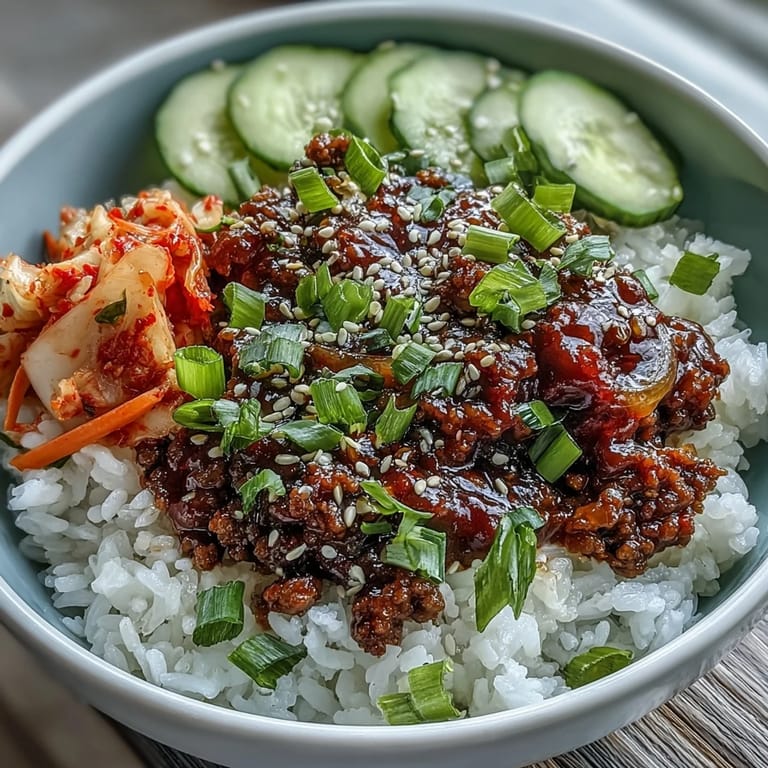
- Stir in your gochujang, soy sauce, brown sugar, rice vinegar, and sesame oil all at once, mixing until the sauce coats the beef evenly. Let it bubble gently for 2 to 3 minutes so the flavors marry and the sauce thickens from wispy to glossy. Turn off the heat and fold in half the green onions for a fresh brightness that contrasts the heat.
- Compose your bowls with intention:
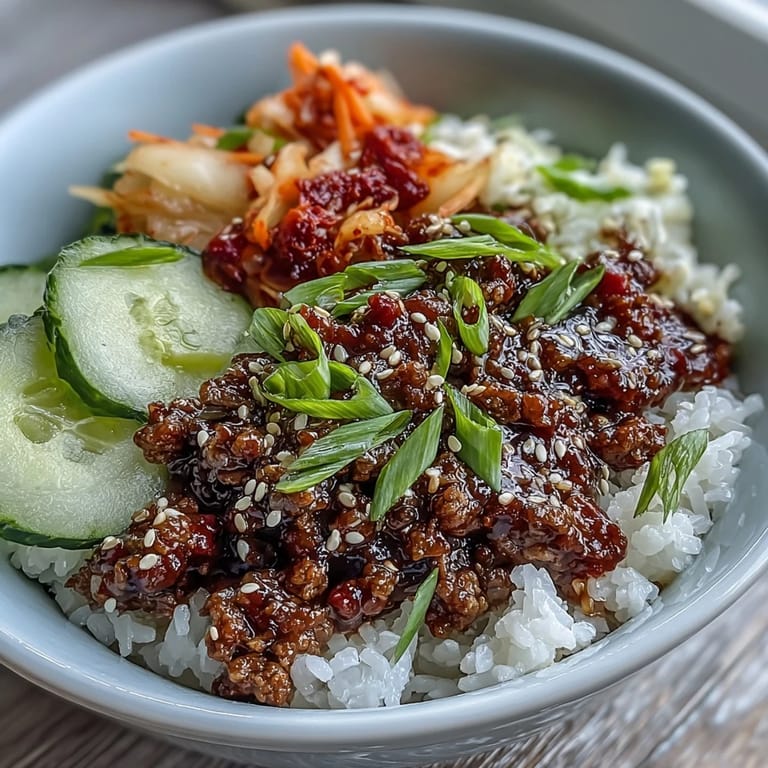
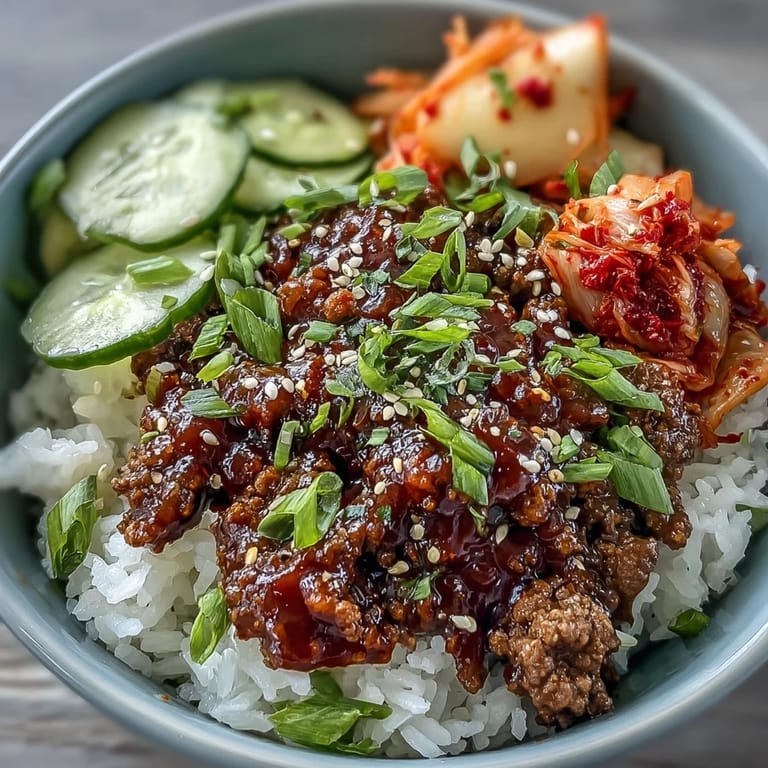
- Divide the warm rice among four bowls as your base, then spoon the beef mixture generously over the center. Arrange the pickled vegetables, fresh cucumber, radish, and kimchi around the beef in little clusters, creating a rainbow of colors and flavors. Top everything with the remaining green onions and a shower of toasted sesame seeds.
 Save to Pinterest
 My partner ate three bowls in one sitting and asked if I could make it twice a week. That's when I realized this wasn't just dinner, it was the kind of meal that makes people feel cared for because of how alive and vibrant it tastes. Every element on that bowl is there for a reason, and when you eat it mindfully, you taste why Korean food has captured hearts everywhere.
The Temperature Play
The magic of this bowl lives in contrast, and temperature is your secret weapon. The rice is steaming warm, the beef is hot and saucy, but the pickled vegetables are cool and crisp, the cucumber is cold and refreshing, and the kimchi sits somewhere in between. Each spoonful becomes this temperature negotiation on your tongue, and it's what keeps you coming back bite after bite instead of getting tired halfway through.
Why This Sauce Works
Gochujang on its own can be overwhelming, almost one-dimensional in heat. But when you balance it with soy sauce for depth, brown sugar for rounding, rice vinegar for brightness, and sesame oil for richness, you create something complex that tastes like it took hours. The beef isn't just spicy, it's umami-packed and nuanced, which is why people get obsessed. This is the formula restaurants guard, and now it's living in your kitchen.
Customize Without Losing the Soul
Ground chicken or turkey works beautifully if beef isn't your thing, though you'll want to add an extra tablespoon of soy sauce since they're leaner and less flavorful. Brown rice is heartier and earthier than white rice, changing the entire bowl's character in a way that's honestly better if you're eating this regularly. For heat lovers, sriracha drizzled on top or an extra half-tablespoon of gochujang mixed into the sauce turns this into a weapon.
- If you're gluten-free, swap soy sauce for tamari and verify your gochujang is certified gluten-free.
- Make the pickled vegetables the night before so they develop deeper flavor while you sleep.
- This bowl tastes good reheated, though the pickles soften a bit, so add fresh ones if you're eating leftovers the next day.
 Save to Pinterest
 This Korean beef bowl became my answer to the question I used to dread on weeknights: what's for dinner? Now it's the meal I make when I want to feel like I'm cooking something impressive, even though it's embarrassingly simple. Make this once and it'll become part of your regular rotation, the kind of dish that tastes like home but also tastes like adventure.
Recipe FAQs
- → How spicy is this dish?
The heat level is moderate, coming from 3 tablespoons of gochujang. You can adjust the spice by adding more or less paste, or drizzling with sriracha for extra heat.
- → Can I use other proteins?
Yes, ground chicken or turkey works well as a lighter alternative. Cooking times remain the same.
- → How long do the pickled vegetables last?
The quick-pickled carrots and daikon will keep in the refrigerator for up to 1 week in an airtight container.
- → Is this gluten-free?
Use tamari instead of soy sauce and verify your gochujang is gluten-free to make this bowl completely gluten-free.
- → Can I prep components ahead?
Pickled vegetables can be made 2-3 days ahead. The beef mixture can be cooked and refrigerated for 3 days, then reheated before serving.