 Save to Pinterest
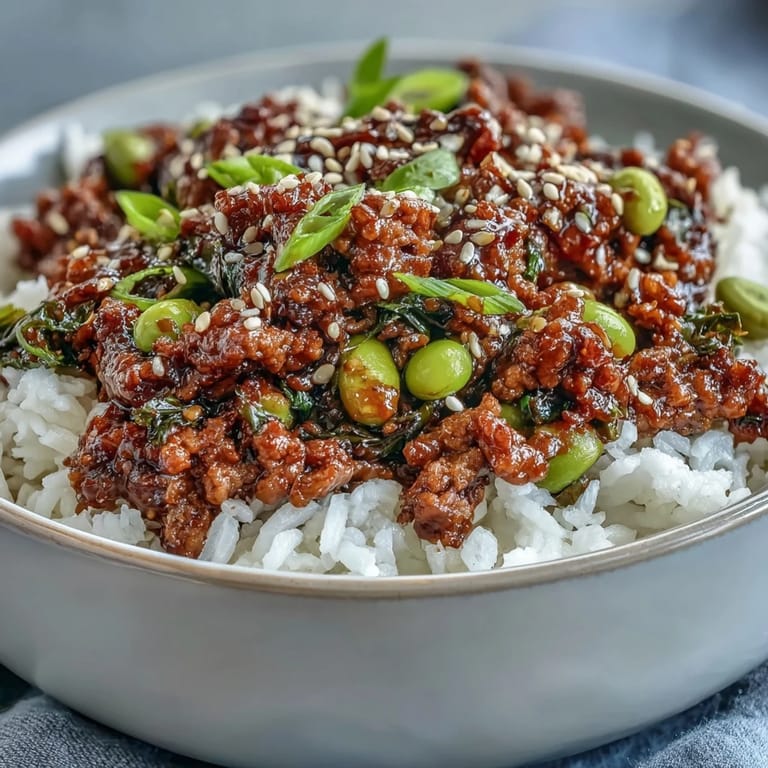
 My coworker Sarah brought a Korean beef bowl to lunch one day, and the aroma alone had everyone turning in their chairs. She let me taste a bite, and I was immediately struck by how the gochujang's heat played against the sweetness of the brown sugar, with each vegetable adding its own bright note. That evening, I raided my pantry and attempted my own version, discovering that this dish comes together faster than the time it takes to steam rice. Now it's become my go-to when I want something that feels restaurant-quality but doesn't demand hours of prep or a grocery list longer than my arm.
I made this for a small dinner party last spring, and my friend Mike, who's usually skeptical about anything spicy, came back for seconds without hesitation. Watching everyone layer their own toppings and customize the heat level reminded me that the best meals are the ones where people feel involved in their own experience. The bowl became less about following my instructions and more about everyone discovering what they loved most.
Ingredients
- Ground beef: Lean cuts keep things from becoming greasy, and the browning process is where the beef's natural umami really shines.
- Gochujang: This fermented chili paste is the backbone of everything, delivering heat, sweetness, and a complexity that feels almost savory in the best way.
- Soy sauce: Don't skip the good stuff here, as it brings a salty depth that pulls all the flavors together.
- Brown sugar: Just a tablespoon balances the heat and saltiness, creating harmony instead of chaos on your palate.
- Garlic and ginger: Mince them fine and let them toast in the sesame oil first, this step fills your kitchen with an aroma that announces dinner before anyone sits down.
- Toasted sesame oil: Use this sparingly, it's potent and aromatic, transforming the dish with its nutty undertones.
- Green onions: Split your portion, cooking half into the beef and scattering the rest fresh on top for brightness and texture.
- Short-grain rice: The slight stickiness catches the sauce, making every bite more cohesive.
- Edamame: These add protein and a tender pop, plus they're usually already cooked if you buy frozen.
- Cucumber and carrot: Keep them raw and crisp, they're your palate cleansers between spicy bites.
- Kimchi: Its funkiness and crunch elevate everything else, but taste yours first as some brands are saltier than others.
- Sesame seeds: Toast them yourself if you can, the difference is worth two minutes of attention.
Tired of Takeout? 🥡
Get 10 meals you can make faster than delivery arrives. Seriously.
One email. No spam. Unsubscribe anytime.
Instructions
- Toast your aromatics:
- Warm a large skillet over medium heat and add sesame oil, then let the minced garlic and ginger sit there for about a minute, swirling occasionally, until the kitchen smells incredible and the raw edge softens.
- Brown the beef:
- Crumble the ground beef into the skillet and use your spatula to break it into small, even pieces as it cooks, about five to six minutes until no pink remains and the edges catch a little color.
- Build the sauce:
- Stir in the gochujang, soy sauce, and brown sugar, letting everything meld together for a few minutes until the sauce thickens slightly and clings to each piece of beef like a glossy coat.
- Finish with freshness:
- Remove from heat and fold in half of your green onions, reserving the rest for garnish.
- Assemble your bowls:
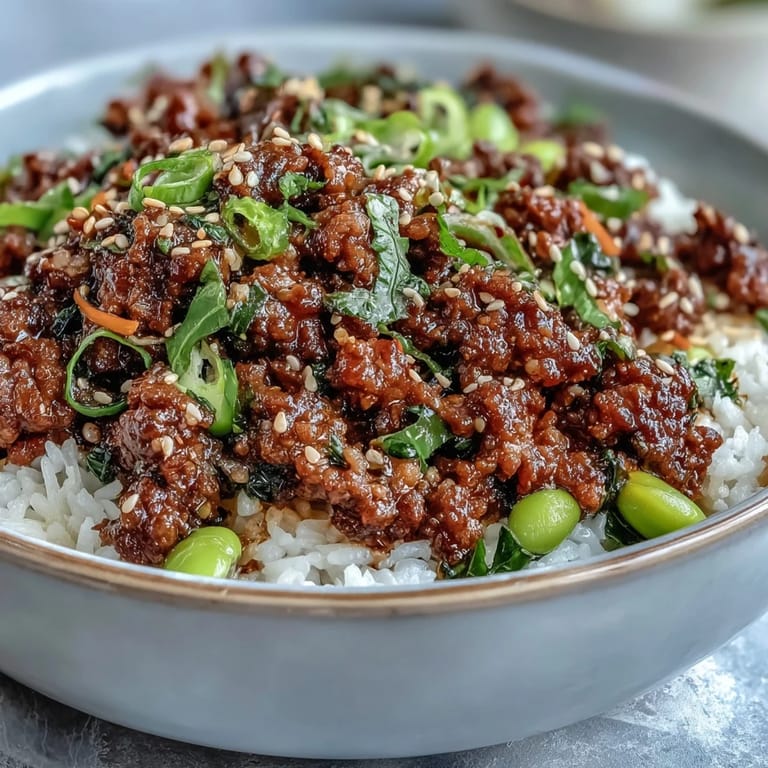
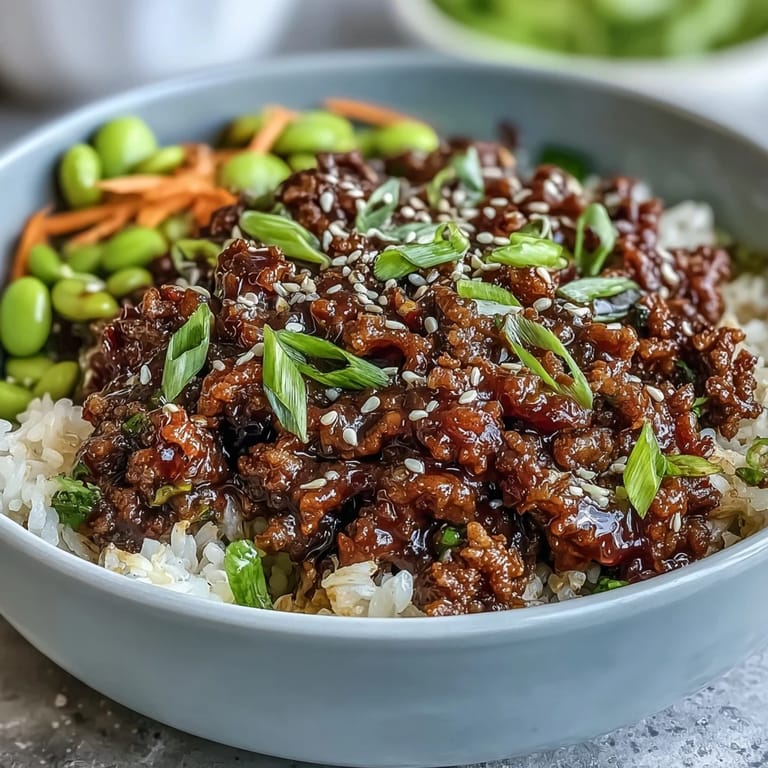
- Divide the warm rice among four bowls, then crown each portion with the seasoned beef, followed by neat piles of edamame, cucumber, carrot, and kimchi arranged in sections so every spoonful contains contrast.
- Final flourish:
- Scatter the remaining green onions and sesame seeds over the top and serve right away while the rice is still warm.
 Save to Pinterest
 My neighbor stopped by one evening while I was making this, and the smell pulled her into the kitchen before I could even offer an invitation. She sat at my counter and we talked about her new job while we ate, and somehow the bowl became the backdrop to a real conversation instead of just dinner. That's when I realized this dish has a quiet generosity to it.
Why This Bowl Works
The genius of Korean rice bowls is their balance without feeling complicated. You're working with a warm, neutral base that accepts flavor without resistance, then building up contrasts in temperature, texture, and heat level as you layer on toppings. The gochujang-seasoned beef is rich and sauce-forward, which is why the raw vegetables matter so much, they cut through and refresh your palate between bites instead of letting everything blend into sameness.
Building Better Flavor
Don't be timid with the sesame oil when you're toasting the garlic and ginger, that initial bloom sets the tone for everything that follows. If you rush through this step or use too low heat, you'll end up with raw-tasting aromatics instead of sweet, mellow ones. The three minutes you spend here are an investment in depth and warmth.
Making It Your Own
The beautiful thing about this formula is how flexible it is without becoming unrecognizable. Ground turkey or chicken work beautifully if you want something lighter, plant-based crumbles satisfy vegetarians while keeping the dish's character intact, and adding a fried egg on top brings richness that makes this feel more like comfort food than a weeknight dinner.
- Swap beef for ground turkey, chicken, or plant-based crumbles if you prefer something lighter.
- Add sliced radish, shredded cabbage, or blanched broccoli for extra crunch and nutrition.
- Top with a fried egg for richness, or drizzle with extra sesame oil if you love it as much as I do.
 Save to Pinterest
 This bowl has become my answer to the question of what to cook when I want something nourishing but don't have energy for complexity. It's proof that some of the most satisfying meals are built from simplicity and contrast, not elaborate technique.
Recipe FAQs
- → What does gochujang taste like?
Gochujang is a Korean chili paste with a complex flavor profile—savory, slightly sweet, and moderately spicy. It adds rich umami depth and a beautiful red color to the beef mixture.
- → Can I make this dish less spicy?
Yes, simply reduce the amount of gochujang or choose a mild variety. The brown sugar helps balance the heat, so you can also increase slightly for a milder version.
- → What can I substitute for ground beef?
Ground turkey, chicken, or plant-based crumbles work beautifully as lighter alternatives. They absorb the gochujang glaze just as well and cook in the same amount of time.
- → Is this meal prep friendly?
Absolutely. Store the cooked beef and vegetables separately from the rice in airtight containers. Reheat gently and assemble fresh for optimal texture throughout the week.
- → What other toppings work well?
Fried eggs, sliced radish, shredded cabbage, avocado, or quick-pickled vegetables make excellent additions. A drizzle of extra sesame oil or sriracha adds extra flavor if desired.