 Save to Pinterest
 The first time I tasted real hummus was at a small counter in Beirut, where an elderly woman had been making the same recipe for decades. She'd plunge her hand into the processor without hesitation, knowing exactly when the chickpeas had transformed into something almost cloud-like. I watched her drizzle olive oil in a deliberate spiral, add a whisper of paprika, and suddenly understand why this simple dish had traveled across continents. Now when I make it at home, I chase that same silky texture she achieved, and every batch brings back the smell of her kitchen and the sound of people gathering around.
I made this for a potluck where everyone brought store-bought dips in plastic containers, and I almost didn't bother bringing my hummus until my roommate said, "just bring it." By the end of the night, mine was gone and three people asked for the recipe. What stuck with me wasn't the compliments but watching someone taste it, pause, and say, "this is different." That's when I knew I'd gotten it right.
Ingredients
- Cooked chickpeas: Use canned if you're in a hurry, but rinse them thoroughly to remove the starchy liquid that keeps hummus from becoming silky.
- Tahini: This is where everything lives or dies; buy a good brand and stir it well because the oil separates.
- Lemon juice: Freshly squeezed makes a real difference in brightness; bottled tastes flat by comparison.
- Garlic: One small clove is enough; too much drowns out the delicate tahini flavor.
- Cold water: This is your secret weapon for controlling texture without diluting the flavor.
- Cumin: Ground cumin adds warmth without being obvious, which is the whole point of good seasoning.
- Sea salt: Fine salt dissolves evenly and tastes cleaner than iodized.
- Extra virgin olive oil: This is for drizzling on top, so use something you actually like the taste of.
- Paprika or sumac: Either works; sumac adds tartness while paprika brings earthiness.
- Fresh parsley: It's not decoration; it adds a green brightness that finishes the dish.
Tired of Takeout? 🥡
Get 10 meals you can make faster than delivery arrives. Seriously.
One email. No spam. Unsubscribe anytime.
Instructions
- Gather everything cold:
- Add your chickpeas, tahini, lemon juice, minced garlic, cold water, cumin, and salt to the food processor. The cold water matters because it keeps the mixture from heating up as the processor works, which can affect texture.
- Blend until it transforms:
- Start processing and listen for the sound to change from grainy to smooth. Stop and scrape down the sides a few times, making sure nothing hides underneath and escapes being fully blended.
- Add water gradually if needed:
- If it's too thick and stubborn, add cold water one tablespoon at a time and blend again. It should eventually become smooth enough to flow slightly when you tilt the bowl.
- Taste and adjust:
- This is where most people skip a step; actually taste it and decide if it needs more salt, more lemon, or more cumin. Hummus should be bright and slightly salty.
- Transfer and create the well:
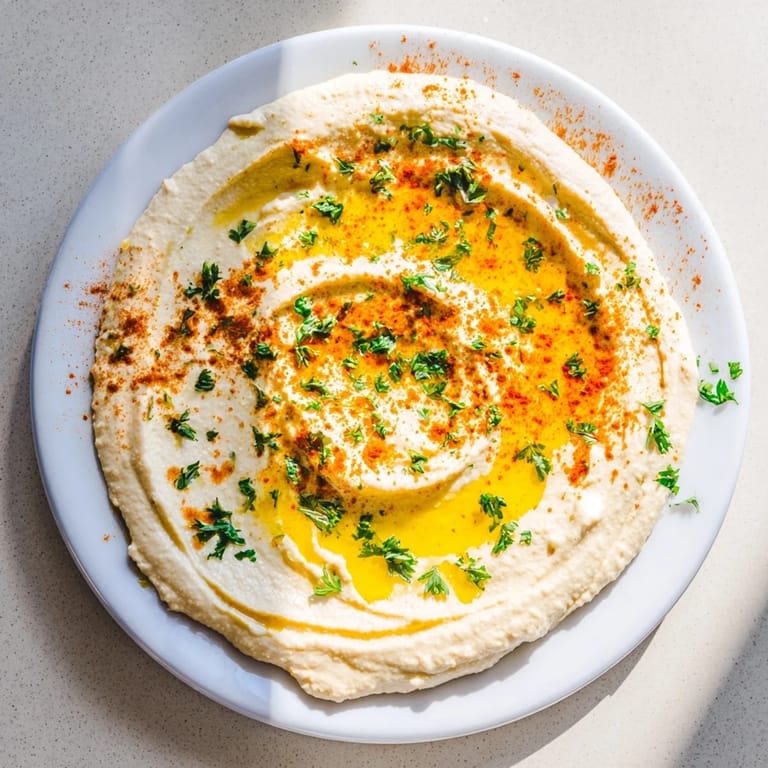
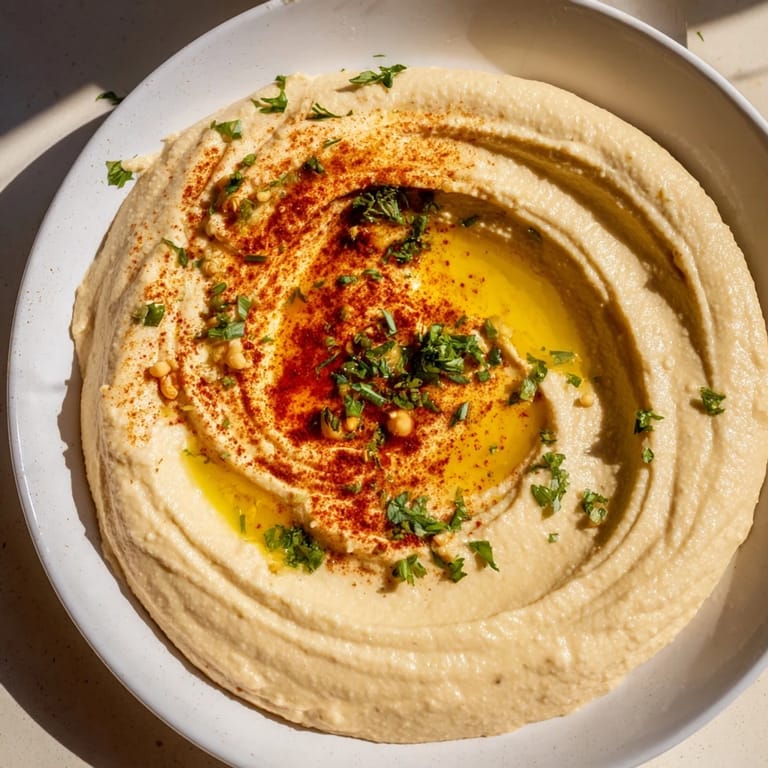
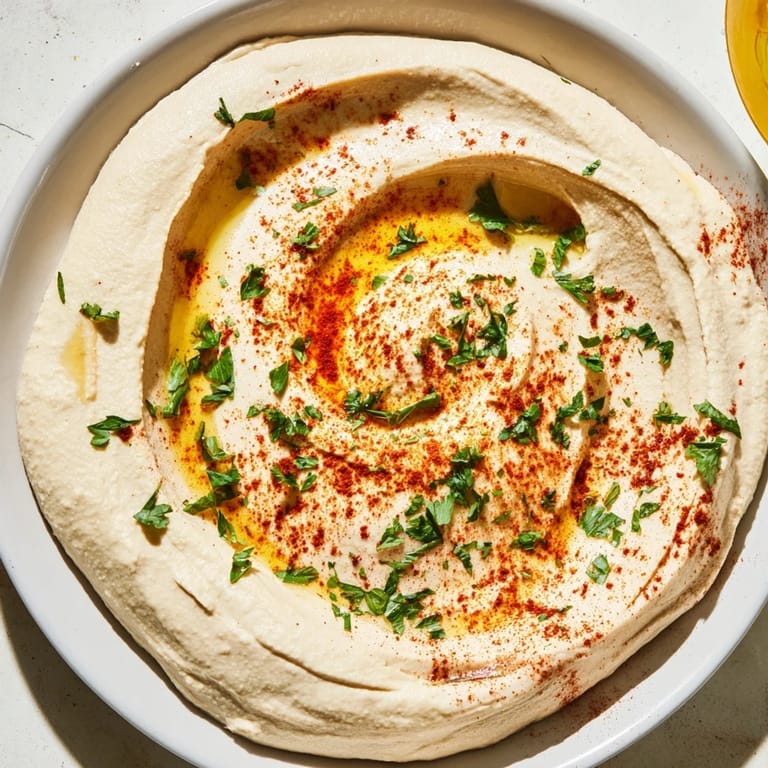
- Spoon the hummus into a shallow dish and use the back of your spoon to create a gentle swirl or small well in the center. This isn't just for looks; it's where the olive oil will pool.
- Finish with care:
- Drizzle olive oil in the well, sprinkle with paprika or sumac, and scatter parsley over the top. Serve right away with warm pita or vegetables.
 Save to Pinterest
 I made this for my grandmother, who used to say hummus was too simple to bother with, and she took one bite and got quiet in that way she did when something surprised her. She asked me where I learned to make it, and I realized I was telling her about the woman in Beirut and the potluck and all the times I'd stood in front of my food processor thinking about texture. Sometimes a dish becomes more than food; it becomes a small way of saying you tried to get something right.
The Secret to Ultra-Smooth Hummus
Most people stop blending too early and end up with hummus that's pleasantly textured but not quite silky. The real magic happens when you let the food processor work past that point where it looks done. The longer the machines runs, the more the chickpea solids break down into something almost creamy, and the tahini integrates so fully that you can't distinguish separate ingredients anymore. I used to worry I was overdoing it, but then I realized the hum of the processor is actually your timer; when the sound quiets and deepens, that's when it's finally ready.
Water Temperature Matters More Than You'd Think
Using cold water instead of room temperature water changes how the tahini behaves in the blender. Cold water slows down the blending process just enough that the tahini emulsifies properly instead of breaking and becoming slick. I learned this by accident when I grabbed ice water one day instead of the pitcher I'd left on the counter, and the result was noticeably creamier. Now I always start with cold water from the fridge, and if I need more, I add it cold too.
Serving and Storage Wisdom
Hummus is most silky and fresh-tasting within the first few hours, but it keeps well for several days in the fridge in an airtight container. When you pull it out to serve again, it will have thickened slightly, which is normal and easily fixed with a splash of water and a stir. I've found that serving it in a wide, shallow dish rather than a deep bowl makes it look more abundant and makes it easier for people to scoop without the serving spoon diving too deep.
- Always stir in a bit of fresh lemon juice and water before serving leftovers to restore brightness and texture.
- Make hummus at least an hour before serving if possible so the flavors have time to marry together.
- Cold hummus is fine, but it tastes even better when you let it sit at room temperature for 10 minutes before serving.
 Save to Pinterest
 This hummus has become my answer to almost any gathering, the thing I make when I want to show up with something good but don't have hours to spend. It's honest food that tastes like care.
Recipe FAQs
- → What gives the hummus its creamy texture?
The creamy texture comes from blending cooked chickpeas with tahini, lemon juice, olive oil, and a bit of cold water until smooth.
- → Can I adjust the thickness of the spread?
Yes, adding cold water one tablespoon at a time during blending helps achieve the desired silky consistency.
- → What spices enhance the flavor?
Ground cumin and sea salt add depth, while paprika or sumac sprinkled on top offers a subtle smoky or tangy finish.
- → Are there any common allergens in this dish?
Yes, tahini contains sesame seeds, which is a common allergen to be aware of.
- → How should I serve this spread?
Serve it drizzled with olive oil and garnished with parsley, accompanied by pita bread, fresh veggies, or as part of a mezze platter.