 Save to Pinterest
 There's something almost meditative about making labneh—watching yogurt transform into creamy silk over the course of a day feels less like cooking and more like a small kitchen ritual. I first tasted it at a crowded mezze table in Beirut, where a bowl sat draped in olive oil with a single leaf of mint floating on top, and I remember thinking how something so simple could taste so complete. Years later, I finally attempted it at home out of pure stubbornness, convinced I'd somehow ruin plain yogurt, only to discover that labneh demands almost nothing from you except patience and a piece of cloth. Now it's become one of those recipes I make when I want to feel like I'm doing something worthwhile while barely lifting a finger.
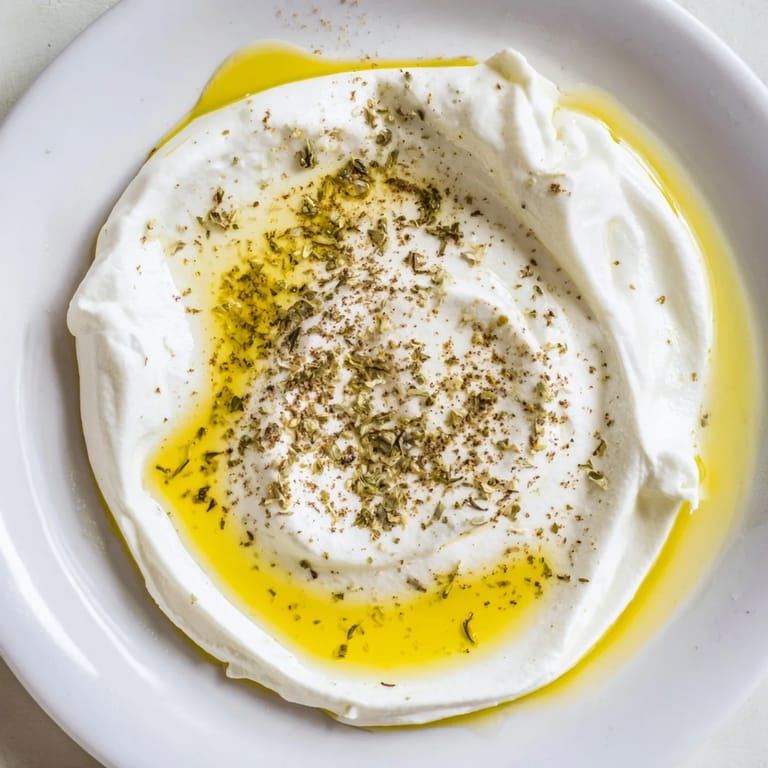
I made this for my neighbor one evening when she stopped by at the exact moment I was arranging labneh on a plate with olive oil pooling around it like liquid gold. She took one bite of it on warm pita and asked if I'd bought it from somewhere, which felt like the highest compliment I could receive. That's when I realized this wasn't just a recipe—it was the kind of thing that made people feel welcomed and cared for without any fuss.
Ingredients
- Full-fat plain yogurt (1 kg or about 4 cups): Use the thickest, tangiest yogurt you can find—Greek yogurt works beautifully, but even regular full-fat yogurt will give you magic if you're patient with the straining. The quality of your yogurt becomes the quality of your labneh, so this is where it matters.
- Fine sea salt (½ tsp): Just enough to season the yogurt without making it aggressive, stirred in at the start so the salt can do its quiet work during straining.
- Extra-virgin olive oil (2 tbsp): This is your finish, your flourish—choose one you actually enjoy tasting because you'll taste it directly.
- Dried mint or zaatar (1 tsp, optional): Mint brings brightness; zaatar brings nuttiness and that distinctive Levantine flavor that makes people lean in closer to smell the plate.
- Aleppo pepper or sumac (a pinch, optional): Either one adds color and a whisper of complexity that transforms labneh from good to memorable.
Tired of Takeout? 🥡
Get 10 meals you can make faster than delivery arrives. Seriously.
One email. No spam. Unsubscribe anytime.
Instructions
- Salt the yogurt:
- Stir the salt into your yogurt until it's completely dissolved and evenly distributed. This takes about a minute and sets the stage for everything that follows.
- Set up your strainer:
- Line a sieve or colander with two layers of cheesecloth or a clean, thin kitchen towel, making sure there's enough fabric hanging over the edges to gather later. Place it over a deep bowl—this is where all that liquid gold (whey) will collect.
- Transfer and wrap:
- Pour the salted yogurt into the cloth-lined sieve and gently gather the fabric edges up and over the top to loosely cover it, like you're tucking it in for a nap. Don't tie it tight; just loosely cover it so nothing falls in.
- The waiting game:
- Slide everything into the refrigerator and let time do the work. For soft, spreadable labneh that you can spoon onto a plate, strain for 12 hours; for something firmer that you could almost roll into balls, go the full 24 hours. I usually check it after 12 hours, peek at the consistency, and decide in that moment.
- Transfer to a serving dish:
- When it's reached the texture you want, carefully transfer the labneh to a bowl or plate, scraping any that clings to the cloth. You'll have more than you expect because straining concentrates everything.
- Dress it up:
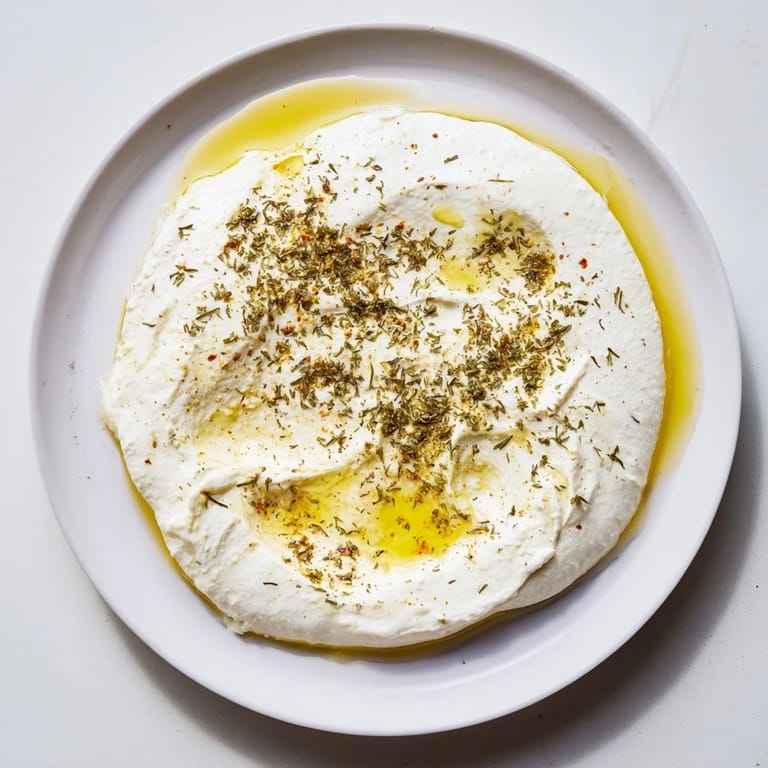
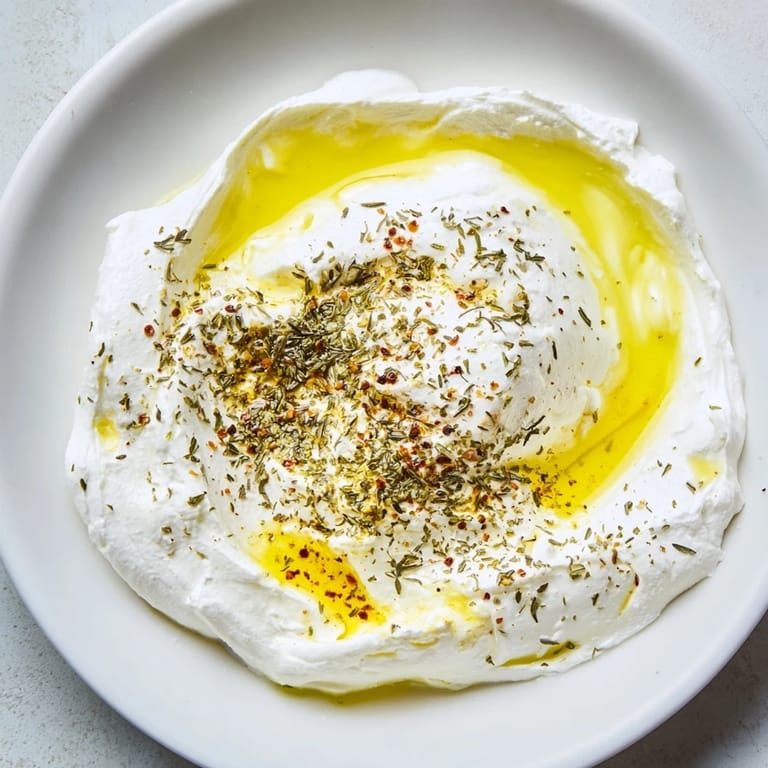
- Drizzle generously with olive oil—don't be shy, this is where the flavor lives—and scatter dried mint, zaatar, or that pinch of Aleppo pepper across the top. Serve it cold with warm pita, fresh vegetables, or however you want to eat something this good.
 Save to Pinterest
 My mother-in-law once told me that the best part of labneh isn't the cheese itself but the way it brings people together around a single, simple plate. I understood exactly what she meant the first time someone tore off a piece of warm pita, dipped it into that pool of olive oil, and closed their eyes while eating.
The Magic of Patience
Making labneh taught me something I didn't expect: that some of the best things in cooking happen when you're not actively doing anything. There's no watching a pot, no precise timing, no worry that you've made a mistake. You simply set things up, step away, and come back to something transformed. It's the kind of cooking that feels good for your mind because it removes the pressure.
Serving and Storage Ideas
Labneh is endlessly flexible—I've served it warm because I forgot to chill it and it was honestly just as good, creamy and soft. I've dolloped it onto roasted vegetables, stirred it into soup for richness, and even used it as a base for a salad dressing by thinning it with a little lemon juice. The olive oil on top can be infused with any herbs from your garden or spices from your cabinet, so each batch can feel completely different depending on your mood.
Making It Your Own
Once you understand how simple this is, you'll start experimenting—adding pomegranate molasses, swirling in harissa, or pressing it into balls to store in jars layered with herbs and oil. Each version tells a story about where you found inspiration or what you had on hand that day. That's when a recipe stops being instructions and becomes permission to make something familiar in a way that feels entirely your own.
- Strain for exactly 12 hours if you want something you can spoon onto a plate without it spreading everywhere.
- If you're making labneh balls, strain until it's almost cream cheese firm, then chill for a few hours before rolling so your hands don't warm it too much.
- Save that whey and use it in bread dough, soups, or anywhere you'd use buttermilk.
 Save to Pinterest
 Labneh is proof that the most satisfying recipes are often the ones that ask the least of you while giving back the most. Once you've made it once, it becomes something you'll return to again and again.
Recipe FAQs
- → What type of yogurt is best for labneh?
Full-fat plain yogurt, preferably Greek or already strained, yields the creamiest texture for labneh.
- → How long should labneh be strained?
Strain for 12 hours for a soft spreadable consistency, or up to 24 hours for a thicker, firmer result.
- → Can I add flavors to labneh?
Yes, garnishing with olive oil and herbs like dried mint, zaatar, or sumac enhances its tangy profile.
- → How do I store labneh properly?
Keep refrigerated up to 5 days, optionally shaped into balls and preserved in olive oil for added richness.
- → Are there dairy-free alternatives for labneh?
Plant-based thick yogurts can be used as a substitute for vegan-friendly labneh variations.