 Save to Pinterest
 The first time I made clam chowder properly, I was standing in a fish market on the Rhode Island coast with my grandmother, who pointed at a pile of littleneck clams and said, "These are the only ones worth your time." I'd tried bottled chowder before—the kind that tasted like it had been sitting in a freezer since 1987—but that afternoon, watching her select clams with the certainty of someone who'd cooked this soup a hundred times, I understood the difference between mediocre and memorable. She taught me that day that clam chowder isn't really about cream at all; it's about respecting the clams enough to let them shine through.
Years later, I made this chowder on the first cold Sunday of November, and my neighbor came over because the smell drifted through the walls—that unmistakable blend of bacon fat, thyme, and the ocean. We sat at my kitchen counter with bowls in our hands, and she asked for the recipe before she'd even finished her first bite. That's when I knew this one was worth keeping.
Ingredients
- 2 lbs fresh littleneck clams, scrubbed: These are your foundation; they're meaty and hold flavor better than smaller varieties, and scrubbing them under cold water removes grit that would ruin the chowder.
- 1 cup clam juice: This carries the ocean into every spoonful, so don't skip it even if you have plenty of cooking liquid.
- 2 medium russet potatoes, peeled and diced: Russets break down slightly and thicken the soup naturally while staying tender.
- 1 medium yellow onion, finely chopped: The sweetness rounds out the brininess of the clams.
- 2 celery stalks, finely chopped: This builds the flavor base; don't rush chopping it small.
- 1 small carrot, finely chopped: A hint of sweetness and color that makes the soup feel complete.
- 2 cloves garlic, minced: Just enough to add depth without overwhelming the delicate clam flavor.
- 1½ cups heavy cream and 1 cup whole milk: This ratio creates richness without heaviness; the milk keeps it balanced.
- 2 tbsp unsalted butter: The base for your vegetable sauté and essential for flavor.
- 2 tbsp all-purpose flour: This roux thickens the chowder to the right consistency.
- 2 slices bacon, diced: Render it slowly so the fat flavors the whole pot.
- 1 bay leaf and ½ tsp dried thyme: These herbs whisper in the background without taking over.
Tired of Takeout? 🥡
Get 10 meals you can make faster than delivery arrives. Seriously.
One email. No spam. Unsubscribe anytime.
Instructions
- Steam the clams open:
- Rinse them under cold water, scrubbing away any sand or mud, then place them in a large pot with 2 cups of water. Bring to a boil, cover tightly, and let the steam do the work for 5 to 7 minutes—you'll hear them opening with little clicks. Discard any that stubbornly refuse to open; they're not worth the risk.
- Extract and prep the clam meat:
- Once cool enough to handle, shuck the clams and chop the meat into bite-sized pieces, removing any shell fragments. Reserve every drop of that cooking liquid; it's liquid gold.
- Crisp the bacon:
- In your Dutch oven, render the diced bacon over medium heat until the edges curl and it's golden brown, which takes about 5 minutes. This fat becomes your flavor base, so don't rush it.
- Build the vegetable foundation:
- Remove the bacon, leaving the fat behind, then melt in butter and add your onion, celery, carrot, and garlic. Let them soften and become fragrant, about 5 minutes—this is where the soup's backbone forms.
- Make the roux:
- Sprinkle flour over the softened vegetables and stir constantly for a minute to cook out the raw flour taste. You'll feel the mixture thicken beneath your spoon.
- Add the liquids:
- Slowly pour in your reserved clam cooking liquid and bottled clam juice, stirring as you go to prevent lumps. Scrape the bottom of the pot to pick up all those flavorful browned bits.
- Simmer the potatoes:
- Add the diced potatoes, bay leaf, and thyme, then bring to a gentle simmer. Let them cook for 10 to 12 minutes until they're just tender enough to break apart with a spoon but not so soft they disappear.
- Finish gently with clams and dairy:
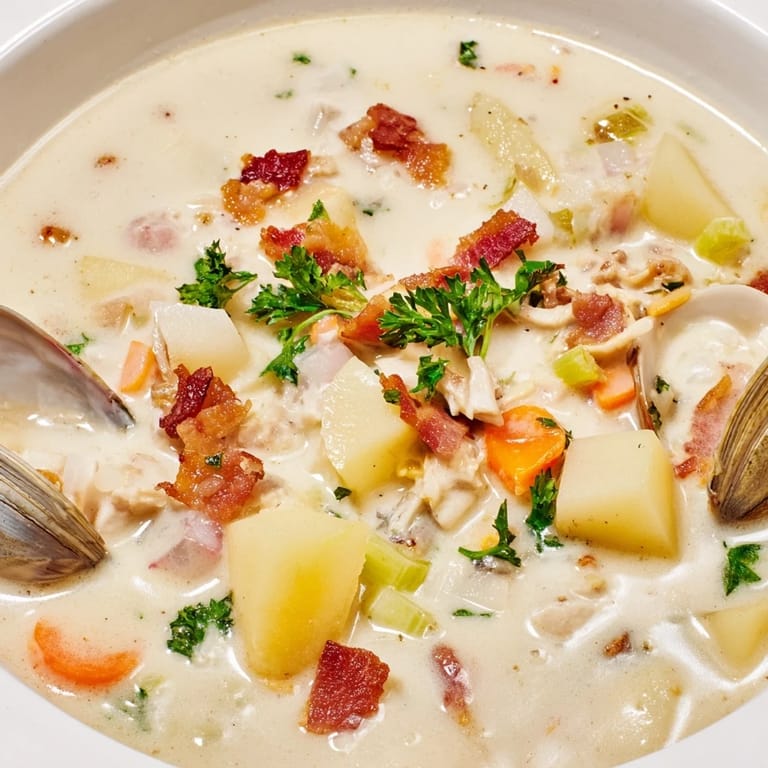
- Lower the heat, then stir in your chopped clams, the crispy bacon, cream, and milk. Simmer gently for 5 to 10 minutes, stirring now and then; if it boils hard, the cream can break and the soup loses its silky texture.
- Taste and adjust:
- Season with salt and pepper, remembering that the clams and bacon bring salt too, so go easy. Remove the bay leaf and taste again.
- Serve with warmth:
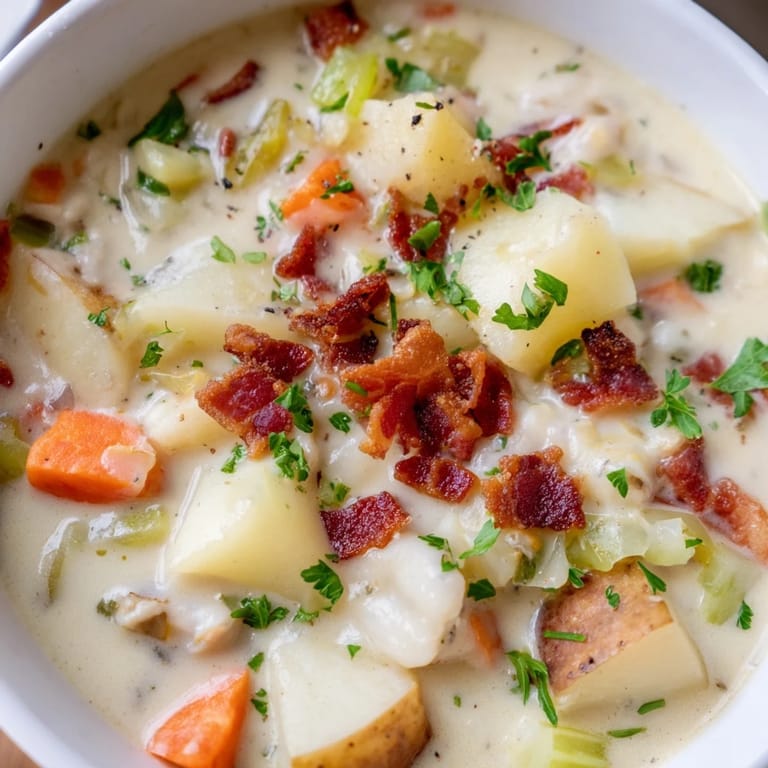
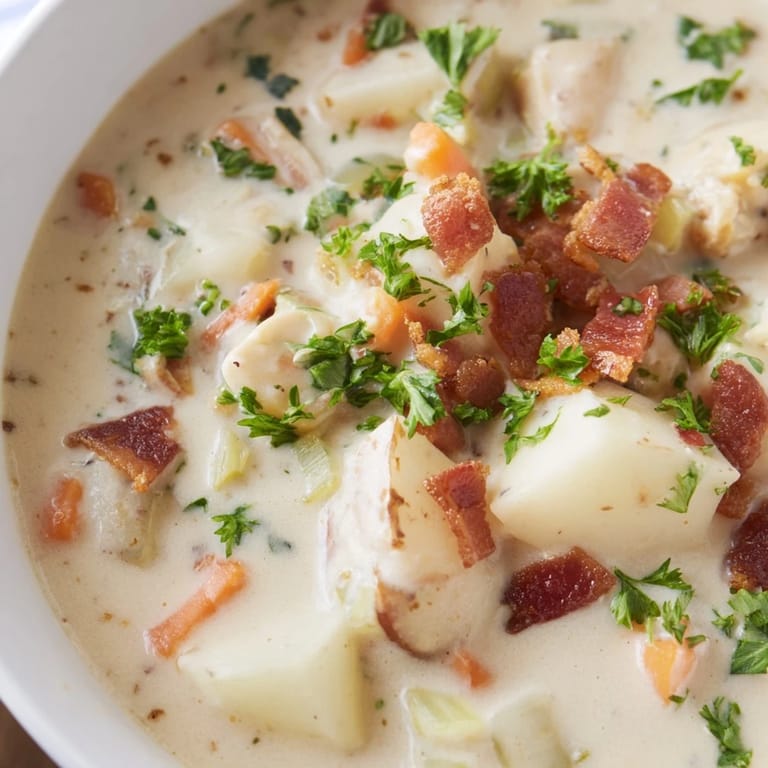
- Ladle into bowls, top with fresh parsley for brightness, and set oyster crackers alongside. Each spoonful should taste like the coast in the best way possible.
 Save to Pinterest
 There's a moment in clam chowder that happens right when you add the cream and milk, when the whole pot transforms from a humble vegetable soup into something luxurious and rounded. That's the moment I knew why my grandmother insisted on making it from scratch.
Choosing Your Clams
Littlenecks are the sweet spot between size and tenderness; they're bigger than cherrystones but not as tough as quahogs. If your fish counter has a choice, ask the fishmonger which ones came in that day—fresh clams have a clean, briny smell, not a fishy one. Keep them in a cool place until you're ready to cook, and don't store them in plastic bags where they'll suffocate; a bowl covered loosely with a damp towel works perfectly.
Making It Your Own
This chowder is forgiving in its own way. If you want it thicker, mash a few of the cooked potatoes right in the pot before adding the cream—the starch thickens everything without changing the flavor. For a lighter version, swap half of the heavy cream for half-and-half; the soup won't be quite as luxurious, but it's still excellent. A tiny dash of hot sauce or a pinch of smoked paprika at the end adds a layer of complexity that catches people by surprise.
Serving and Pairing
Clam chowder is best served in warmed bowls—it cools quickly, and a hot bowl keeps each spoonful tasting as it should. Oyster crackers are the traditional companion, but crusty bread works too. For wine, a crisp white like Sauvignon Blanc or Pinot Grigio cuts through the richness beautifully.
- Make it ahead: This chowder actually tastes better the next day once the flavors have had time to settle and meld.
- Freeze it well: The chowder freezes for up to three months; thaw slowly in the refrigerator and reheat gently on the stovetop, never in the microwave.
- Keep potatoes in mind: If you're planning to freeze, slightly undercook the potatoes since they soften more after thawing.
 Save to Pinterest
 When you're standing in your kitchen and that smell hits you, you'll understand why people crave this soup through the long winter months. It's not fancy, but it's honest, and that's what makes it unforgettable.
Recipe FAQs
- → What type of clams are best for this chowder?
Fresh littleneck clams are ideal for their tender texture and sweet flavor, complementing the creamy broth perfectly.
- → Can I make the chowder thicker?
Yes, mashing a few of the cooked potatoes into the broth before adding cream helps thicken the chowder naturally.
- → Is it possible to use canned clam juice?
Canned clam juice can be used to enhance the broth's seafood flavor when fresh clam cooking liquid is limited.
- → How should the chowder be seasoned?
Season the chowder with salt, freshly ground black pepper, thyme, and garnish with fresh parsley for a balanced, aromatic flavor.
- → Are there suggested pairings for serving this chowder?
This chowder pairs well with oyster crackers and a crisp white wine like Sauvignon Blanc for a delightful dining experience.