 Save to Pinterest
 The first time I made kefta, my kitchen filled with a scent that transported me somewhere I'd never been—warm spices, caramelized onions, and something indefinably welcoming. I'd watched a friend's mother shape the meatballs with practiced ease, her hands moving like she'd done it a thousand times, and I realized right then that this dish was more than a recipe; it was a way of slowing down. Now, every time I make it, that same magic happens, and my house smells like a memory I'm happy to keep recreating.
I remember serving this to my roommate after a rough week, watching her face light up as she took that first bite of a spiced meatball swimming in warm sauce and fragrant vegetables. She asked for seconds immediately, then thirds, and we sat in comfortable silence just eating and occasionally trading bites. That's when I knew this recipe had staying power.
Ingredients
- Ground beef or lamb (500 g): Lamb brings a richer, more authentic flavor, but beef works beautifully too and costs less; mix with your hands to ensure every spice reaches every morsel.
- Onion, finely grated (1 small): Grating rather than mincing releases the onion's natural juices, which keeps the meatballs moist from the inside out.
- Garlic and fresh herbs (2 cloves, 2 tbsp parsley, 2 tbsp cilantro): These three elements are the backbone of brightness; never skip them or use dried cilantro here.
- Spice blend (cumin, coriander, paprika, cinnamon, cayenne): Toast them in your mind as you add them—this is the soul of North African cooking, warming and layered.
- Couscous (250 g): The fluffy canvas; use a 1:1.2 ratio of couscous to boiling liquid for results that fluff perfectly every time.
- Vegetables for the sauce (carrots, zucchini, bell pepper, tomatoes): Each adds its own sweetness and texture; don't rush the sautéing step or you'll lose that caramelized depth.
- Broth (700 ml): A good broth transforms this from a dish into a dining experience; I use homemade when I can.
Tired of Takeout? 🥡
Get 10 meals you can make faster than delivery arrives. Seriously.
One email. No spam. Unsubscribe anytime.
Instructions
- Form the flavor foundation:
- Combine your ground meat with the grated onion, garlic, parsley, and cilantro, then tumble in every spice until the mixture looks uniformly speckled. Shape into walnut-sized balls with gentle hands—overworking makes them dense and heavy, so think of it as cradling rather than kneading.
- Build the aromatic base:
- Heat oil in your pot and let the sliced onion go golden and soft, about 5 minutes, while you listen to it whisper in the heat. Add carrots, pepper, and zucchini, stirring now and then, until they soften just enough to perfume the oil.
- Awaken the spices:
- After the tomatoes and garlic have mingled for a couple minutes, add your cumin, coriander, turmeric, cinnamon, paprika, and cayenne—you'll smell the shift immediately as the spices bloom into fragrance. Stir everything together so the vegetables glisten with spiced oil.
- Bring it to a gentle simmer:
- Pour in your broth, taste, and season with salt and pepper as if you're seasoning a soup you plan to sip. Let it bubble gently while you arrange your meatballs on top, nestling them in like they belong there.
- Let the meatballs cook through gently:
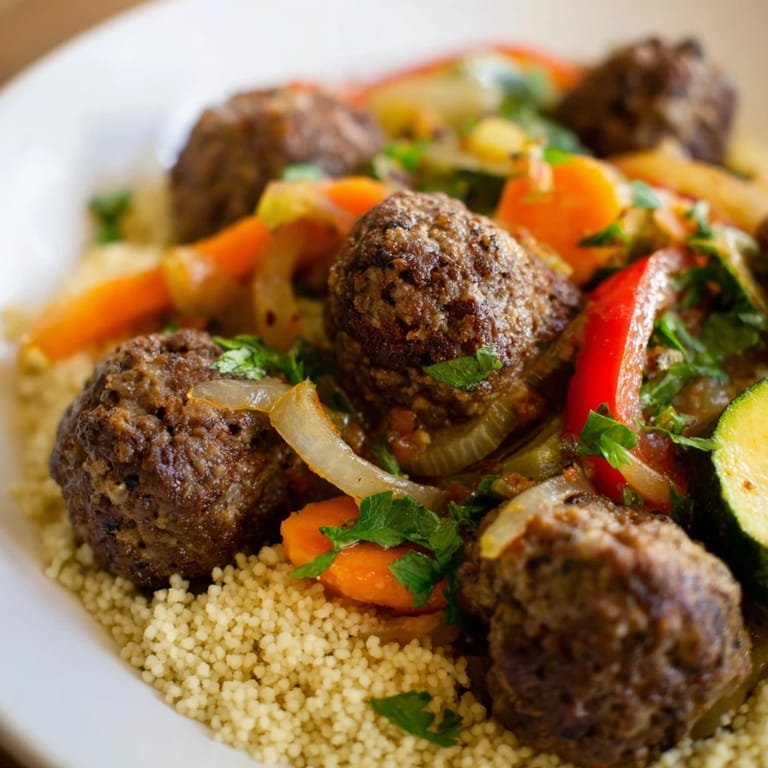
- Cover and simmer for 25 minutes, giving everything a gentle stir about halfway through so nothing sticks and everything cooks evenly. The meatballs are done when they feel firm to a gentle nudge and the vegetables are tender enough to cut with the edge of your spoon.
- Fluff the couscous into clouds:
- While everything simmers, place your couscous in a bowl with salt and oil, then pour boiling water over it and cover tightly—the steam does the real work here. After 5 minutes, fluff it gently with a fork until it resembles fluffy clouds rather than a solid mass.
- Bring it all together on a platter:
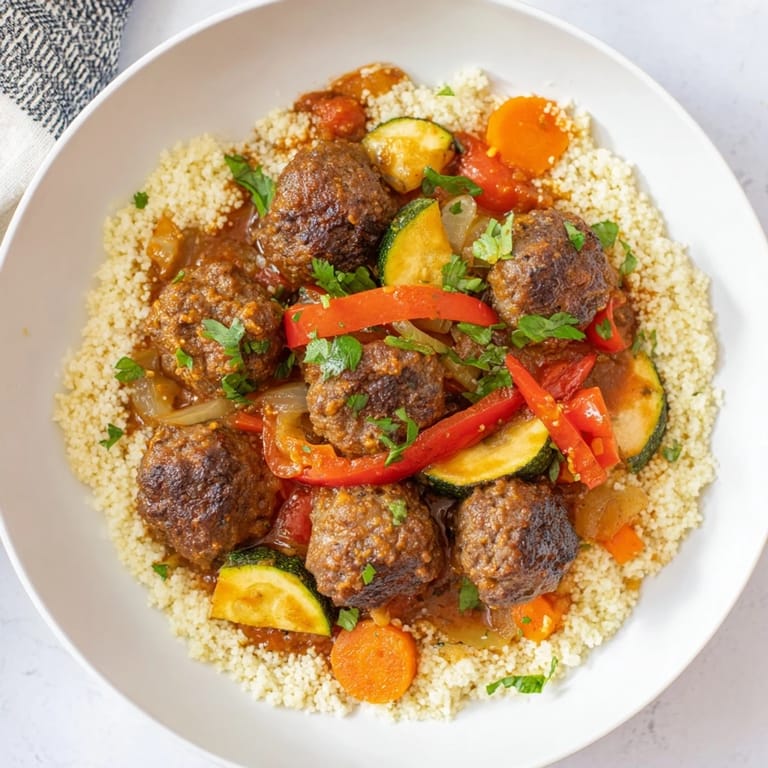
- Mount the couscous in the center or divide it among your plates, then spoon the kefta, vegetables, and sauce generously over the top. Scatter cilantro or parsley on top for that final touch of green freshness.
 Save to Pinterest
 There's a moment near the end of cooking when you lift the pot lid and the steam hits your face, carrying all those spices with it, and you know something special is about to happen. That's when I know I've done it right.
The Spice Story
North African spicing isn't about heat; it's about warmth and depth. The cinnamon might seem odd in a savory dish, but it whispers rather than shouts, adding a rounded sweetness that lifts everything else. I learned this by tasting the sauce before the meatballs went in, noticing how the spices were building a complexity I couldn't quite name until a friend pointed out the cinnamon and suddenly everything made sense. That's the magic of this cuisine—nothing is accidental, and every spice serves a purpose.
Timing and Temperature
The pace of this dish matters more than speed. If you rush the onions and vegetables, they'll release their moisture too quickly and steam instead of sauté, and you'll miss that golden caramelization that gives the sauce its backbone. I found this out by trying to speed things up one evening when I was hungry; the result was technically cooked but tasted rushed. Now I use the sautéing time as an excuse to pour a drink, set the table, and actually be present in the cooking rather than treating it as something to rush through.
Variations and Personal Touches
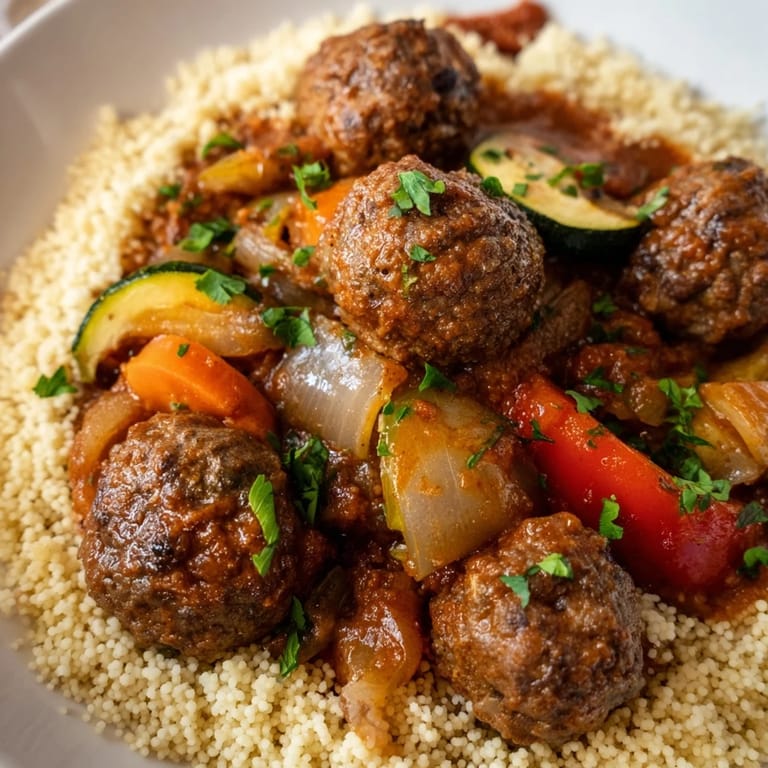
This recipe is forgiving and loves improvisation. I've made it with ground chicken when I didn't have beef, added a handful of chickpeas for extra heartiness, and once stirred in a pinch of saffron when I was feeling fancy. The bones of this dish—the spice blend, the cooking method, the couscous base—stay the same, but everything else is flexible. My friend who's vegetarian uses a plant-based mince and adds extra chickpeas, and honestly, it's just as satisfying.
- Substitute lamb with beef, chicken, or plant-based mince to match what you have on hand or your dietary preferences.
- Add chickpeas, raisins, or olives during the last 10 minutes of simmering for texture and a touch of sweetness.
- A tiny pinch of saffron stirred into the broth adds luxury if you have it, but the dish doesn't need it to be delicious.
 Save to Pinterest
 This is the kind of meal that reminds you why cooking matters—not because it's complicated or fancy, but because it feeds people and fills a space with comfort. I hope it becomes as much a part of your kitchen as it has mine.
Recipe FAQs
- → What type of meat works best for the kefta?
Ground lamb or beef are classic choices, providing rich, tender meatballs with deep flavor. You can also try plant-based mince for a vegetarian option.
- → How do I achieve fluffy couscous?
Pour boiling salted water and olive oil over couscous, cover tightly, and let it steam for 5 minutes. Fluff gently with a fork before serving to separate the grains.
- → Can I vary the vegetable sauce ingredients?
Yes, carrots, zucchini, bell peppers, and tomatoes create a vibrant base, but feel free to add chickpeas or saffron for texture and depth.
- → What spices are key to this dish's flavor?
Cumin, coriander, paprika, cinnamon, and turmeric combine to provide warm, aromatic notes essential to the North African profile.
- → How long should the meatballs simmer in the sauce?
Simmer the meatballs gently for about 25 minutes to ensure they cook through and absorb the savory vegetable sauce flavors.