 Save to Pinterest
 Years ago, a Moroccan neighbor brought over a pot of harira during an unexpected snowstorm, and I watched her stir it with such certainty that I knew this wasn't just soup—it was something that had been made a hundred times before in a hundred different kitchens. The smell of cinnamon and tomato wrapped around my kitchen like a warm blanket, and I understood why people gather around this dish when the weather turns cold or when they're celebrating. Now whenever I make it, I'm trying to capture that same feeling of comfort and belonging in a single bowl.
I made this for a small dinner party during a particularly dreary February, and someone asked for the recipe before they'd even finished their first bowl. That's when I realized harira isn't just about the ingredients—it's about the moment when people slow down and actually taste what's in front of them.
Ingredients
- Dried chickpeas (1 cup soaked overnight) or canned (2 cups): These give the soup its heartiness and substance—soaking overnight shortens cooking time, but canned will save you hours if you're pressed.
- Dried lentils (1/2 cup): They break down slightly as they cook, thickening the broth naturally without any cream or starch.
- Olive oil (2 tbsp): Use good oil here because it flavors the base—cheap oil tastes thin in something this simple.
- Onion, celery, and carrots: This is where your flavor foundation lives, and taking time to chop them evenly means they soften at the same pace.
- Garlic (3 cloves minced): Add it after the vegetables have softened or it can turn bitter and taste acrid instead of sweet.
- Canned tomatoes (one 400 g can) and tomato paste (2 tbsp): The paste concentrates flavor in a way fresh tomatoes alone never can—don't skip it.
- Ground cumin, cinnamon, ginger, turmeric, and paprika: These spices are the soul of harira, and if you can find them in a Middle Eastern market, they'll be fresher and more potent than supermarket versions.
- Cayenne pepper (1/4 tsp optional): Add this only if heat excites you; the soup is complex and satisfying without it.
- Vegetable broth (6 cups): Quality matters here—a thin, salty broth will muddy the spices, but a good one amplifies them.
- Dried apricots (1/2 cup chopped): They dissolve slightly into the broth and add a subtle sweetness that balances the spices and tomatoes.
- Fresh cilantro and parsley (1/4 cup each): These go in at the end so they stay bright and don't get lost in the long cooking time.
- Lemon juice: It wakes everything up at the last moment—squeeze it fresh, never bottled.
Tired of Takeout? 🥡
Get 10 meals you can make faster than delivery arrives. Seriously.
One email. No spam. Unsubscribe anytime.
Instructions
- Build your base with heat:
- Heat the olive oil in a large pot over medium heat, then add the chopped onion, celery, and carrots. You'll want to hear them sizzle gently for 6 to 8 minutes—they should turn soft and slightly golden at the edges, not brown.
- Bloom the spices:
- Once the vegetables have released their sweetness, add the minced garlic and all the dry spices at once. Let them cook for just one minute so they wake up and become fragrant—you should smell the cinnamon and cumin rise up from the pot.
- Deepen the flavor:
- Stir in the tomato paste and let it cook for another minute in the oil, coating the vegetables. This step transforms the paste from harsh to rich and complex.
- Bring it together:
- Add the canned tomatoes, chickpeas, lentils, and chopped apricots, stirring everything to combine. The apricots will look small and lost now, but they'll soften and meld into the broth as it cooks.
- Simmer gently:
- Pour in the vegetable broth and bring the pot to a boil, then immediately reduce the heat and let it simmer uncovered for 45 to 50 minutes. Stir occasionally so nothing sticks to the bottom, and you'll know it's ready when the chickpeas are completely tender and yield easily to a spoon.
- Finish with brightness:
- Stir in the fresh cilantro, parsley, and lemon juice at the very end. Taste it and adjust the salt and pepper—the lemon should shine without overpowering, just lifting everything up.
- Make it heartier if you wish:
- If you want a thicker, more substantial soup, cook some vermicelli or rice separately and stir it in just before serving, or let guests add it to their own bowls.
 Save to Pinterest
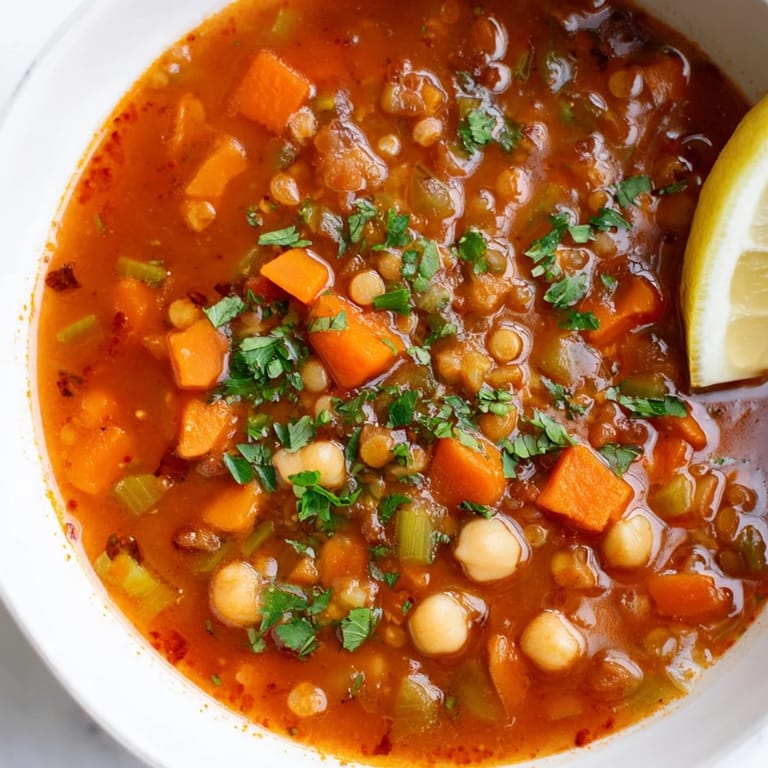
 There's a moment when everything in the pot has softened and the broth has turned deep red and richly spiced, and you taste it and realize you've actually made something nourishing. That's the moment when harira stops being just a recipe and becomes proof that simple things, cooked with attention, are enough.
The Story Behind Harira
Harira belongs to North Africa the way tomato soup belongs to a rainy day—it shows up at family tables during Ramadan, at neighborhood gatherings when the weather turns cool, and at celebrations where people need something warm to hold onto. The blend of sweet and savory, the use of both legumes and spices, the simplicity of the ingredient list—all of it speaks to a tradition where food stretches as far as generosity will take it. When you make harira, you're not just cooking soup; you're joining a conversation that's been happening across generations and across borders.
Variations and What Works
The beauty of harira is how it adapts to what you have on hand. Some cooks add a pinch of saffron if they have it, which transforms the broth into something almost floral and expensive-tasting. Others stir in a small spoonful of harissa paste for smoke and heat, or swap the dried apricots for dried figs or dates. I've made it without the tomato paste in a pinch and added an extra can of tomatoes instead—it was thinner but still tasted true. The core of the dish is so strong that variations feel like natural translations rather than mistakes.
Serving and Storage
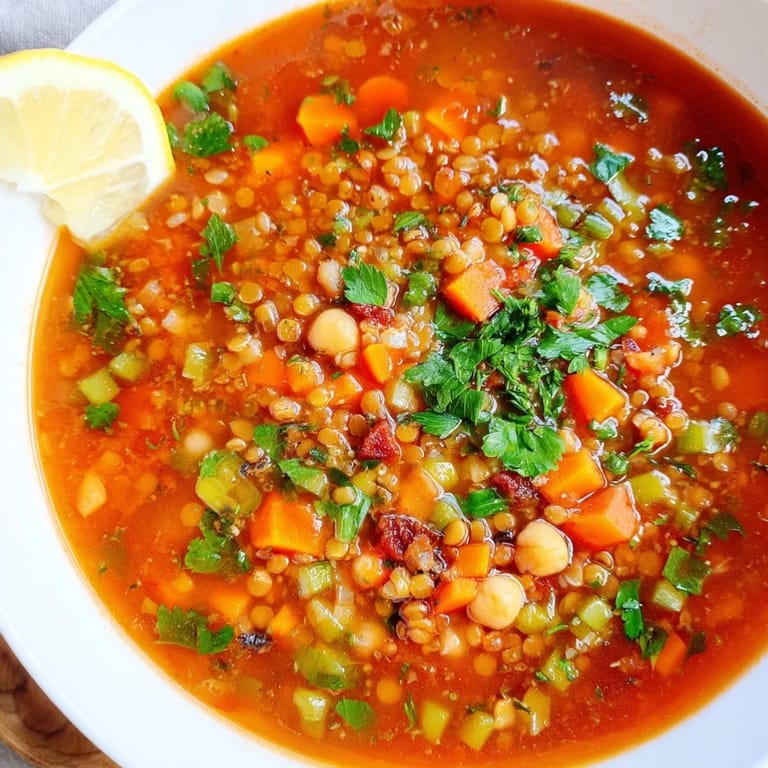
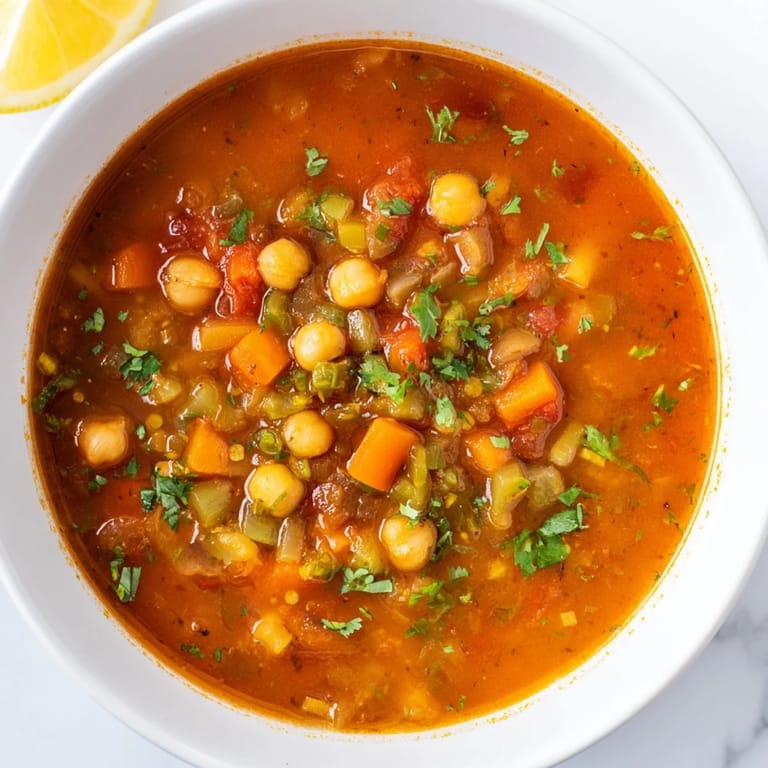
Harira tastes best served piping hot in a bowl with lemon wedges on the side and a small handful of fresh cilantro scattered on top. Some people like to serve it with bread for dipping, and others add the cooked vermicelli or rice directly into their bowl. It keeps beautifully in the refrigerator for up to four days, and the flavors actually deepen and marry together as it sits, making leftovers genuinely better than the first serving.
- You can freeze harira for up to three months if you skip the vermicelli or rice and add those when you reheat and serve.
- To reheat, warm it slowly over medium heat with a splash of extra broth if it's thickened too much, stirring occasionally.
- Always taste and adjust the lemon and salt again after reheating—flavors shift slightly as food sits.
 Save to Pinterest
 Make harira when you want to feel like you've taken care of yourself and anyone else lucky enough to be at your table. It's the kind of soup that asks for nothing fancy but delivers something generous.
Recipe FAQs
- → What legumes are used in this dish?
Dried chickpeas and lentils are the primary legumes, adding texture and protein.
- → How are the spices used to enhance flavor?
A combination of cumin, cinnamon, turmeric, ginger, paprika, and optional cayenne pepper creates a warm, complex aroma and taste.
- → Can I prepare the legumes ahead of time?
Yes, soaking dried chickpeas overnight softens them for faster cooking, or canned chickpeas can be used for convenience.
- → What fresh herbs finish the soup?
Chopped cilantro and parsley are stirred in at the end to brighten and freshen the overall flavor.
- → Are there optional additions for a heartier meal?
Cooked vermicelli or rice can be added to give extra substance and make the dish more filling.
- → How can I adjust the flavor for more depth?
Adding a pinch of saffron or a dash of harissa paste intensifies the aroma and heat.