 Save to Pinterest
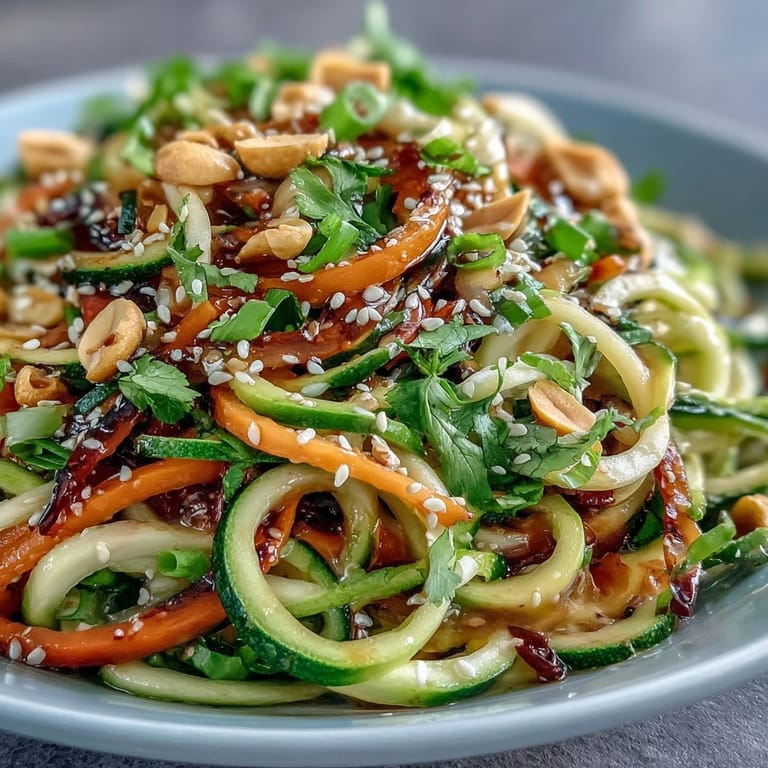
 There's something almost meditative about feeding a zucchini through a spiralizer—watching it transform into delicate green ribbons in seconds. I discovered this salad on a sweltering afternoon when my fridge was overflowing with vegetables and I had zero energy to cook anything hot. The sesame-ginger dressing came together faster than I expected, and suddenly I had this bright, tangy bowl that felt both light and satisfying. It's become my go-to when I want something that tastes vibrant without the kitchen heat.
I made this for a potluck once, nervous nobody would touch it since salad isn't always the star of the show. But watching people come back for thirds while the fancy casseroles sat untouched taught me something—the right dressing can make vegetables feel like an event. My coworker asked for the recipe on the spot, and I realized this wasn't just lunch food, it was something people genuinely craved.
Ingredients
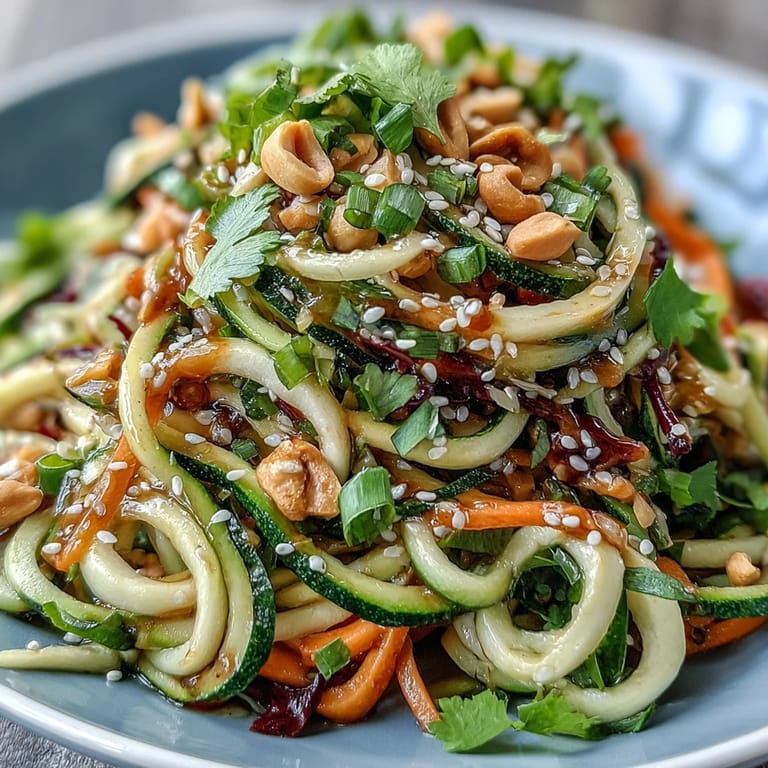
- Zucchini, carrot, cucumber (spiralized): These mild vegetables become the canvas for everything else, and their tender texture is what makes this salad feel almost noodle-like without any actual noodles.
- Red bell pepper and red cabbage: The color and slight sweetness balance out the sharp ginger in the dressing, plus they stay crisp longer than softer vegetables.
- Green onions and fresh cilantro: These aren't optional if you want that fresh, alive quality that makes you keep reaching for more bites.
- Toasted sesame oil: This is non-negotiable—use the good stuff and taste it first because quality varies wildly, and it's the soul of this dressing.
- Rice vinegar: Milder and slightly sweeter than regular vinegar, it plays nice with the ginger without overpowering the delicate vegetables.
- Soy sauce or tamari: The umami backbone that makes everything taste deeper and more intentional.
- Fresh ginger: Freshly grated, not jarred, because the spicy bite mellows as it sits and infuses the whole bowl.
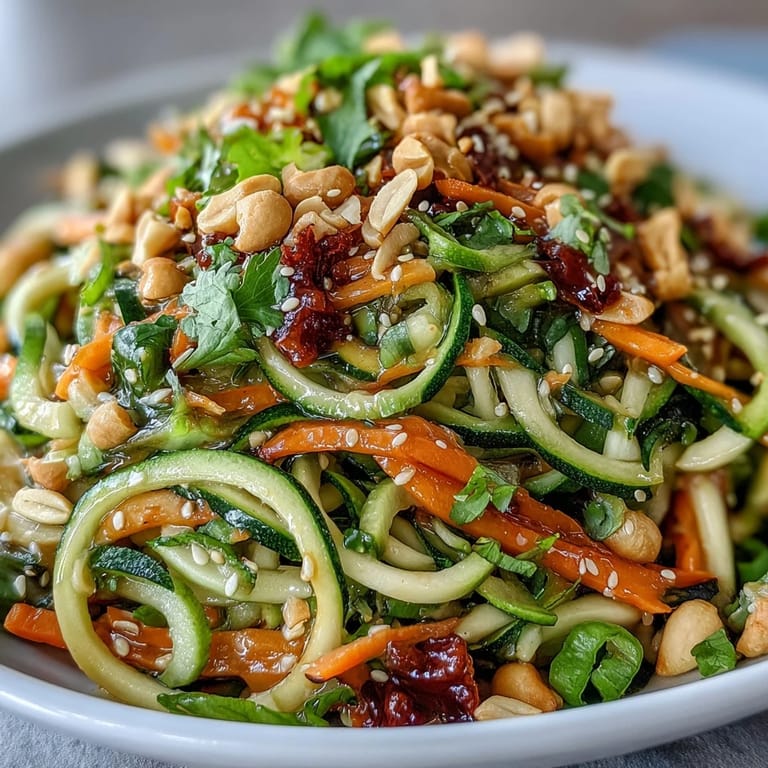
- Sesame seeds and roasted peanuts or cashews: These add crunch and keep the salad from feeling like you're eating clouds, plus they're beautiful scattered on top.
Tired of Takeout? 🥡
Get 10 meals you can make faster than delivery arrives. Seriously.
One email. No spam. Unsubscribe anytime.
Instructions
- Spiralize with intention:
- Take your time getting each vegetable ready, and don't stress if your spirals aren't Instagram-perfect—they're going to taste exactly the same. I usually spiralize over a large bowl to catch any stray pieces and to start assembling as I go.
- Build the dressing:
- Whisk the sesame oil, rice vinegar, soy sauce, ginger, maple syrup, garlic, and lime juice together until it looks like a glossy sauce. Give it a taste and adjust—if it's too sharp, add a touch more sweetness; if it's too mild, add another squeeze of lime.
- Bring it all together:
- Pour that golden dressing over your pile of vegetables and toss gently but thoroughly, making sure every strand gets coated. The vegetables will start releasing a tiny bit of liquid, which mingles with the dressing and creates something even more delicious.
- Let it rest and marry:
- This is important—let the salad sit for 5 to 10 minutes so the flavors actually get to know each other. The acid from the vinegar will soften the vegetables just slightly without making them soggy, and the ginger will mellow into something warm and rounded.
- Finish with theater:
- Transfer to a serving bowl or platter, then scatter your sesame seeds and nuts across the top just before serving. This isn't just for looks—it's the crunch that makes people want to eat it immediately.
 Save to Pinterest
 There was this one night when my friend texted that she was exhausted from work and had nothing in her fridge, and I made this salad and brought it over. Watching her eat it quietly on her couch while scrolling through her phone, occasionally making small happy sounds, reminded me that sometimes people don't need elaborate care—they just need something that tastes like someone was thinking of them.
Why This Salad Became My Summer Anchor
The first time I made a double batch for a family gathering, I realized this was my salad—the one people remember me bringing. It's vegan without announcing itself, gluten-free without tasting like penance, and adaptable enough that I've made versions with daikon radish, yellow squash, even shredded beets when I wanted something more dramatic. The beauty is that you can't mess it up because the dressing is forgiving and the vegetables are nearly impossible to ruin.
Customizing It Without Losing the Soul
I've learned that any spiralizable vegetable works here—the framework is solid enough to handle experimentation. One night I had extra beets and spiralized them in, creating this gorgeous purple-and-green situation that looked like it belonged in a fancy restaurant. The dressing stayed exactly the same because it's that good, and suddenly I had a totally new-feeling dish without actually changing the recipe.
Making It a Complete Meal
On its own, this salad is a perfect side or light lunch, but there are moments when you want something more substantial. I've topped it with baked tofu that I tossed in the same dressing for extra flavor, added a handful of edamame for protein, and even grilled some fish to rest on top when I felt like building something more ambitious. The salad is flexible enough to be the supporting player or the main event depending on what you need.
- For extra protein without changing the flavor profile, add baked tofu cubes or edamame tossed lightly in the dressing.
- If you want it heartier, grilled chicken or shrimp scattered on top makes it feel like dinner.
- Leftover dressing keeps in the fridge for almost a week and tastes incredible on everything from roasted vegetables to grain bowls.
 Save to Pinterest
 This salad has taught me that sometimes the most satisfying meals are the simplest ones, built on a dressing you believe in and vegetables treated with respect. Make it, love it, and don't be surprised when people start asking you for the recipe.
Recipe FAQs
- → Can I make this ahead of time?
Yes, you can prepare the vegetables and dressing separately up to 24 hours in advance. Store them in airtight containers in the refrigerator and toss together just before serving to maintain optimal crunch and freshness.
- → What vegetables work best for spiralizing?
Zucchini, carrots, yellow squash, cucumbers, and beets spiralize beautifully. Daikon radish and sweet potatoes also work well. Avoid soft vegetables like tomatoes that don't hold their shape when spiralized.
- → How can I add more protein?
Consider adding baked tofu, edamame, shredded chicken, or grilled shrimp. Roasted chickpeas also provide excellent crunch and plant-based protein while complementing the Asian-inspired flavors.
- → Is there a substitute for sesame oil?
Toasted walnut or almond oil can provide a similar nutty richness. For a lighter option, use olive oil with additional toasted sesame seeds to maintain the distinctive sesame flavor profile.
- → How long does the dressing keep?
The sesame-ginger dressing stays fresh in the refrigerator for up to one week when stored in a sealed jar. Give it a good shake or whisk before using, as ingredients may separate slightly.