 Save to Pinterest
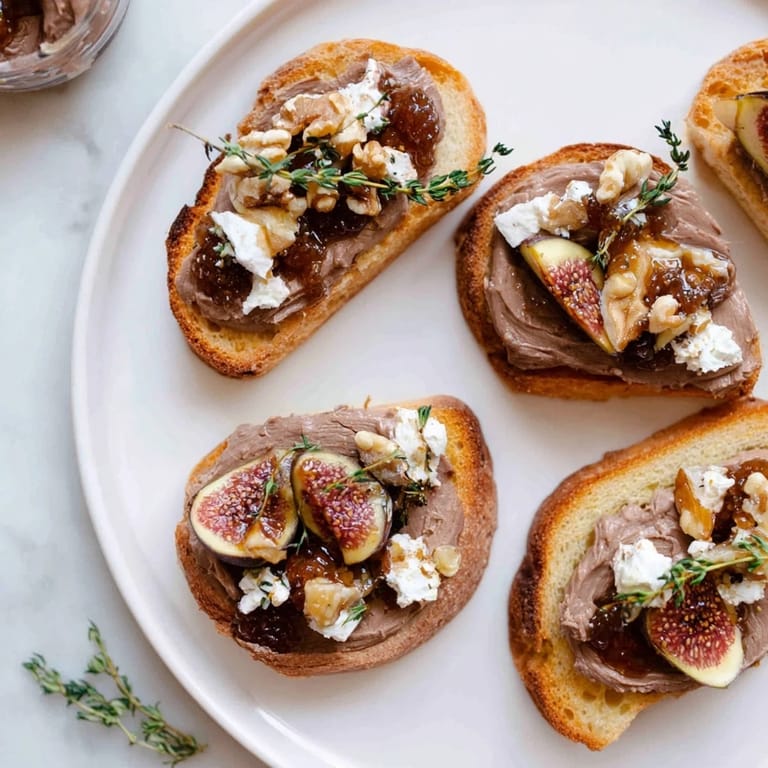
 There's something about the first time you taste layers that actually matter that stays with you. I was at a small dinner party in Lyon, watching the host arrange these little open-faced bites with such deliberate care, and I realized halfway through that this wasn't just an appetizer—it was edible architecture. The way the figs gleamed against the dark pâté, how the goat cheese caught the light like tiny clouds, it felt almost too beautiful to eat. Years later, I tried recreating it at home, and somehow it became the thing people ask me to bring.
I made this for a friend who'd just moved into her first apartment, and she nearly cried. Not because it was life-changing food, but because someone had taken the time to make something that looked like it belonged in a magazine. She kept taking photos before eating, which told me everything about how it landed. Now whenever she hosts, she makes it, and people always ask where she got the recipe.
Ingredients
- Duck or chicken liver pâté, 200 g: This is the earthy anchor that holds everything together; buy it from a quality source or make your own if you're feeling ambitious—the difference shows.
- Dried figs, 120 g, thinly sliced: They bring honeyed sweetness and visual drama; slice them just before assembly so they don't dry out further.
- Soft goat cheese (chèvre), 80 g, room temperature: Room temperature is non-negotiable here—it spreads like a dream and tastes creamier than cold cheese.
- Toasted brioche or gluten-free crackers, 12 slices: Toasting them adds structure and prevents sogginess, which is the enemy of a beautiful bite.
- Toasted walnuts, 40 g, roughly chopped: The texture contrast is everything; toast them yourself if you can because they taste exponentially better.
- Fresh thyme sprigs: A small garnish that signals this is intentional and special, not an afterthought.
- Fig jam, 2 tbsp, optional: This is the surprise; it deepens the fruit flavor and adds a glossy finish that catches the light.
Tired of Takeout? 🥡
Get 10 meals you can make faster than delivery arrives. Seriously.
One email. No spam. Unsubscribe anytime.
Instructions
- Build your base:
- Arrange the toasted brioche or crackers on a serving platter in overlapping rows, like you're laying down roof tiles. They should sit close enough that the platter almost disappears beneath them.
- Layer the richness:
- Spread a generous layer of pâté on each piece—enough that you can taste it, not so much that it overwhelms. Use the back of a butter knife or a small spatula to create a light, even layer.
- Add the sweet:
- Place a thin slice of dried fig on top of each pâté layer, making sure the colors create that rich contrast. This is where it starts to look like something.
- Dot the cream:
- Add small spoonfuls of room-temperature goat cheese between the figs, tucking them into the gaps. Think of it like placing tiny edible jewels.
- Scatter the crunch:
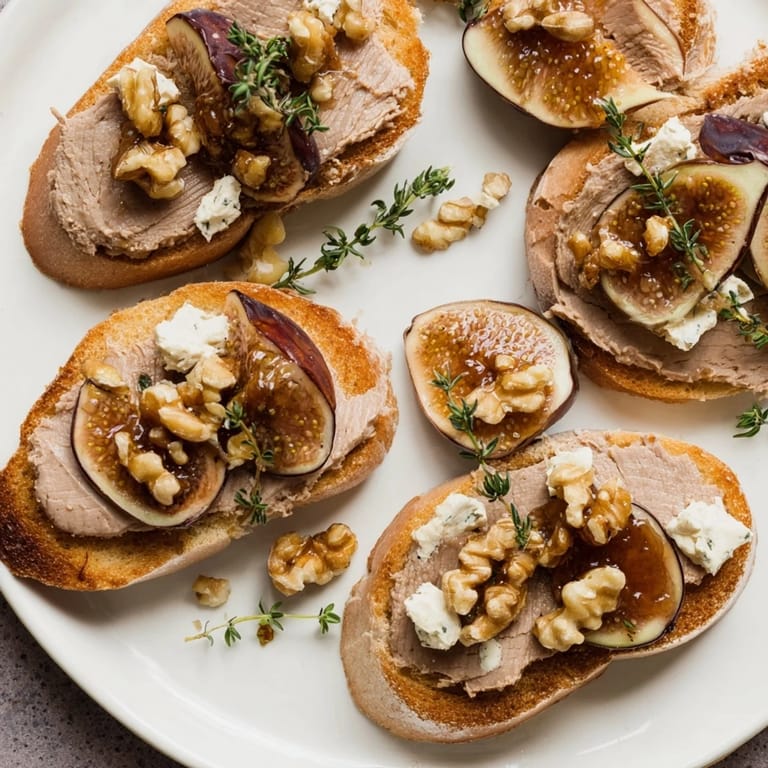
- Sprinkle the toasted walnuts across the whole platter in an even but not-too-precious way. They should look natural, not placed with tweezers.
- Finish and serve:
- If using fig jam, drizzle it lightly over the top, then scatter fresh thyme sprigs as your final garnish. Serve immediately while everything is still at its best.
 Save to Pinterest
 I served this at a dinner where someone brought their aging grandmother, and she picked one up and said, "Finally, someone who understands that food should look like it matters." That one comment stuck with me more than a dozen compliments ever could. It reminded me that presentation isn't vanity—it's respect for the people eating.
Why This Works as an Opener
This dish is a conversation starter because it demands to be eaten slowly, deliberately, in layers. You can't rush it; each bite has so many components that they force you to pause and actually taste. It signals to your guests that the meal ahead will be thoughtful, that you've considered them.
Variations That Feel Natural
The beauty of this recipe is that it takes direction without losing its identity. I've swapped the goat cheese for creamy blue cheese when I wanted something bolder, or used fig jam straight across as a glaze instead of scattered drizzles. A friend of mine uses caramelized onion jam instead of fig jam—it's earthier, less sweet, and honestly just as good.
Pairing and Presentation
This is meant to be elegant without pretension, so present it on your best platter—not your fanciest, but the one that makes you happy. Pour yourself something cold and slightly sweet; a Sauternes is traditional, but a fruity Riesling works beautifully too. If you want wine pairing suggestions, lean toward anything with stone fruit notes.
- Arrange the platter no more than 15 minutes before serving to keep everything fresh and the colors bright.
- If you're making this ahead, keep the components separate and assemble just before guests arrive.
- Leftover components keep for days in the fridge, so you can make impromptu bites whenever you want.
 Save to Pinterest
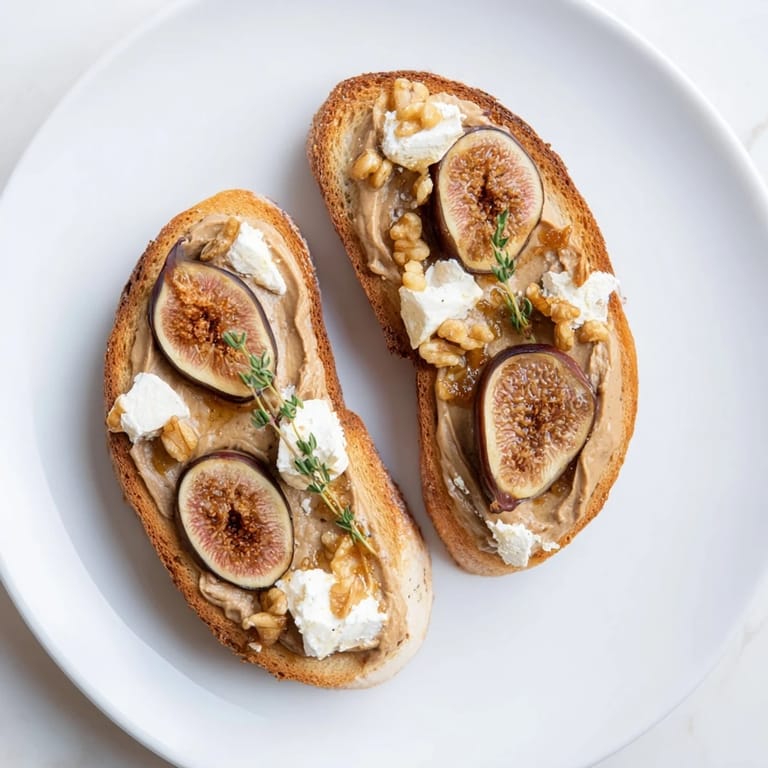
 This recipe reminds me that sometimes the most impressive meals are the ones where you stop trying so hard and just let the ingredients speak. It's French cooking at its most honest—nothing fussy, just perfect things arranged with intention.
Recipe FAQs
- → Can I make a gluten-free version?
Yes, substitute toasted brioche with gluten-free crackers to keep it gluten-free while preserving texture.
- → What alternatives work for the pâté?
For a vegetarian twist, use mushroom pâté instead of duck or chicken liver pâté.
- → How can I enhance the flavor profile?
Swap goat cheese for blue cheese to add a more intense, tangy flavor contrast.
- → What beverages pair well with this dish?
Enjoy alongside chilled Sauternes or a fruity red wine to complement the sweet and savory layers.
- → How should I serve this appetizer?
Arrange layers artfully on a large platter and serve immediately to maintain freshness and texture contrast.