 Save to Pinterest
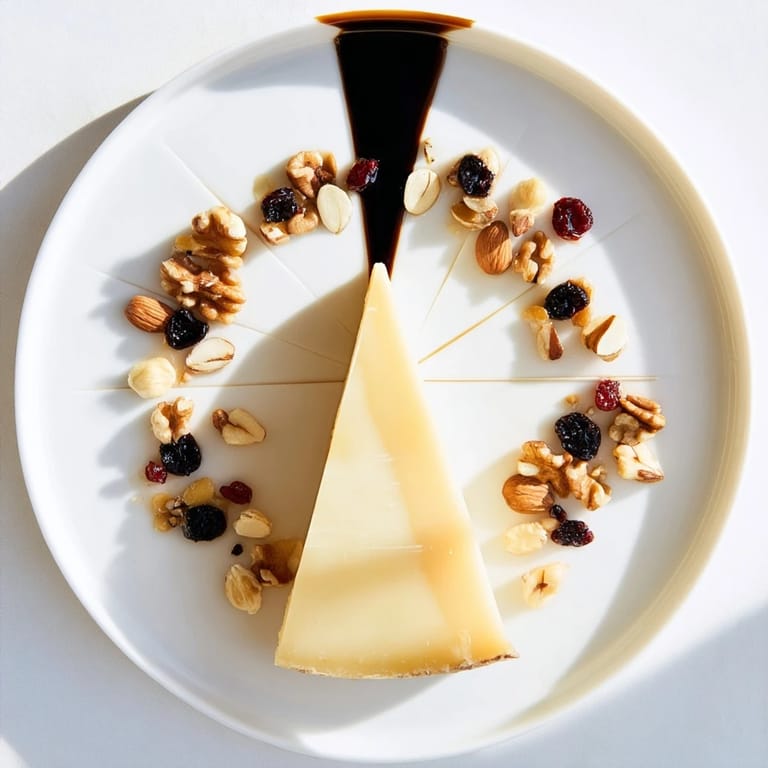
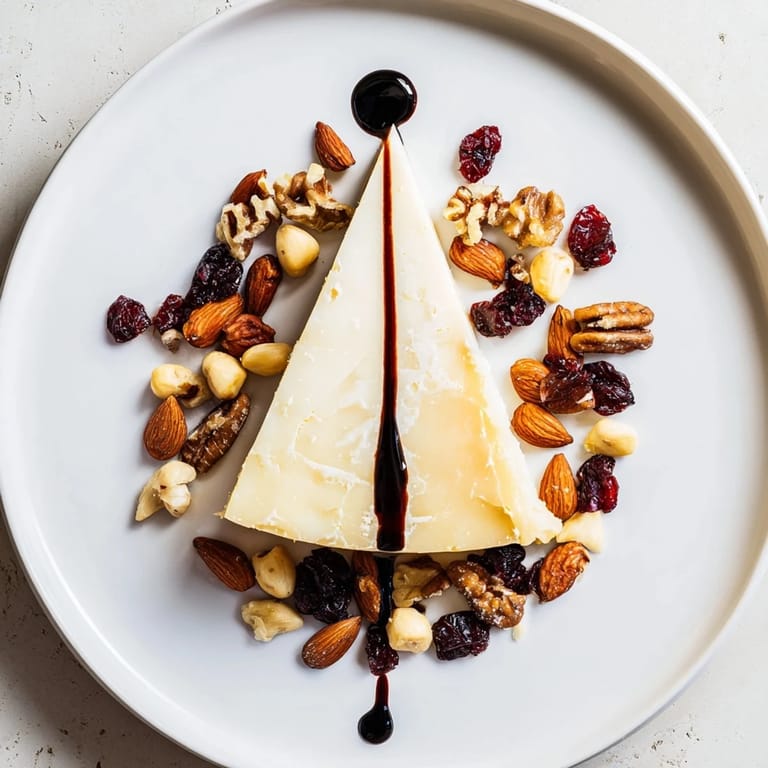
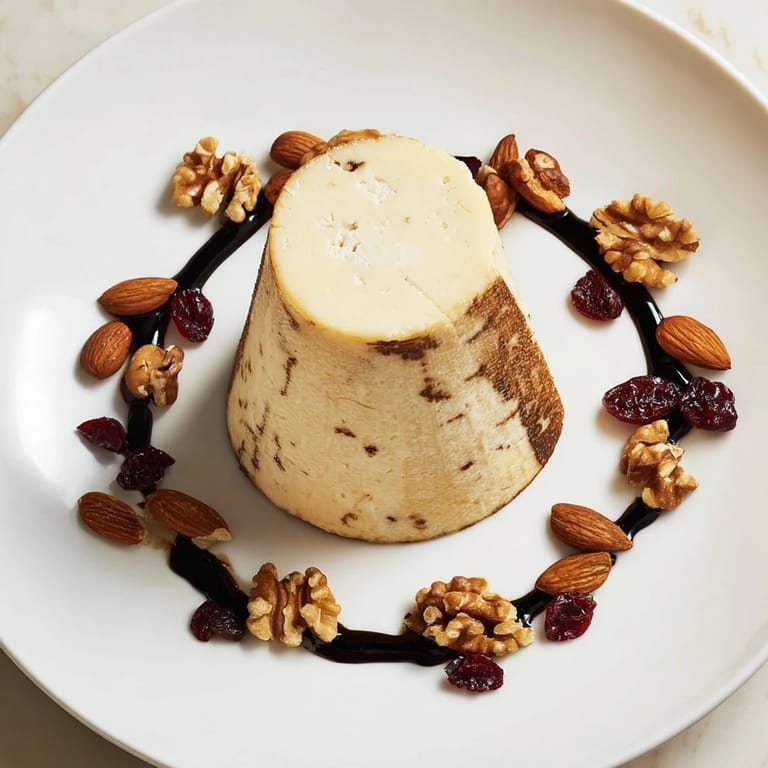
 I discovered The Sundial by accident, honestly. I was hosting a dinner party and had splurged on this beautiful aged Gouda, then found myself staring at a bottle of balsamic glaze wondering how to make something ordinary feel theatrical. On a whim, I stood the cheese wedge upright, dragged the glaze across the board like a shadow, and suddenly there it was—something that looked like it belonged in a gallery, not on my scratched dining table. My guests didn't expect to gasp at a cheese platter, but they did.
There was this moment when my sister came into the kitchen and just stopped mid-sentence. She was holding her phone ready to help, but instead she just watched me arrange the nut clusters around the cheese like they were numbers on a clock face. No one had ever seen her quiet before a party. We didn't say anything, just kept working until the whole thing came together, and then she took a photo before anyone else could touch it.
Ingredients
- Aged hard cheese (about 150 g): Choose something with character—Parmigiano-Reggiano is sharp and classic, aged Gouda brings sweetness, Manchego adds earthiness. The wedge needs to be thick enough to stand upright without wobbling, so ask your cheesemonger to cut it for you if you're unsure.
- High-quality balsamic glaze (3 tbsp): This is your shadow and your star, so don't skimp. Real balsamic glaze has depth and moves slowly across the board like it's supposed to.
- Roasted almonds (1/3 cup): They're the quiet sophisticates of the nut world, and they anchor the entire design with their pale color and delicate crunch.
- Roasted walnuts (1/3 cup): These add a deeper tone and a slightly earthier flavor that keeps things interesting.
- Roasted pecans (1/3 cup): Buttery and warm, they round out the variety so no two clusters taste the same.
- Roasted hazelnuts (1/3 cup): The surprise element—they add a subtle sweetness and a different texture that people usually can't quite name.
- Dried cranberries (2 tbsp, optional): These aren't just decoration. They bridge the gap between savory and sweet, and they catch the light in a way that makes the whole thing look more intentional.
- Fresh grapes or figs (optional): If you want to push the elegance further, nestle a few between the clusters—they look like they wandered into an art installation.
- Edible flowers or microgreens (optional): A whisper of finesse, nothing more.
Tired of Takeout? 🥡
Get 10 meals you can make faster than delivery arrives. Seriously.
One email. No spam. Unsubscribe anytime.
Instructions
- Plant your sundial:
- Set the wedge of hard cheese upright in the exact center of your round platter, with the pointed end aiming outward like the stick of an actual sundial. Take a breath and make sure it's stable—no one wants it tipping into the wine.
- Cast the shadow:
- Using a small spoon, slowly drizzle the balsamic glaze in a thick, confident line extending outward from the cheese wedge. Let gravity help you; this should look purposeful, not accidental.
- Mark the hours:
- Now comes the meditative part. Divide your mixed nuts into 12 small clusters and arrange them in a circle around the cheese, spacing them evenly like numbers on a clock face. Tuck a dried cranberry or two into a few clusters if you want that extra visual pop.
- Garnish if you dare:
- Tuck grapes or figs into the spaces, or scatter a few microgreens around the edge if you're feeling that way inclined. This step is entirely optional, but it's where you get to make it yours.
- Set out the tools:
- Place small cocktail picks or forks nearby so people can help themselves without their hands getting involved. The presentation matters right up until someone takes the first bite.
 Save to Pinterest
 The real magic happened when someone I didn't know well enough to judge noticed the sundial and actually traced the balsamic line with their finger before eating anything. They looked at me and said it made them think about time and beauty in the same moment, which is not a conversation most appetizers start. That's when I understood this wasn't just about arranging cheese nicely.
Choosing Your Cheese
The cheese is your foundation, and it deserves consideration. Aged Parmigiano-Reggiano brings crystalline crunch and umami depth—it's for people who appreciate a strong, clear statement. Aged Gouda is sweeter and more approachable, almost caramel-like, which works beautifully if your crowd is mixed. Manchego splits the difference with an earthy, slightly dry quality that feels European and intentional. I've used all three, and they each tell a different story, but they all work. The key is that it's aged and hard enough to stand without drama.
The Nut Arrangement Philosophy
You don't need to stress about perfect spacing or symmetry, though it helps to think in terms of 12 clusters representing clock positions. Some people arrange them first with dry hands, then adjust once they can see the whole composition. Others go slower, cluster by cluster, making tiny adjustments. There's no wrong way here. The clusters don't have to be uniform in size either—some personality makes it feel less sterile and more like something a real person made in their kitchen.
Pairing and Serving Strategy
I've learned that this platter doesn't need much help, but it does appreciate company. A dry white wine like Sauvignon Blanc or Albariño works like a dream because it cuts through the richness of the cheese and nuts. If you want to stay red, a light Chianti is traditional and elegant. Sparkling water with lemon is lovely for non-drinkers and actually cleanses the palate beautifully between bites.
- Bring the cheese to room temperature about 30 minutes before guests arrive so every bite is creamy and flavorful, not cold and closed off.
- Arrange the platter as late as possible—maybe 10 minutes before serving—so the balsamic glaze looks fresh and glossy instead of matte and absorbed.
- If you're serving this at a standing reception, place it on a high table so people can admire it before they eat, not just snack casually while looking at their phones.
 Save to Pinterest
 This platter taught me that entertaining doesn't require hours in the kitchen—sometimes it just requires a little visual thinking and the willingness to see ordinary ingredients as something more. Serve it with real attention, and watch what happens.
Recipe FAQs
- → What types of cheese work best for this platter?
Hard, aged cheeses like Parmigiano-Reggiano, aged Gouda, or Manchego hold their shape well and offer rich flavors that complement the nut clusters and balsamic glaze.
- → Can the nut clusters be customized?
Yes, you can mix different roasted or spiced nuts to vary flavors and textures. Including dried cranberries adds a pop of color and subtle sweetness.
- → How should the balsamic glaze be applied?
Use a small spoon to drizzle a thick line extending outward from the cheese wedge, mimicking the sundial’s shadow for a dramatic visual effect.
- → Are there options for garnishing the platter?
Fresh grapes, figs, edible flowers, or microgreens make beautiful, edible decorations that add freshness and enhance presentation.
- → What serving tools are recommended?
Provide cocktail picks or small forks for easy sharing and to keep the presentation neat during entertaining.
- → Is this platter suitable for special diets?
It suits vegetarian and gluten-free diets. For vegan options, substitute with plant-based hard cheese alternatives.