 Save to Pinterest
 My neighbor dropped off a huge basket of summer vegetables one July afternoon, and I had no idea what to do with all of it. I stood there staring at zucchini, carrots, and celery piled on my counter when her voice echoed from the doorway: "Make minestrone." Those two words changed everything. That first pot taught me that the best soups aren't fancy—they're just honest ingredients speaking to each other in a warm broth.
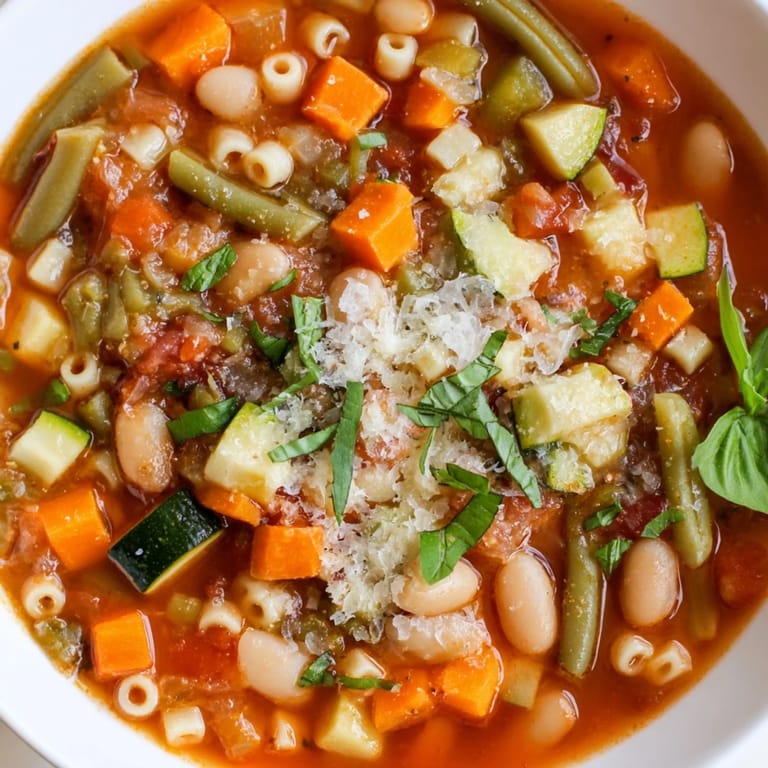
Years later, I made this soup for my daughter's first day back at school. She came home exhausted and quiet, and I had it waiting—those fresh basil leaves I'd added just minutes before still glistening on top. She took one spoonful and the tight shoulders relaxed. Sometimes a bowl of soup says what words can't.
Ingredients
- Olive oil: Use good quality here—it's one of the few ingredients you taste directly at the beginning.
- Onion, carrots, and celery: The holy trinity that builds flavor; don't rush the sauté or you'll miss the sweetness developing.
- Garlic: Mince it yourself if you can—jarred garlic gets lost in a pot this size.
- Zucchini and green beans: These stay bright and just-tender if you don't overcook the whole thing.
- Diced and crushed tomatoes: The combination gives you texture and depth; don't skip the crushed ones.
- Vegetable broth: Low-sodium is worth it so you can taste your own seasoning decisions.
- Oregano, thyme, and red pepper flakes: Dried herbs work beautifully here and won't overpower the vegetables.
- Tomato paste: This is your secret weapon—it concentrates the tomato flavor without making the soup acidic.
- Small pasta: Ditalini or elbow macaroni are traditional; they nestle into the broth instead of floating.
- Cannellini beans: Rinsing them matters more than you'd think—it removes the starchy coating.
- Fresh basil and parsley: Add these at the very end so they stay vibrant green and aromatic.
- Parmesan cheese: Optional but worth having on the table so everyone can add as much as they want.
Tired of Takeout? 🥡
Get 10 meals you can make faster than delivery arrives. Seriously.
One email. No spam. Unsubscribe anytime.
Instructions
- Start the base:
- Heat olive oil in a large pot over medium heat and add onion, carrots, and celery. You want to hear a gentle sizzle and smell that sweet smell as everything softens over five minutes—this isn't a race.
- Add the garden:
- Stir in minced garlic, zucchini, and green beans, letting them cook for just three minutes. The kitchen will smell alive at this point.
- Build the broth:
- Pour in both kinds of tomatoes, the vegetable broth, oregano, thyme, salt, pepper, red pepper flakes, and tomato paste. Stir everything together and bring it to a boil—watching for that first big bubble.
- Let it simmer:
- Lower the heat and let the pot cook uncovered for fifteen minutes. This is when all the flavors get to know each other.
- Add the pasta and beans:
- Stir in the small pasta and drained cannellini beans, then simmer for another ten to twelve minutes until the pasta is tender. Taste a noodle—it should have just a tiny bit of resistance.
- Finish with green:
- Stir in the fresh basil and parsley at the last moment, taste for seasoning, and adjust salt and pepper if it needs it. This is where the soup goes from warm to alive.
 Save to Pinterest
 There's a moment in cooking when you stop following steps and start listening to what's in front of you. That's when minestrone stops being a recipe and becomes something you know by heart, something you make because you need the comfort of it.
What Makes This Soup Sing
The trick to minestrone is understanding that each vegetable wants something slightly different. Carrots and celery take time to sweeten, zucchini needs just enough heat to stay tender, and green beans should never turn to mush. If you pay attention during those first few minutes when you're sautéing the aromatics, everything else becomes easier. The broth does most of the heavy lifting after that.
Pasta Timing and Swaps
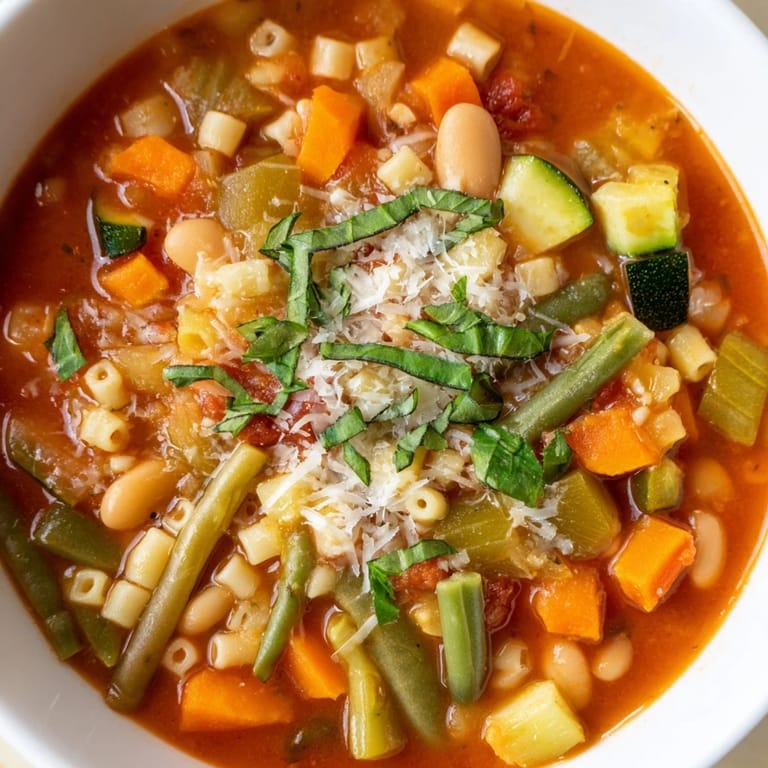
Small pasta is essential—it's not snobbery, it's just practical. Bigger pasta shapes get in the way of the spoon and don't absorb the broth the same way. If you only have regular elbow macaroni, that works, but add it later and watch it closely. You can also use orzo or any small shape you have, though ditalini is what Italian grandmothers use, and there's usually a reason for tradition.
Flexibility and Love
This soup is forgiving in the best way possible. Spinach or kale stirred in at the end adds earthiness without fuss. An extra carrot or an extra zucchini won't hurt anything. If you have leftover herbs, throw them in. The soup will taste slightly different every time, and that's exactly right.
- Serve it with crusty bread that you can tear and dunk without thinking.
- Make extra and freeze it for a day when you need something warm and real.
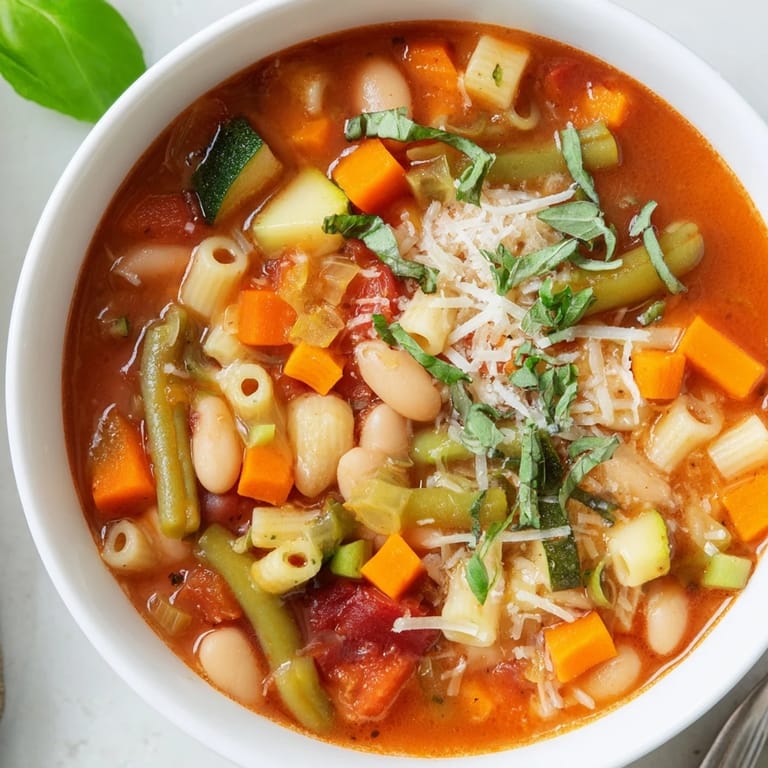
- Grated Parmesan at the table lets everyone customize their own bowl.
 Save to Pinterest
 This soup asks for nothing fancy and gives everything back. It's the kind of dish that reminds you why you cook in the first place.
Recipe FAQs
- → What type of pasta works best in this soup?
Small pasta shapes like ditalini or elbow macaroni hold well, absorbing flavors without overpowering the texture.
- → Can I make this soup gluten-free?
Yes, substituting regular pasta with gluten-free options ensures it's suitable for gluten-free diets without changing the taste.
- → When should the pasta and beans be added?
They are added after the broth simmers for about 15 minutes and cooked until tender, around 10–12 minutes.
- → How can I add more greens to this dish?
Adding spinach or kale at the end of cooking offers extra color and nutrition without affecting the cooking time.
- → Is Parmesan cheese necessary for serving?
Parmesan cheese is optional and adds a savory finish; it can be omitted for a dairy-free variant.
- → What herbs complement the flavor profile?
Oregano, thyme, basil, and parsley work together to create a fragrant and balanced broth.