 Save to Pinterest
 There's a Tuesday night that comes to mind when I think about this pasta—the kind where I had maybe twenty minutes before friends arrived and absolutely nothing prepared. I grabbed a box of spaghetti, three garlic cloves, and olive oil from the pantry, and somehow that simplicity became the whole point. No cream, no complicated technique, just heat and time and the kitchen filling with this warm, toasty garlic smell that made everyone ask what smelled so good before they even walked in the door.
I made this for my roommate once when she came home saying she'd eaten nothing but meetings all day, and watching her twirl that first bite and just close her eyes—that's when I realized this isn't just quick food, it's the kind that lands differently depending on your mood. The next time I made it was for myself alone on a quiet Sunday, and it tasted like comfort in the simplest form.
Ingredients
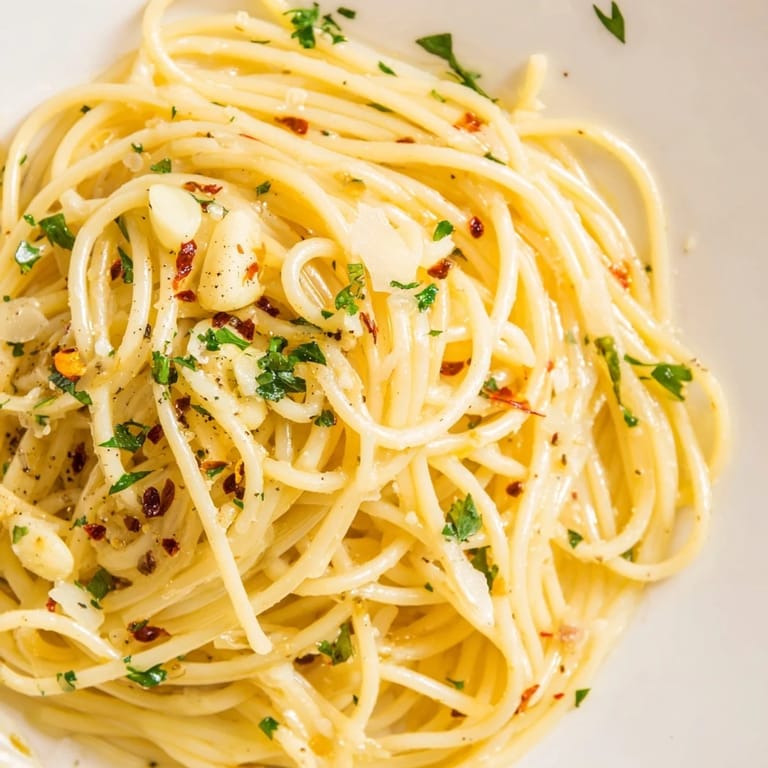
- Dried spaghetti, 200g: Don't skip the quality here because there's nowhere to hide with just four main components—this is one of them, and a decent pasta makes the difference.
- Extra-virgin olive oil, 4 tbsp: This is your sauce, so use something you'd actually taste on bread; the fruity notes matter.
- Garlic cloves, 4 large, thinly sliced: Thickness matters because thin slices cook evenly and turn golden instead of burnt or raw.
- Red chili flakes, 1 tsp: This amount is a gentle warmth, not a challenge; you can always add more but you can't take it back.
- Fresh parsley, 2 tbsp chopped: The brightness at the end that makes you realize how much this simple dish needed that green note.
- Sea salt and freshly ground black pepper: Season generously because there's no other flavor cushion here.
- Parmesan cheese, 2 tbsp freshly grated (optional): If you use it, grate it fresh; pre-grated tastes flat and bitter in a dish this delicate.
Tired of Takeout? 🥡
Get 10 meals you can make faster than delivery arrives. Seriously.
One email. No spam. Unsubscribe anytime.
Instructions
- Boil water and cook pasta:
- Fill a large pot with water, salt it generously (it should taste like the sea), and bring it to a rolling boil before adding the spaghetti. Set a timer and start tasting at the lower end of the package time—al dente means there's still a slight resistance when you bite it. Before you drain, scoop out about half a cup of that starchy water and set it aside.
- Gently infuse the oil:
- While pasta cooks, pour olive oil into a skillet and add your thin garlic slices over medium-low heat. Listen for a gentle sizzle, not a aggressive bubble; you want to coax the garlic into sweetness, not shock it into browning. Stir it often and watch for that moment when it starts turning pale gold—that's your sign to move to the next step.
- Wake up the chili:
- Scatter the red chili flakes over the warm garlic oil and let them sit for about ten seconds, stirring gently so they bloom and release their warmth into the oil without burning.
- Bring it together:
- Drain your pasta and add it directly to the skillet, tossing everything together for about a minute so every strand gets coated. If it looks too dry, splash in some of that reserved pasta water—just enough to loosen things and create a silky finish.
- Season and serve:
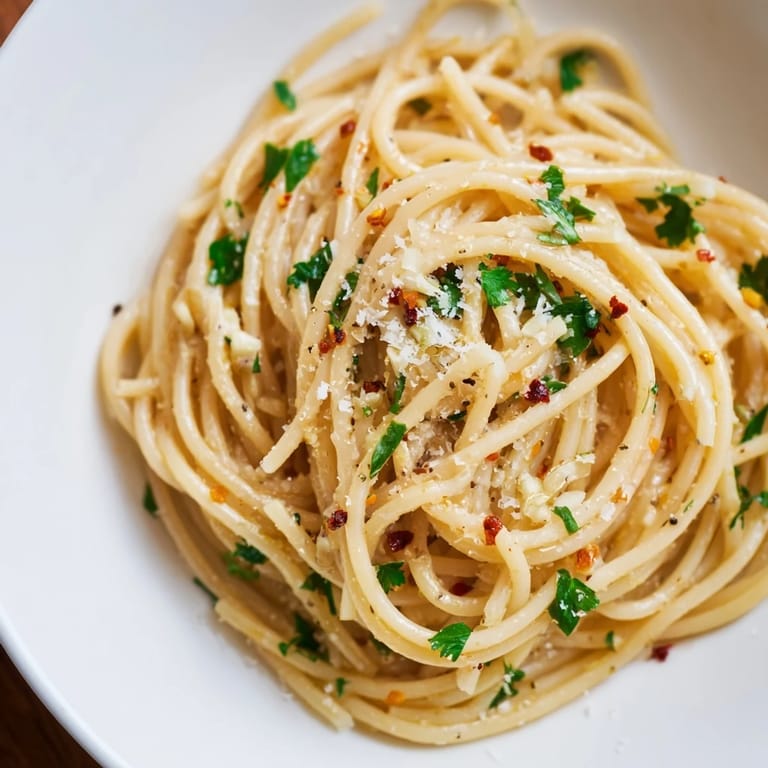
- Taste and adjust salt and pepper, then remove from heat and toss in the fresh parsley. Plate immediately while everything is still steaming and pile that Parmesan on top if you're using it.
 Save to Pinterest
 There's a moment in cooking this when the kitchen fills with that toasted garlic smell and you realize how much flavor can come from patience and good ingredients instead of complexity. That's when this dish became something I return to—not because it's impressive, but because it taught me that simple can be perfect.
Timing Is Everything Here
The whole magic of this dish lives in the details of when things happen. Your garlic needs to start cooking the moment your pasta hits the water so they finish at the same time; if you're left standing there with cooked pasta and raw garlic, you've lost the rhythm. I learned this the hard way by cooking the garlic first and then realizing it turned dark while I waited for pasta, so now I time it backward from the pasta cooking time and it works every single time.
Why Temperature Matters
Medium-low heat sounds slow until you realize it's the difference between silky golden garlic and acrid burnt garlic. When I bumped it up to medium thinking I'd speed things along, the garlic caught in about thirty seconds and tasted aggressive and bitter. The moment I dropped it back down, the whole dish shifted into something sweeter and more refined. This is one of those recipes where less heat actually gets you there faster because you're not fighting burnt flavors.
Variations Worth Trying
Once you nail the basic version, this is a foundation for playing around. A squeeze of fresh lemon juice at the end brightens everything; a pinch of dried oregano whispers Italian herbs; sometimes I add a handful of toasted breadcrumbs for texture and richness. The beauty is that the technique stays the same, so you can build from here without losing what makes this so good.
- Try anchovy paste stirred into the oil for an umami depth that nobody expects but everyone loves.
- A small handful of toasted panko or fresh breadcrumbs adds the texture that some people feel this needs.
- Red pepper flakes aren't your only heat option; try a small pinch of cayenne for something more refined.
 Save to Pinterest
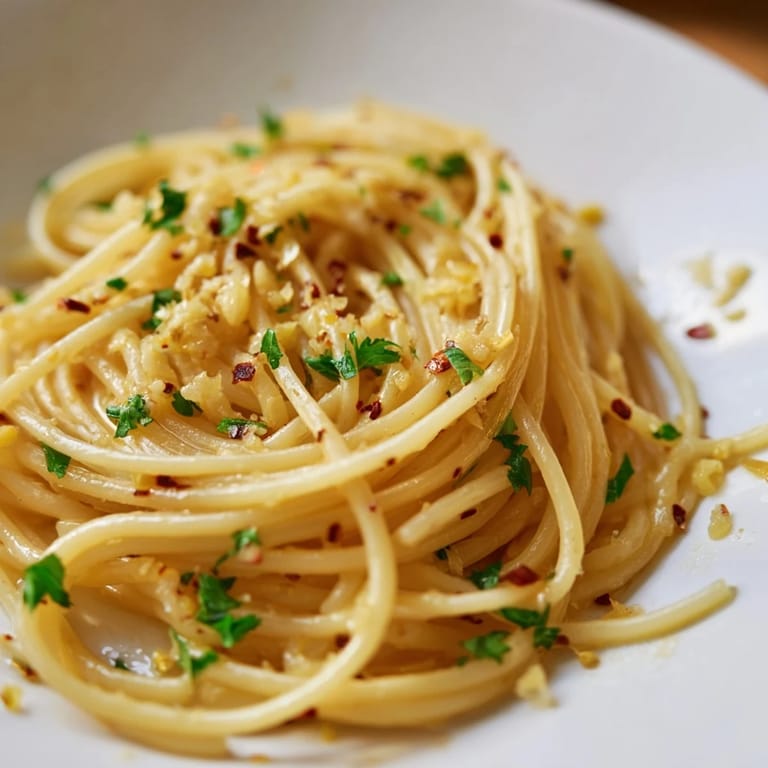
 This dish reminds me that the best meals don't need to be complicated to be memorable. Ten minutes and five ingredients taught me more about cooking than many longer recipes ever could.
Recipe FAQs
- → How do I prevent garlic from burning?
Cook garlic over medium-low heat and stir frequently until it turns golden. This ensures a fragrant oil without bitterness.
- → Can I adjust the spice level in this dish?
Yes, simply add more or less red chili flakes according to your preferred heat intensity.
- → What can I use if I want a vegan option?
Omit the Parmesan or substitute it with a plant-based cheese alternative or nutritional yeast.
- → Is it possible to make this gluten-free?
Replace the regular spaghetti with gluten-free pasta to accommodate dietary needs.
- → Why reserve pasta water before draining?
The starchy pasta water helps loosen the sauce, allowing it to coat the spaghetti evenly for a silky texture.