 Save to Pinterest
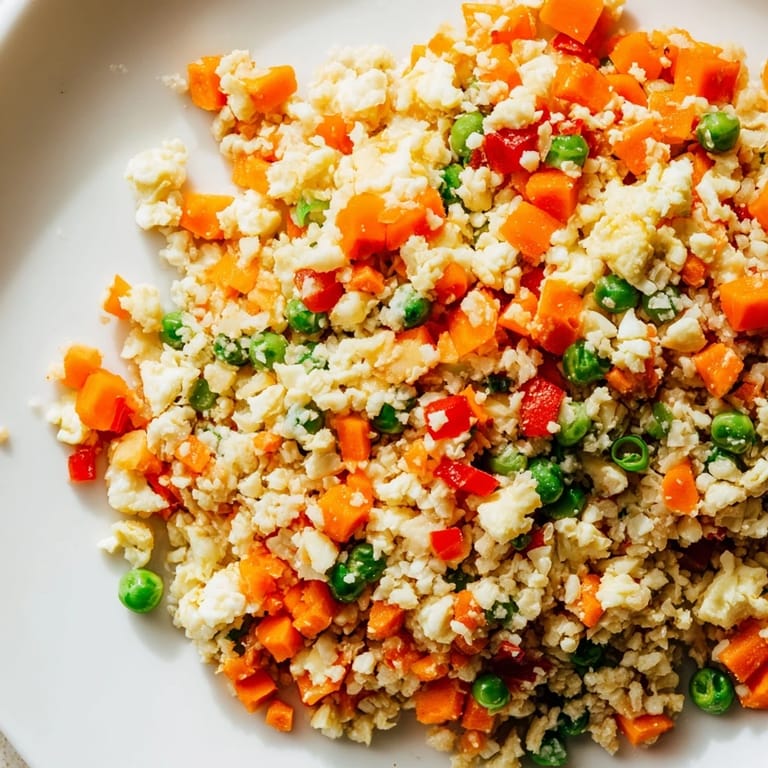
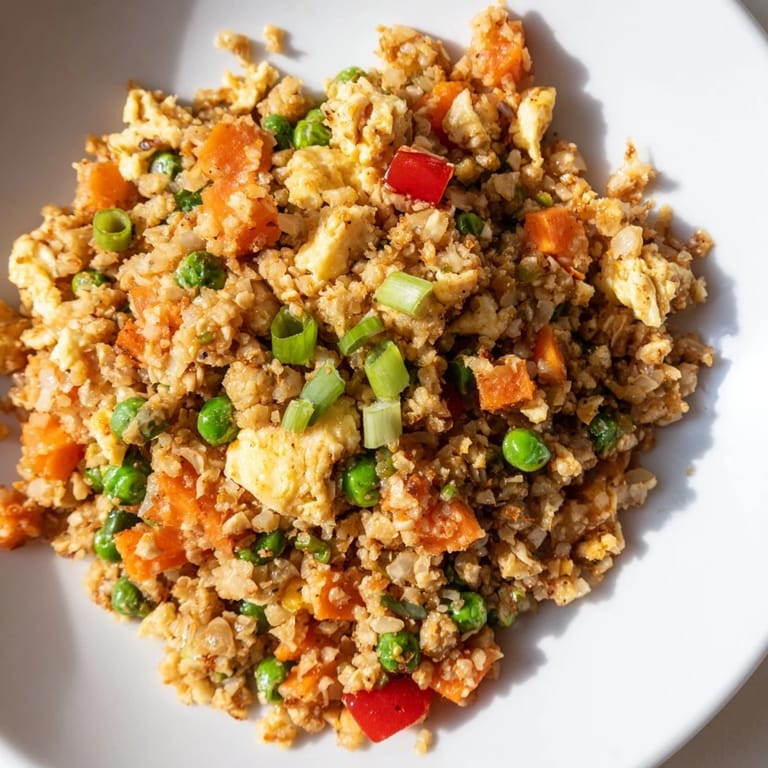
 My neighbor handed me a bag of cauliflower from her garden one Saturday morning, and I stared at it wondering what to do with that much vegetable. I had been craving takeout fried rice all week but was trying to eat lighter. Then it hit me: what if I could turn this pale giant into something that tasted just as satisfying? I pulled out my food processor, pulsed the florets into tiny grains, and within twenty minutes, I had a skillet full of something that smelled better than any delivery I'd ordered.
I made this for my sister when she visited during her first month of a new eating plan. She was skeptical when I told her it was cauliflower, but after her second helping, she asked me to write down every step. We sat at the kitchen table with the windows open, the smell of ginger still hanging in the air, and she admitted she didn't miss the carbs at all. That night, she texted me a photo of her own version with shrimp stirred in.
Ingredients
- Cauliflower: The star of the show, and the key is making sure it is really dry after rinsing or it will steam instead of fry and turn mushy.
- Carrot: Adds natural sweetness and a pop of color that makes the dish look like it came from a restaurant.
- Frozen peas: I keep a bag in the freezer at all times because they are sweet, convenient, and never need chopping.
- Red bell pepper: Brings a mild crunch and a glossy brightness that balances the earthiness of the cauliflower.
- Green onions: Toss these in at the end so they stay vibrant and give little bursts of sharpness in every bite.
- Garlic and ginger: This duo is non-negotiable if you want that authentic stir-fry aroma that fills the whole kitchen.
- Eggs: They add richness and little golden ribbons throughout the dish, but you can skip them or swap in crumbled tofu.
- Sesame oil: A tiny drizzle at the end transforms everything with its nutty, toasted fragrance.
- Soy sauce or tamari: This is where all the savory depth comes from, so use a good quality one and do not oversalt.
- White or black pepper: Just a pinch wakes up all the other flavors without adding heat.
Tired of Takeout? 🥡
Get 10 meals you can make faster than delivery arrives. Seriously.
One email. No spam. Unsubscribe anytime.
Instructions
- Prep the cauliflower rice:
- Pat the florets completely dry with a towel, then pulse them in your food processor until they look like grains of rice. If you skip the drying step, you will end up with something closer to mashed cauliflower, and nobody wants that.
- Scramble the eggs:
- Heat a tablespoon of oil in your largest skillet over medium-high heat, pour in the beaten eggs, and stir gently until they are just set but still soft. Slide them onto a plate because they will go back in later.
- Build the aromatics:
- Add the rest of the oil to the same pan, toss in the garlic and ginger, and let them sizzle for about thirty seconds until the smell makes you lean closer to the stove. Do not walk away or they will burn.
- Cook the vegetables:
- Stir in the carrots, bell pepper, and peas, keeping everything moving in the pan for two to three minutes. You want them tender but still snappy, not soft and sad.
- Fry the cauliflower:
- Add the riced cauliflower and stir constantly for four to five minutes until it is cooked through but still has a little bite. This is where the magic happens, so resist the urge to stop early.
- Season and finish:
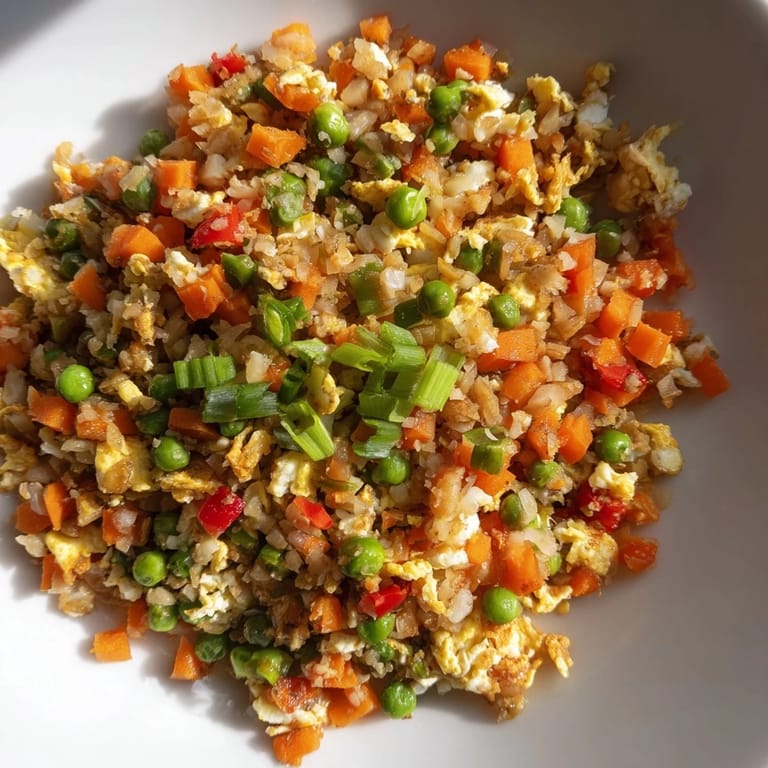
- Pour in the soy sauce, sprinkle the pepper and a pinch of salt, then fold the scrambled eggs and green onions back in. Toss everything for one more minute, drizzle with toasted sesame oil if you have it, and take it off the heat.
 Save to Pinterest
 One weeknight, I made this after a long day and ate it straight from the skillet while standing at the counter. My husband walked in, grabbed a fork, and joined me without a word. We stood there in the quiet kitchen, the only sound the scrape of metal on nonstick, and I realized that sometimes the best meals are the ones you do not have to think too hard about. It just works.
Making It Your Own
This recipe is forgiving in the best way. I have added leftover rotisserie chicken, quickly seared shrimp, and even crumbled baked tofu depending on what was in the fridge. Sometimes I toss in broccoli florets or snap peas for extra crunch. If you like a little heat, a few drops of chili oil or a pinch of red pepper flakes stirred in at the end will wake everything up. The base stays the same, but the add-ins can change with your mood or what needs using up.
Storing and Reheating
Leftovers keep well in an airtight container in the fridge for up to three days. I reheat mine in a hot skillet with a tiny splash of water or oil to bring back some moisture and crispness. The microwave works in a pinch, but the texture is better if you give it a quick toss in a pan. If you are meal prepping, pack it into containers right after it cools, and it becomes an easy grab-and-go lunch that actually tastes good cold or reheated.
Serving Suggestions
I love serving this as a main dish on nights when I want something light but filling. It also works beautifully as a side next to grilled salmon, teriyaki chicken, or even a simple fried egg on top for breakfast. A squeeze of fresh lime and a handful of cilantro right before serving adds a bright, herby note that cuts through the richness.
- Top with a fried egg and sriracha for a quick weeknight dinner that feels special.
- Pair it with miso soup and steamed edamame for a complete Asian-inspired meal.
- Pack it in a bento box with some sliced cucumber and pickled ginger for a satisfying lunch.
 Save to Pinterest
 This dish has become my go-to whenever I need something fast, healthy, and satisfying without a lot of fuss. It reminds me that good food does not have to be complicated, just made with a little attention and whatever you have on hand.
Recipe FAQs
- → How do I rice the cauliflower?
Rinse cauliflower florets and pat dry, then pulse in a food processor until the texture resembles rice grains. Work in batches if needed to avoid overcrowding. Alternatively, use a box grater for a finer texture.
- → Can I make this dish vegan?
Yes, simply omit the eggs or substitute with tofu scramble. The dish remains equally flavorful and satisfying with just the vegetables and seasonings as the base.
- → What vegetables can I substitute or add?
Try broccoli florets, snap peas, corn, or mushrooms. Any crisp vegetable works well. Add them during the sautéing step to maintain a pleasant crunch throughout.
- → Is this gluten-free?
Yes, it is naturally gluten-free when using tamari instead of regular soy sauce. Always check ingredient labels on oils and seasonings if you have celiac disease or gluten sensitivity.
- → How can I add more protein?
Stir in cooked chicken, shrimp, or crumbled tofu during the final heating step. For extra richness, add cashews or sesame seeds as a garnish.
- → Can I prepare this ahead of time?
Prepare components in advance: rice the cauliflower, chop vegetables, and cook eggs separately. Store in containers in the refrigerator for up to 3 days. Reheat in a wok or skillet with a splash of sesame oil before serving.