 Save to Pinterest
 I stumbled onto this dish on a random Tuesday night when I had chicken thawing and a jar of sun-dried tomatoes staring at me from the pantry. There was something about the way the cream swirled with garlic that made me stop rushing and actually pay attention to what I was cooking. By the time the spinach wilted into those silky ribbons, I knew this was going to become one of those recipes I'd make over and over, the kind that tastes like restaurant cooking but feels entirely manageable at home.
I made this for my sister when she was going through a rough patch, and she sat at my kitchen counter just watching the steam rise off the plates. She didn't say much, but she finished everything and asked me to write down what I'd done. That's when I realized this wasn't just comfort food—it was the kind of dish that says I was thinking of you without needing to say much at all.
Ingredients
- Penne or fettuccine (350 g): Either shape works beautifully; I lean toward penne because the sauce settles into those little tubes and every forkful feels intentional.
- Boneless, skinless chicken breasts (2 large): Pound them gently to an even thickness so they cook at the same rate and stay tender rather than turning tough at the edges.
- Unsalted butter (2 tbsp): This is your flavor foundation—don't skip it or substitute it with oil, which changes everything.
- Garlic (3 cloves, minced): Mince it yourself right before you cook; the smell tells you when you're doing it right.
- Sun-dried tomatoes in oil (120 g): Drain them well but save that oil if you're feeling bold—a drizzle at the end adds depth.
- Chicken broth (120 ml): Use the good kind; it's the understudy that nobody notices but that changes everything about the scene.
- Heavy cream (240 ml): Room temperature is ideal so it doesn't seize when it hits the hot pan.
- Parmesan cheese (60 g, grated): Grate it fresh if you can; pre-grated has additives that make the sauce grainy.
- Fresh baby spinach (80 g): It shrinks dramatically, so don't be shy about how much you add raw to the pan.
- Red pepper flakes (1/4 tsp, optional): A whisper of heat against all that richness; trust me on this even if you don't usually go for spice.
Tired of Takeout? 🥡
Get 10 meals you can make faster than delivery arrives. Seriously.
One email. No spam. Unsubscribe anytime.
Instructions
- Boil water like you mean it:
- Fill your largest pot three-quarters full and get that water to a rolling boil—you want pasta that cooks in a well-seasoned bath, not a timid simmer. Salt it generously so it tastes like the sea, then slide the pasta in and stir immediately.
- Get the chicken golden and rested:
- While the pasta goes, pat your chicken dry and season it generously on both sides. Heat olive oil in a large skillet until it shimmers, then lay the chicken in with confidence—you want a good sear, about five to six minutes per side until the outside is golden and the inside reads 165°F. Let it rest on a plate while you build the sauce; this step is not optional.
- Build the sauce from the fond:
- In that same skillet with all the caramelized bits still clinging to the bottom, melt your butter over medium heat. Add minced garlic and let it bloom for just under a minute—you're looking for fragrant, not brown. Stir in those sun-dried tomatoes and let them warm through for another minute, releasing all their tangy sweetness.
- Deglaze and cream:
- Pour in the chicken broth while scraping the bottom with a wooden spoon, breaking up all that golden crust. Reduce the heat to low and pour in the cream slowly, stirring as you go so it incorporates smoothly rather than curdling.
- Melt in the cheese and heat:
- Sprinkle in the Parmesan and those optional red pepper flakes, stirring gently until the cheese disappears into the sauce and everything turns into a silky, unified thing. This should take two to three minutes of gentle simmering; you're listening for the sound to change from bubbling to almost a whisper.
- Wilt the spinach without overdoing it:
- Add the spinach a handful at a time, stirring until each batch is just barely wilted. You want it tender but still bright, not cooked into submission.
- Bring it all together:
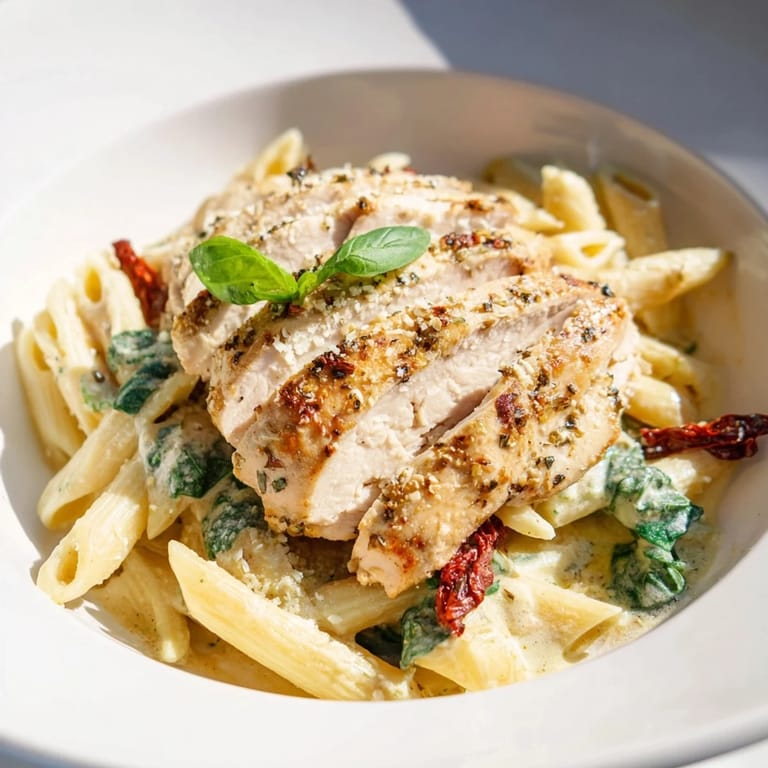
- Drain your pasta, reserving that starchy cooking water like liquid gold. Add the pasta and sliced chicken to the skillet and toss everything to coat, adding reserved pasta water in small splashes until the sauce clings to the noodles without pooling at the bottom.
- Taste and adjust:
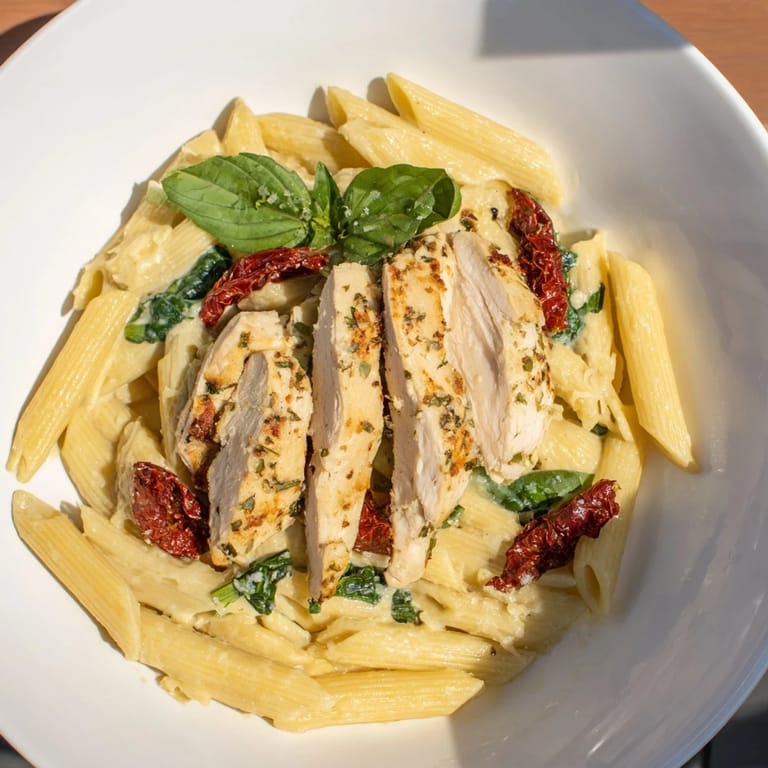
- Finish with a pinch more salt and pepper if it needs it, then serve immediately while the sauce is still loose and silky, topped with fresh basil or parsley and more Parmesan.
 Save to Pinterest
 There's a moment about halfway through cooking this where your whole kitchen smells like garlic and cream and sun-dried tomatoes, and you realize you're actually going to pull off something that tastes like you know what you're doing. That's the magic right there—not in some fancy technique, but in that breath where everything is coming together and you're confident in what's happening in the pan.
Why This Became a Weeknight Staple
The genius of this dish is that it takes advantage of ingredients you're likely already stocking. There's no special shopping trip, no obscure technique that requires three YouTube videos to understand. It hits that sweet spot between feeling indulgent and being entirely doable when you've had a long day and you want something that tastes like you tried harder than you actually did.
Variations That Actually Work
I've learned through happy accidents and intentional experiments that this sauce is endlessly flexible. You can swap the chicken for shrimp that you've quickly sautéed, or even add mushrooms for earthiness, or use half-and-half instead of heavy cream if you're watching the richness but still want that silky feel. The sun-dried tomatoes are what make it Tuscan, but if you don't have them, a handful of roasted red peppers will give you something equally satisfying in a different direction.
The Small Details That Elevate Everything
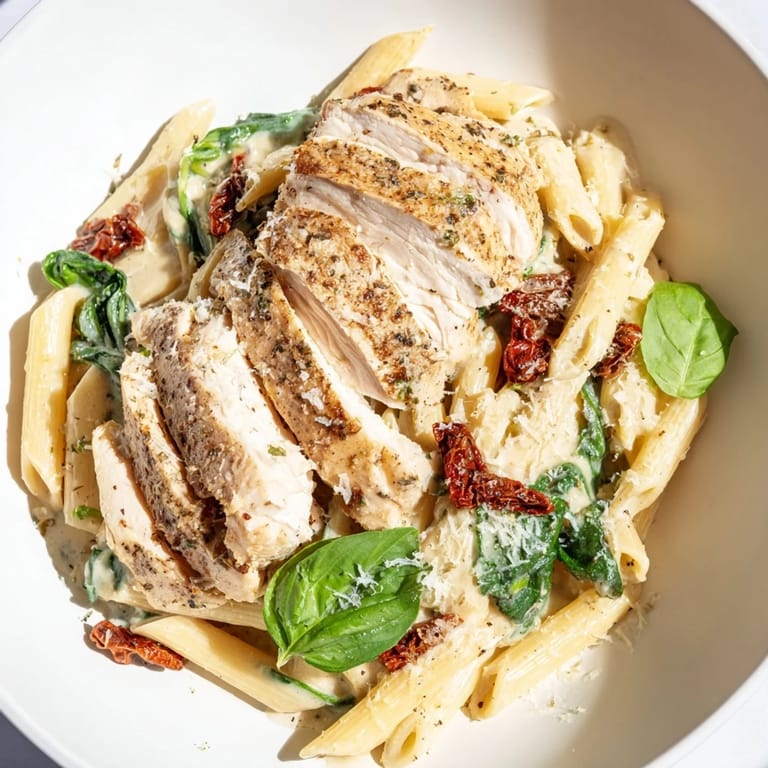
This is where the difference between good and truly memorable shows up. Fresh basil at the end isn't decoration—it's acidity and brightness that cuts through all that richness and wakes up your palate. The red pepper flakes aren't for heat lovers only; that small amount adds a thread of complexity that makes people pause and ask what's different about this dish. Even something as simple as grating your own Parmesan matters because it melts into the sauce instead of sitting grainy on top.
- Grate Parmesan just before you use it so it's ready to melt smoothly into warm sauce.
- A squeeze of lemon juice right before serving is like turning up the volume on everything else you've done.
- Don't skip the rest time on the chicken—it keeps the juices inside instead of bleeding all over your plate.
 Save to Pinterest
 This is the kind of dish that becomes yours once you make it the first time. You'll find your own way with it, maybe adding a splash of white wine next time, or using different greens, or discovering that it reheats beautifully the next day if there are leftovers. That's when you know a recipe is worth keeping.
Recipe FAQs
- → What type of pasta works best for this dish?
Penne or fettuccine are ideal as they hold the creamy sauce well, providing a satisfying texture with every bite.
- → Can I use fresh tomatoes instead of sun-dried?
Fresh tomatoes can be used, but sun-dried tomatoes add a concentrated, tangy flavor that enriches the sauce’s depth.
- → Is it possible to make this dish dairy-free?
Yes, by substituting heavy cream and Parmesan with plant-based alternatives, you can reduce dairy while maintaining creaminess.
- → How do I ensure the chicken stays tender?
Cooking the chicken breasts over medium-high heat until golden and allowing them to rest before slicing helps retain juiciness.
- → What can I serve alongside this creamy pasta?
A crisp Pinot Grigio pairs wonderfully, or steamed vegetables and a light salad complement the richness well.