 Save to Pinterest
 The first time I tasted zarb, I wasn't in a kitchen at all—I was sitting on a woven mat in the Jordanian desert, watching a Bedouin family unearth a metal tray from beneath hot coals and sand. When they unwrapped it, the steam rose like magic, carrying aromas of cumin, cinnamon, and smoky meat that made everyone lean in instantly. That single bite changed how I thought about patience in cooking. Now, whenever I make it in my home oven, I chase that same tender perfection and those layers of spice that somehow taste both bold and gentle at once.
I made this for my sister's dinner party last spring, and I'll never forget her face when she lifted that foil and the aroma hit everyone at the table simultaneously—the whole room just quieted down. Someone asked for the recipe before dessert, and another guest took a photo of their plate. It became one of those meals where the food itself became the conversation, and that felt like the highest compliment.
Ingredients
- Lamb shoulder or chicken pieces, bone-in, cut into large chunks (1.5 kg): Bone-in meat is essential here because it releases gelatin that transforms the broth into something silky and rich; large chunks prevent the meat from shredding into the vegetables, keeping everything distinct and beautiful on the platter.
- Olive oil (2 tbsp): Use good quality oil because it carries all those ground spices deep into the meat during the massage; a basic oil won't give you the same depth.
- Ground cumin, coriander, cinnamon, and smoked paprika (2 tsp, 2 tsp, 1 tsp, 1 tsp): This blend is the soul of the dish—the cinnamon adds warmth without sweetness, while smoked paprika gives an almost underground earthiness that mimics pit cooking.
- Ground black pepper and salt (1 tsp and 2 tsp): Don't skip the massage step; these seasonings need to coat every surface of the meat and mingle with the garlic and lemon juice.
- Garlic and lemon juice (4 cloves minced, juice of 1 lemon): These brighten the marinade and prevent the dish from tasting heavy despite all the long cooking.
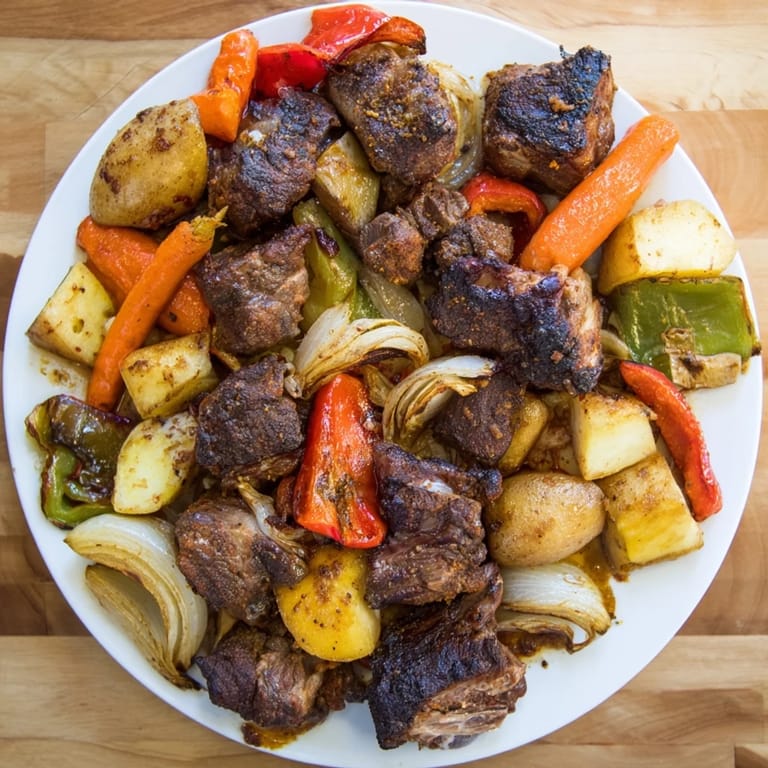
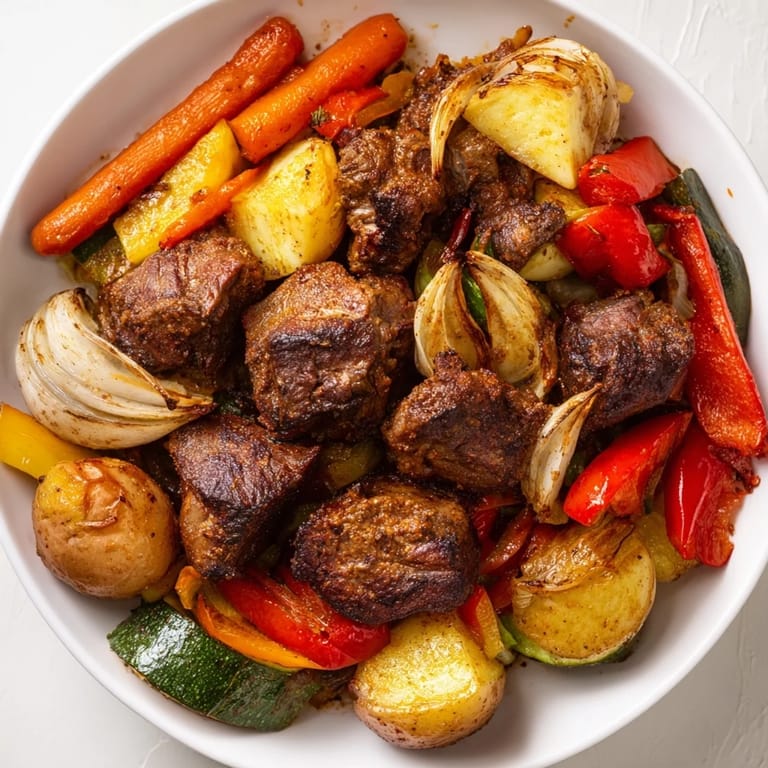
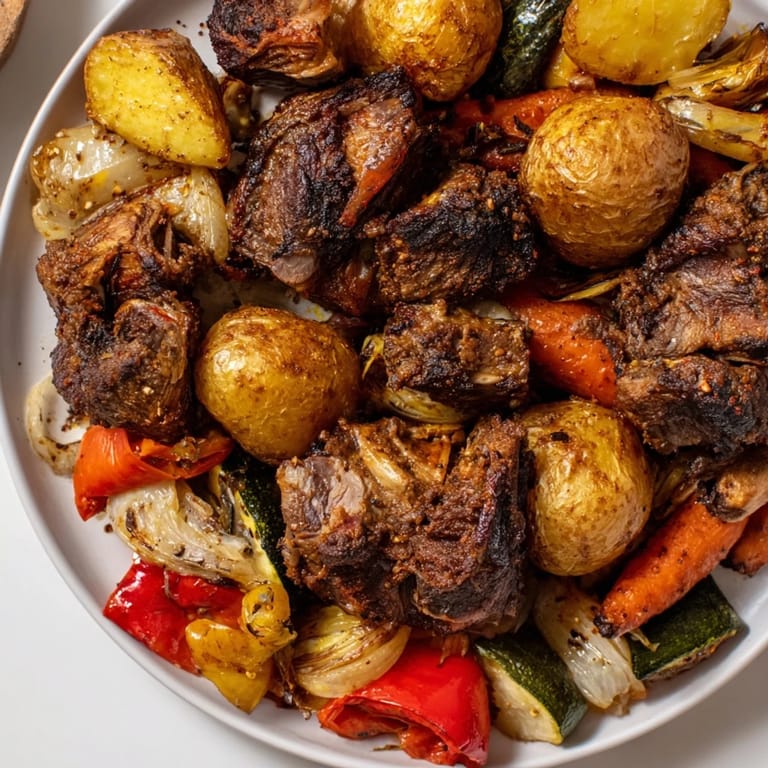
- Potatoes, carrots, onions, zucchinis, bell peppers, and tomatoes (3 large, 3 large, 2 medium, 2 medium, 1 of each color, 2 medium): The vegetables aren't just sides—they become tender vessels for all those spices and create a natural sauce as they release their moisture.
- Long-grain rice, broth, butter or olive oil (2 cups, 3 cups, 1 tbsp): Rice is optional but recommended; it catches the precious juices from the tray and becomes fluffy and infused with flavor.
Tired of Takeout? 🥡
Get 10 meals you can make faster than delivery arrives. Seriously.
One email. No spam. Unsubscribe anytime.
Instructions
- Combine and massage the marinade:
- In a large bowl, whisk together olive oil, all the spices, garlic, and lemon juice until it looks like a loose paste. Place your meat on a cutting board and massage this mixture into every crevice and surface, letting your hands do the work—this isn't just about coating; you're beginning the flavor infusion.
- Let the meat rest and absorb:
- Cover the bowl and refrigerate for at least one hour, though overnight is when the magic really happens and the marinade penetrates the meat completely. If you can only manage an hour, don't worry; just know that overnight tastes noticeably richer.
- Prepare your cooking vessel:
- Preheat your oven to 180°C (350°F) if you're using a home kitchen, and arrange a wire rack or large roasting tray so steam can circulate around everything evenly. Line the tray with foil if you like, leaving plenty of overhang for sealing.
- Arrange the meat and vegetables:
- Place the marinated meat pieces on your rack, then toss all the vegetables separately with a little olive oil, salt, and pepper, and arrange them around and beneath the meat so they'll roast together in the same fragrant cloud. The layering matters because vegetables on the bottom will catch all the dripping juices.
- Seal and trap the steam:
- Cover the entire tray tightly with foil, crimping the edges so no steam escapes—this is what gives you that underground oven effect in your regular kitchen. If you're feeling adventurous and can find banana leaves, wrap them around everything first for authenticity and a subtle flavor gift.
- Slow-cook low and long:
- Bake for two and a half hours without peeking; resist the urge to lift the foil because each time you do, you're releasing precious steam and flavor. The meat should be so tender it yields to a fork without resistance, and the vegetables should be soft enough to mash.
- Prepare rice if desired:
- While everything roasts, combine rinsed rice, broth, butter or oil, and salt in a saucepan and bring to a boil. Once boiling, reduce the heat to low, cover, and let it simmer gently for fifteen to twenty minutes until fluffy and all the liquid is absorbed.
- Serve with care and ceremony:
- Carefully open the foil—the steam will be hot and aromatic—and transfer the meat and vegetables to a beautiful platter, optionally over the cooked rice. Spoon every drop of those precious pan juices over everything because that liquid is liquid gold.
 Save to Pinterest
 What struck me most about zarb was learning that it's historically a celebration dish, cooked for guests and special occasions because it requires time and intention. There's something beautiful about a recipe that forces you to slow down and plan ahead, one that brings people to the table with anticipation already built in.
Why This Dish Matters
Zarb is more than a recipe; it's a Bedouin tradition that speaks to resourcefulness and community. In the desert, where cooking resources were limited, an underground oven that could cook everything at once—meat, vegetables, and the juices that bind them—was pure genius. When you make this at home, you're honoring that heritage while adapting it to your own kitchen reality, and that respectful adaptation is exactly what keeps traditional food alive.
Variations and Swaps
While lamb is traditional and worth trying if you can find it, chicken works beautifully if that's what you have or prefer, and some families mix the two for a more varied texture. You can add eggplant or sweet potatoes instead of regular potatoes, or throw in both for a deeper vegetable medley; just keep the pieces large so everything cooks evenly and stays distinct on the plate.
Serving and Pairings
Zarb is humble enough to serve on its own with just flatbread and a cool yogurt sauce for dipping, or elegant enough to serve over fluffy rice at a dinner party. The juices from the tray are precious—never waste them; use them to moisten the rice or to drizzle over everything at the table. Fresh mint tea cuts through the richness beautifully, or if you prefer wine, reach for something robust and slightly spicy that won't overwhelm the delicate spice balance you've worked hard to achieve.
- Always serve the yogurt sauce on the side so guests can control how much tang they add.
- Tear the flatbread into pieces just before serving so it stays warm and pliable.
- Garnish with fresh parsley or cilantro if you want a bright final note that feels like a gift.
 Save to Pinterest
 Making zarb taught me that some of the best meals are the ones where you do almost nothing once the cooking starts—you just trust the process and the time. That's where real flavor lives.
Recipe FAQs
- → What meats are best for traditional Zarb?
Lamb shoulder or bone-in chicken pieces work best due to their tenderness and flavor retention during slow cooking.
- → How does cooking underground affect the dish?
Underground cooking traps heat and smoke, infusing the meat and vegetables with a unique smoky aroma and tender texture.
- → Can I substitute vegetables in the dish?
Yes, eggplants or sweet potatoes can be added for variation alongside the standard potatoes, carrots, and peppers.
- → Is it necessary to marinate the meat overnight?
Marinating for at least one hour enhances flavor, but overnight marination deepens the taste and tenderness significantly.
- → How is the accompanying rice prepared?
Rice is cooked separately in broth with butter or olive oil until fluffy, providing a comforting base that complements the rich main components.