 Save to Pinterest
 I discovered kelp noodles by accident at a farmers market on a humid summer afternoon when I was desperately searching for something that wouldn't leave me feeling sluggish after lunch. The vendor handed me a package with barely a word, but something about their translucent, almost glass-like appearance intrigued me. That first batch I made was revelatory—crunchy, light, and somehow satisfying in a way that felt like I'd cracked a code. Now this stir-fry is my go-to whenever I want a meal that tastes indulgent but leaves me energized instead of weighted down.
I made this for my friend who'd been trying to eat lighter but kept abandoning diets because nothing felt exciting. She took one bite and her whole face changed—she actually asked for the recipe instead of groaning politely. That's when I realized this wasn't just about the health aspect; it was about proving that restraint doesn't have to mean sacrifice.
Ingredients
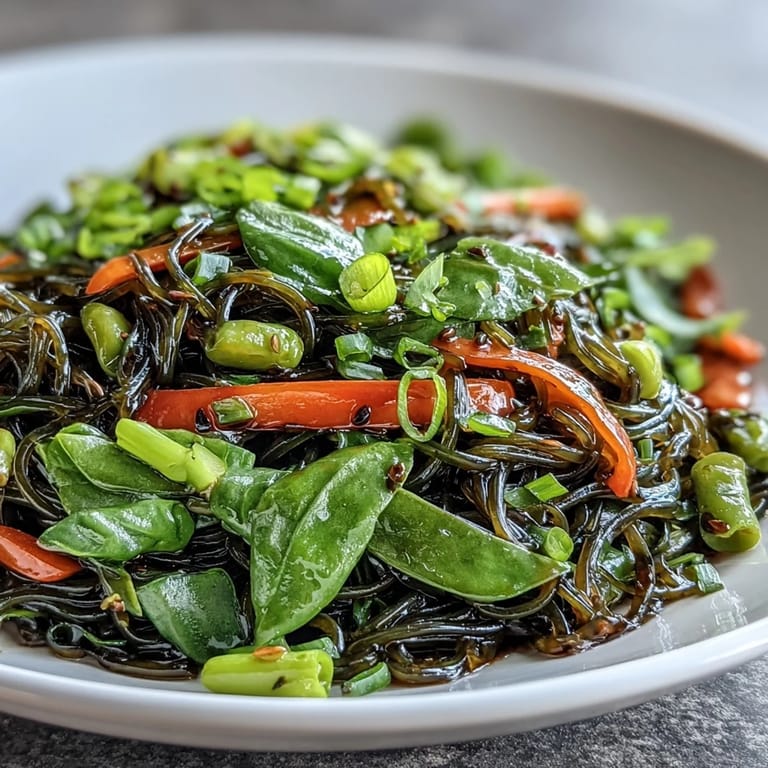
- Kelp noodles (12 oz): These remarkable strands stay crisp no matter how long they sit in sauce, unlike traditional noodles that turn to mush—soak them just long enough to soften but not so long they lose their snap.
- Red bell pepper: The sweetness balances the zesty sauce perfectly, and thin slicing ensures it softens just enough while keeping its vibrant color.
- Snap peas (1 cup): These add a natural crunch and sweetness that plays beautifully against the ginger heat.
- Carrot (1 medium): Julienning it thin means it cooks quickly and distributes throughout the dish evenly.
- Baby spinach (2 cups): It wilts dramatically in the last moment, adding nutrients without weight.
- Green onions: A fresh, sharp note that keeps the whole dish from feeling too heavy.
- Tamari or soy sauce (2 tbsp): Use the full-sodium version if you can—it carries more umami depth, and the 2 tbsp isn't excessive for four servings.
- Toasted sesame oil (1 tbsp): Never skip the toasting step in the name; this is where the nutty magic lives, so buy it specifically marked toasted.
- Rice vinegar (1 tbsp): This slight acidic bite keeps the sauce from feeling cloying and makes your taste buds sing.
- Fresh ginger (1 tbsp grated): Grate it on a microplane so it distributes evenly and doesn't leave stringy pieces.
- Maple syrup or agave (2 tsp): Just enough sweetness to round out the flavors without making it taste like dessert.
- Garlic (2 cloves): Mince it finely so it softens into the sauce rather than staying as harsh little chunks.
- Chili flakes (1/2 tsp, optional): I always include them—the heat makes the fresh ginger sing in a way that's almost mysterious.
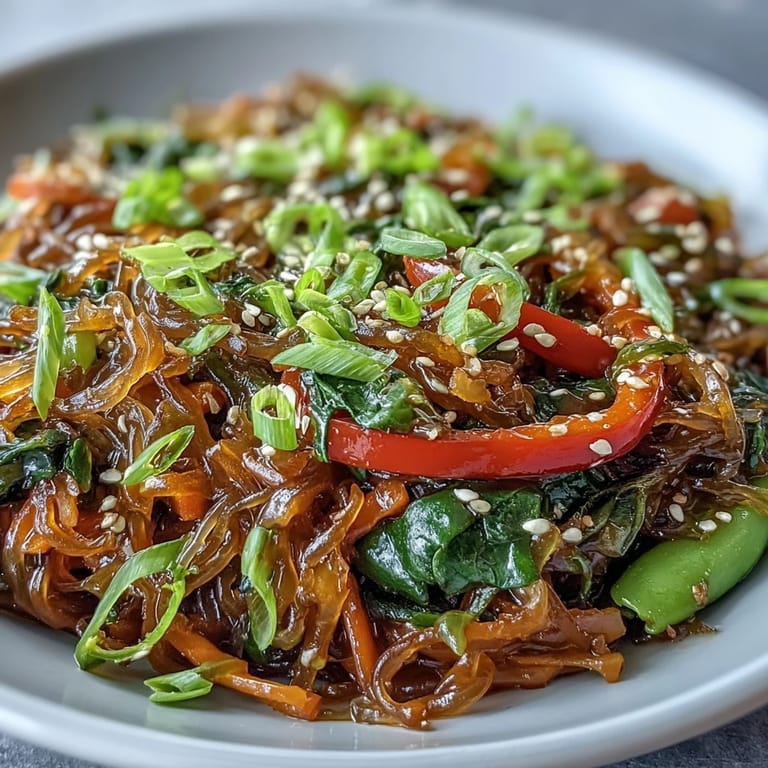
- Toasted sesame seeds: The finishing touch that adds crunch and visual drama.
Tired of Takeout? 🥡
Get 10 meals you can make faster than delivery arrives. Seriously.
One email. No spam. Unsubscribe anytime.
Instructions
- Soak the noodles gently:
- Pour your kelp noodles into a large bowl and cover with warm water—not hot, which can make them too soft. After exactly 10 minutes, the noodles should feel pliable but still have that satisfying bite; drain them well in a colander so they don't dilute your sauce later.
- Build your sauce first:
- In a small bowl, whisk together tamari, sesame oil, rice vinegar, ginger, maple syrup, garlic, and chili flakes until the sweetness dissolves completely. This step matters because mixing it separately means every strand of noodle gets coated evenly instead of some pieces swimming in sauce while others stay dry.
- Sear the hardy vegetables:
- Get your skillet or wok screaming hot over medium-high heat, then add bell pepper, snap peas, and carrot without any oil—they have enough moisture to cook in their own steam and you want them to slightly caramelize at the edges. Toss them around for 3 to 4 minutes until they're tender but still possess that crucial crunch that makes the dish interesting.
- Wilt the delicate greens:
- Toss in your baby spinach and green onions, stirring just for about 1 minute—the residual heat from the pan will soften the spinach into silky submission while the green onions lose their rawness but keep their freshness. Don't walk away during this moment or the spinach will go from wilted to mushy faster than you'd think.
- Marry everything together:
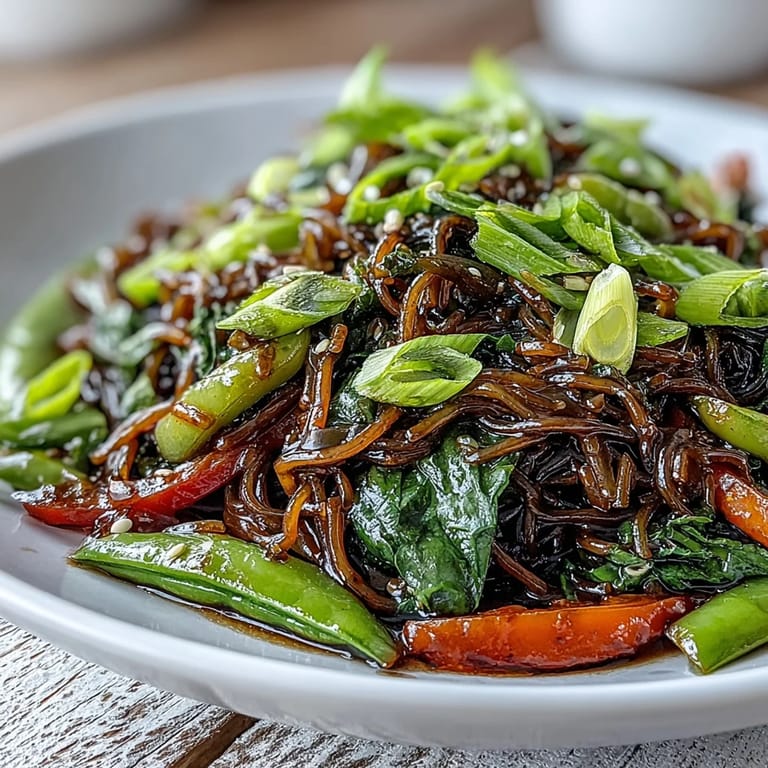
- Add your drained noodles to the pan and pour the sauce over everything, then use tongs to toss for 2 to 3 minutes so each component gets intimate with the flavors. You'll see the sauce cling to the noodles and the whole dish come alive with a glossy sheen that's genuinely beautiful.
- Serve with intention:
- Plate everything immediately while the vegetables still have their snap and the noodles are at their best temperature. Top with sesame seeds, cilantro if you like its brightness, and lime wedges for squeezing—that final squeeze of acid right before eating makes everything taste fresher somehow.
 Save to Pinterest
 My sister came home from a morning run absolutely ravenous and skeptical about eating something this light. After finishing the whole bowl, she admitted she felt energized instead of the usual post-meal crash, and that's when I understood why this recipe became such a regular player in my kitchen. It wasn't about restriction—it was about finding food that actually made me feel good.
The Truth About Kelp Noodles
These noodles are made from kelp seaweed and water, which means they're basically a vehicle for flavor rather than a flavor themselves. The first time I cooked them, I wondered if they'd taste fishy or seaweed-forward, but they're remarkably neutral—almost invisible in the best way. What they bring instead is texture and the satisfaction of eating something substantial without any of the heaviness that comes with wheat or rice noodles.
Building Layers of Flavor
The sauce is where this dish lives or dies, and I learned this the hard way after making a version where I just dumped soy sauce over everything and wondered why it tasted flat. The combination of tamari's umami, sesame oil's nuttiness, rice vinegar's brightness, and ginger's bite creates something that's greater than any single ingredient—it's a small orchestra playing in your mouth. The maple syrup isn't about sweetness; it's about rounding the edges and making the spice feel less aggressive and more inviting.
Customization Without Losing the Soul
This recipe is forgiving in ways that matter, but there are boundaries worth respecting. You can absolutely swap vegetables—broccoli, zucchini, mushrooms all work beautifully—and add protein like tofu cubes or edamame without changing the character of the dish. Some people swear by adding a spoonful of almond or peanut butter to the sauce, which transforms it into something almost cream-based and richer, though I prefer keeping it clean and light. Here's what I'd keep consistent:
- Always include something with natural sweetness like carrots or bell pepper so the sauce has something to play against.
- Don't skip the toasted sesame oil—the regular kind tastes like machine oil in comparison and completely changes the dish.
- Keep the acid from the rice vinegar because it's what prevents everything from tasting one-dimensional.
 Save to Pinterest
 This stir-fry taught me that eating light doesn't mean eating boring, and sometimes the meals that make you feel best are the ones you actually look forward to making. I hope it becomes a regular visitor to your kitchen too.
Recipe FAQs
- → Do kelp noodles need to be cooked?
Kelp noodles don't require traditional cooking. Soaking them in warm water for 10 minutes softens their texture while maintaining their signature crunch. They're heated through during the final toss with vegetables and sauce.
- → Can I add protein to this dish?
Absolutely. Cubed tofu, edamame, or cooked chickpeas work beautifully. Simply add your protein of choice when sautéing the vegetables to ensure it heats through with the other ingredients.
- → What vegetables work best in this stir-fry?
Bell peppers, snap peas, carrots, and spinach create a nice color and texture contrast. Broccoli, zucchini, mushrooms, or bok choy also work well. The key is choosing vegetables that maintain some crispness when cooked quickly over high heat.
- → Is this dish spicy?
The optional chili flakes add mild heat. Without them, the dish has a gentle warmth from ginger and garlic. Adjust the spice level to your preference by adding more or less chili flakes.
- → How long does this keep in the refrigerator?
Best enjoyed immediately while the noodles retain their crunch. Leftovers can be refrigerated for up to 2 days, though the vegetables will soften and the noodles may lose some of their crisp texture.