 Save to Pinterest
 There's something about the smell of red curry paste hitting hot oil that instantly transports me to a cramped Bangkok kitchen where I watched a street vendor throw together this exact soup in a dented aluminum pot. I came home inspired but skeptical—how could I recreate something so alive in my own kitchen? Turns out, the secret wasn't technique but respect for the ingredients. This lentil curry soup has become my go-to when I want something that tastes like it took hours but comes together in under an hour, with a warmth that settles into your bones on the first spoonful.
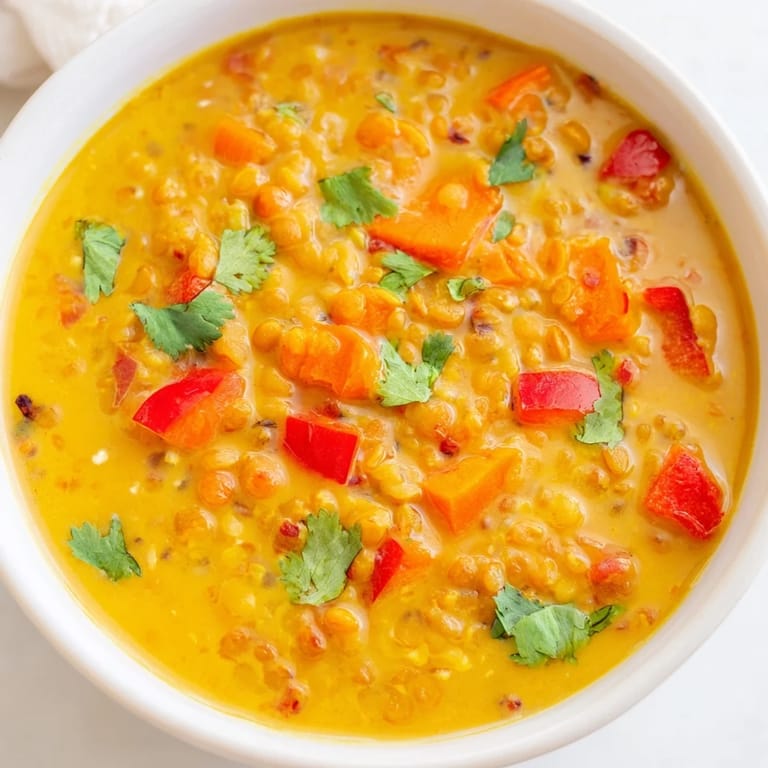
I made this for my sister one January evening when she'd had a terrible week at work. She arrived grumpy and skeptical, but as the soup simmered, the whole apartment filled with this golden, fragrant warmth. By the time I ladled it into bowls and topped it with cilantro, she was already asking for the recipe. It became our thing after that—whenever one of us needed comfort, a pot of this soup appeared.
Ingredients
- Red lentils: Buy them in bulk if you can and rinse them well before using—they cook down into a silky, almost creamy texture that acts as the soul of this soup.
- Red curry paste: The real deal matters here; look for brands with minimal additives and a deep, complex flavor rather than just heat.
- Coconut milk: Use full-fat, never the light version—those empty calories aren't worth the sacrifice in taste and texture.
- Vegetables: Dice everything roughly the same size so everything cooks evenly and you avoid biting into a raw carrot chunk.
- Garlic and ginger: Fresh only; minced ginger from a jar tastes like disappointment.
- Lime juice: Always fresh squeezed, added at the very end to keep its brightness alive.
- Vegetable broth: The quality of your broth is the quality of your soup—use something you'd actually drink on its own.
Tired of Takeout? 🥡
Get 10 meals you can make faster than delivery arrives. Seriously.
One email. No spam. Unsubscribe anytime.
Instructions
- Wake up the aromatics:
- Heat your oil until it shimmers, then add diced onion. Let it soften for three minutes, listening for that gentle sizzle. When the edges start to turn translucent, you're ready.
- Build the base:
- Stir in garlic and ginger and let them cook for exactly one minute—any longer and they'll burn, any shorter and you'll miss their perfume. The kitchen should smell intoxicating at this point.
- Awaken the spice:
- Add curry paste and turmeric, stirring constantly for a minute or two. This step is crucial; you're not just mixing, you're coaxing the spice into the oil so every spoonful of soup tastes like it.
- Sauté the vegetables:
- Add carrot, bell pepper, and zucchini if using. Cook for two to three minutes until they smell sweet and their edges begin to soften.
- Bring it together:
- Pour in lentils, coconut milk, broth, and soy sauce. Stir well, then bring to a boil and immediately reduce to a gentle simmer. Let it bubble away uncovered for twenty to twenty-five minutes, stirring occasionally.
- The final moment:
- Add spinach and let it wilt into the soup in about two minutes. Squeeze in lime juice, taste, and adjust salt until it sings.
 Save to Pinterest
 This soup taught me that sometimes the most nourishing meals are the simplest ones. There was a comfort in knowing exactly what went into every bowl, and a quiet pride in the fact that something this vibrant and delicious was entirely plant-based.
The Heat Factor
Red curry paste carries its own gentle warmth, but it's not a scorcher. If you like your soup with more kick, add a chopped fresh chili or a pinch of chili flakes to the oil when you add the curry paste. Start small—you can always add more, but you can't take it back once it's in the pot.
Variations Worth Trying
While this recipe is perfect as written, I've learned that soups are forgiving. Swap spinach for kale if that's what you have, add chickpeas if you want more protein, or throw in a can of diced tomatoes for brightness. One evening I roasted some cauliflower ahead of time and stirred it in at the end—it added a different texture and made the soup feel almost meaty. The base is strong enough to handle whatever vegetables you have lingering in the crisper drawer.
Serving and Storage
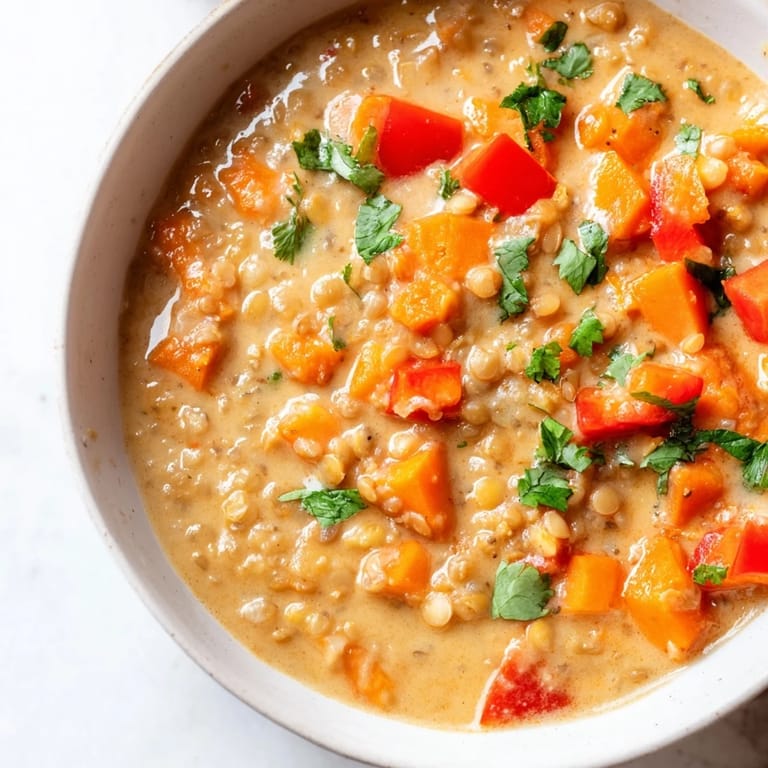
This soup is best served hot in deep bowls with a generous handful of cilantro scattered on top and a lime wedge for squeezing. I usually make it and eat it immediately, but it keeps beautifully in the refrigerator for four days and freezes well for up to three months. When reheating, add a splash of water or broth since the soup thickens as it sits, and taste again for salt and lime juice, which fade slightly over time.
- Serve with jasmine rice or warm naan to turn it into a complete meal.
- A dollop of coconut yogurt on top adds richness without overwhelming the spices.
- Fresh herbs like basil or mint can stand in for cilantro if that's your preference.
 Save to Pinterest
 This is the kind of soup that gets better with time, both in the refrigerator and in your cooking confidence. Make it once and you'll make it a hundred times.
Recipe FAQs
- → What type of lentils work best?
Dried red lentils are preferred for their quick cooking time and creamy texture, blending well with the coconut milk and curry flavors.
- → Can I adjust the spice level?
Yes, adding more or less red curry paste controls the heat. For extra spice, include a chopped chili or chili flakes.
- → Is it possible to substitute the coconut milk?
Full-fat coconut milk adds creaminess and richness; light versions can be used but may reduce thickness and flavor depth.
- → What vegetables complement the dish?
Carrots, bell peppers, zucchini, and spinach add texture, color, and nutrition, balancing the spiced lentils and broth.
- → How should leftovers be stored?
Store cooled portions in airtight containers in the refrigerator for up to 3 days. Reheat gently on the stove or microwave.
- → Can this be made soy-free?
Replace soy sauce or tamari with coconut aminos to avoid soy allergens without sacrificing umami flavor.