 Save to Pinterest
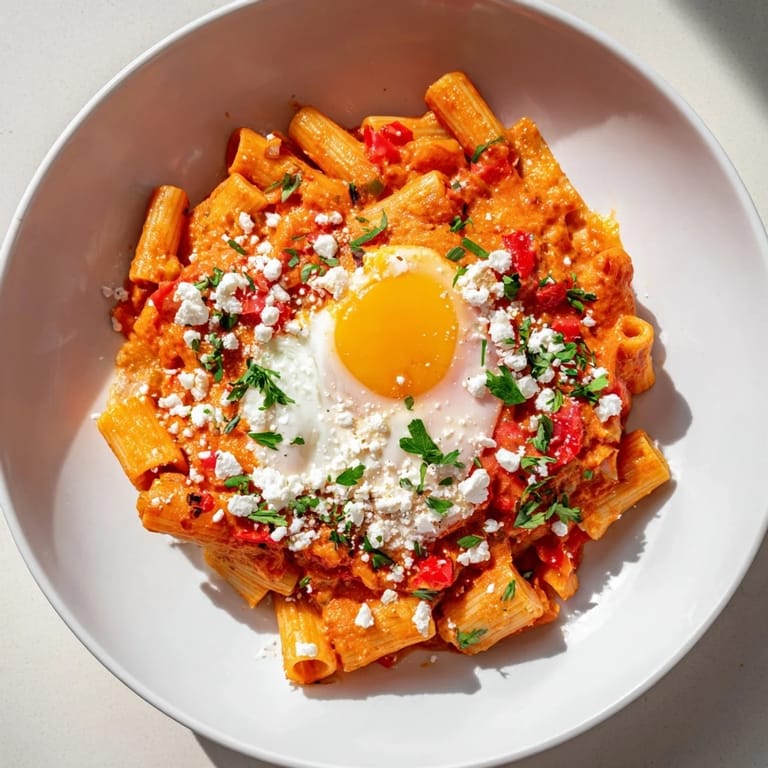
 There was a Tuesday night when my kitchen timer kept blaring, and I had thirty minutes before guests arrived. I'd been craving shakshuka but didn't have bread to soak up the sauce, so I grabbed a box of penne and threw it into boiling water. What emerged was something unexpected: a warm, spiced pasta that tasted like a Mediterranean escape, with runny eggs turning it into liquid gold. That improvisation became my go-to weeknight dinner.
I made this for my roommate on a particularly exhausting Thursday, and she actually stopped scrolling her phone to taste it. The smell of cumin and smoked paprika filling our tiny kitchen was enough to make her look up, but the first bite sealed it—she asked for the recipe before she finished eating. Now it's become our unspoken language for saying 'I care but I don't have time to fuss.'
Ingredients
- Penne or rigatoni, 300 g: Choose a sturdy pasta shape that holds onto sauce; these tubes trap the spiced tomato mixture perfectly, and they cook just tender in the time it takes to build the sauce.
- Olive oil, 2 tbsp: Use good quality here since you'll taste it directly—it's the foundation for everything that follows.
- Onion and red bell pepper: The red pepper adds sweetness that balances heat; finely chopped onion dissolves into the sauce rather than staying chunky.
- Garlic, 3 cloves minced: Garlic burns easily once you add the paprika, so have it ready before you start cooking.
- Ground cumin and smoked paprika, 1 tsp each: These are non-negotiable—they're what transforms tomato sauce into something with Middle Eastern soul.
- Chili flakes, 1/4 tsp: Start conservatively; you can always add heat, but you can't take it away.
- Crushed tomatoes and tomato paste: The paste concentrates flavor and thickens the sauce, while crushed tomatoes provide body and texture.
- Eggs, 4 large: The yolks are the dish's richest secret—they need to stay runny, so don't overcook them.
- Fresh parsley or cilantro: Cilantro brightens everything if you like its flavor; parsley is safer if you want herbal freshness without risk.
- Feta cheese: Optional, but the salty tang cuts through the richness and adds a textural contrast.
Tired of Takeout? 🥡
Get 10 meals you can make faster than delivery arrives. Seriously.
One email. No spam. Unsubscribe anytime.
Instructions
- Start your pasta:
- Boil a large pot of generously salted water and cook the pasta until just barely al dente—it'll soften slightly more from the sauce's heat. Reserve that pasta water; it's your safety net for achieving the right sauce consistency.
- Build the sauce base:
- While pasta cooks, warm olive oil in a large skillet and sauté the onion and bell pepper until the edges soften and the onion turns translucent. This takes about five minutes and sets up all the flavors that follow.
- Toast the spices:
- Add minced garlic along with cumin, smoked paprika, and chili flakes, stirring constantly for just a minute. You'll smell when they're ready—the aroma becomes deeper and richer, not raw or sharp.
- Simmer the sauce:
- Pour in crushed tomatoes and tomato paste, add a pinch of sugar to balance acidity, then season with salt and pepper. Let it bubble gently for eight to ten minutes, stirring occasionally, until it thickens enough that a spoon dragged through leaves a brief trail.
- Create the egg nests:
- Using the back of a spoon, make four shallow wells in the sauce. Crack an egg into each well, cover the skillet, and let steam cook the whites while yolks stay liquid—this takes four to six minutes depending on how runny you prefer them.
- Marry pasta and sauce:
- Add your drained pasta to the skillet and gently toss everything together. If the mixture feels too thick, splash in some reserved pasta water until it flows naturally around the pasta and eggs.
- Finish and serve:
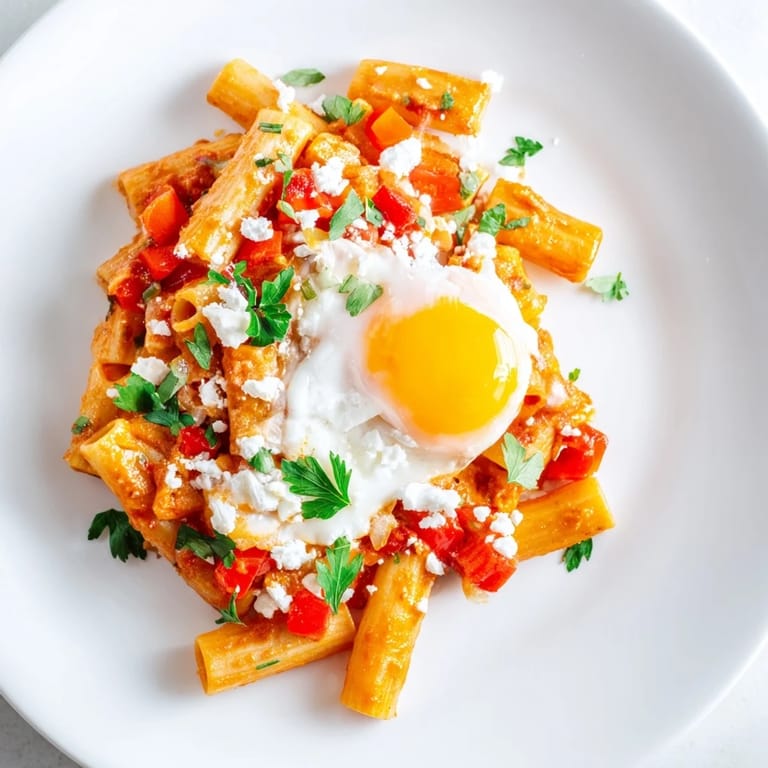
- Scatter chopped herbs and crumbled feta over the top, then bring the whole skillet to the table if you're serving family-style, or divide carefully among plates so everyone gets an egg.
 Save to Pinterest
 I made this dish for my sister the week she moved into her first apartment, and she cried a little when she ate it—not from sadness, but from the simple comfort of a hot meal in an otherwise empty kitchen. Food has a way of filling spaces bigger than the pot it's cooked in.
The Magic of Runny Yolks
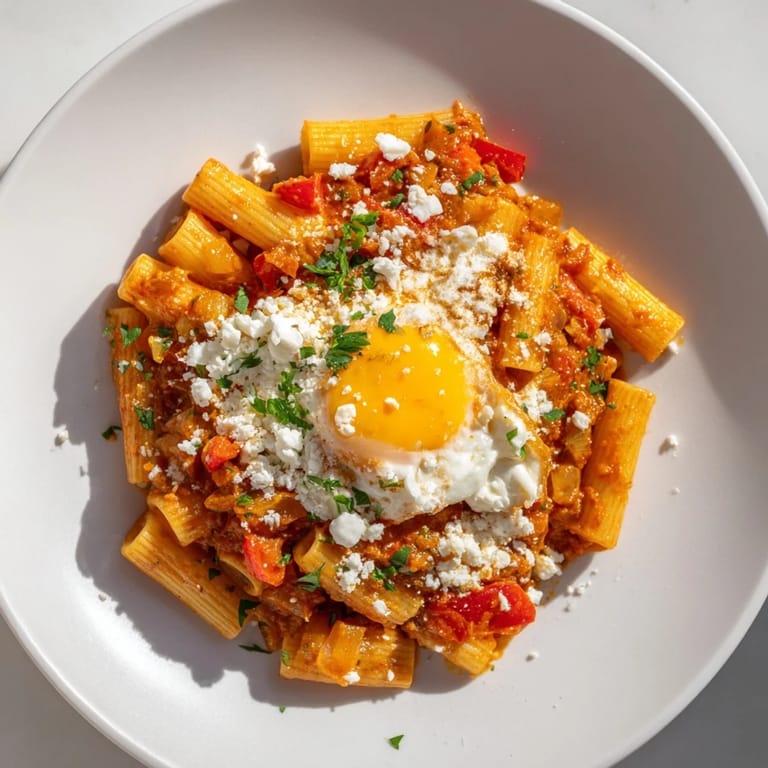
Those yolks aren't just decoration; they're your sauce. The second you cut into one, it bleeds golden and glossy into every crevice of the pasta, creating richness that no cream could replicate. This is why timing matters so much—you want them set enough to hold together when you plate, but still liquid enough to do their job. It's the difference between a good dish and one you find yourself thinking about for days afterward.
Customizing for Your Heat Tolerance
Shakshuka isn't meant to be timid, but heat is personal. If you love fire, double the chili flakes or add a pinch of cayenne alongside the paprika. If you're cooking for someone who avoids spice entirely, omit the chili flakes and trust that cumin and smoked paprika carry enough warmth on their own. The beauty of cooking this way is that you're not locked into one interpretation—you're creating something for your own palate.
Wine, Bread, and Timing
This pasta wants company—a crisp white wine that cuts through the richness, crusty bread for soaking up every last drop of sauce. The thirty-minute timeline is real; nothing about this dish demands fussing or resting. It's the kind of meal that works for a casual weeknight or a last-minute dinner party because it feels both homey and special at the same time.
- Serve directly from the skillet while everything is still steaming for the most dramatic effect.
- If you're dairy-free, skip the feta without hesitation—the dish stands perfectly well on its own.
- Leftovers reheat gently in a low oven, covered, though honestly these rarely last long enough to worry about.
 Save to Pinterest
 This is the kind of recipe that proves you don't need hours in the kitchen to feel like you've created something real. Thirty minutes from start to finish, and you've made dinner into an occasion.
Recipe FAQs
- → What pasta works best for this dish?
Penne or rigatoni are preferred for their shape, which holds the sauce well. You can also substitute with whole-wheat or gluten-free pasta if desired.
- → How can I adjust the spiciness?
Adjust chili flakes to taste or add a pinch of cayenne for extra heat. Omitting chili flakes will result in a milder profile.
- → Can I substitute feta cheese?
Yes, goat cheese works well as an alternative or you can omit dairy entirely for a dairy-free version.
- → How do I know when the eggs are perfectly cooked?
Cover the skillet and cook the eggs for 4-6 minutes until whites are set but yolks remain runny for the ideal texture.
- → What are good serving suggestions?
This dish pairs well with crusty bread to soak up sauce and a crisp white wine to complement the spices.