 Save to Pinterest
 The first time I made tom yum soup, I was standing in a Bangkok night market at midnight, watching a vendor work over a steaming pot with the kind of casual precision that only comes from making something a thousand times. I bought a bowl, tasted it, and was immediately transported by the heat, the sourness, the brightness of lime cutting through everything else. Years later, I finally recreated that moment in my own kitchen, and what surprised me most was how quickly the aromatics transform plain stock into something that smells like a whole country.
I made this for a friend who'd just returned from Thailand, and I was nervous until she took one taste and closed her eyes. When she opened them again, she said it reminded her of sitting under a fan in Chiang Mai, which somehow felt like the highest compliment. That's when I realized tom yum isn't just soup—it's a flavor memory that travels.
Ingredients
- Chicken or vegetable stock (4 cups): This is your canvas, so use something you'd actually drink on its own.
- Fresh lemongrass (2 stalks): Trim the dry ends, smash it open with your knife handle to release the oils—this small gesture changes everything.
- Kaffir lime leaves (4 leaves): If you can't find them, lime zest works in a pinch, but the leaves have a floral quality you can't fully replicate.
- Fresh galangal (3 slices): This root is slightly peppery and nothing like ginger, but honestly, ginger will get you 80% of the way there if you're in a bind.
- Thai bird's eye chilies (2): These are spicy without being aggressive, but adjust based on your heat tolerance and who you're cooking for.
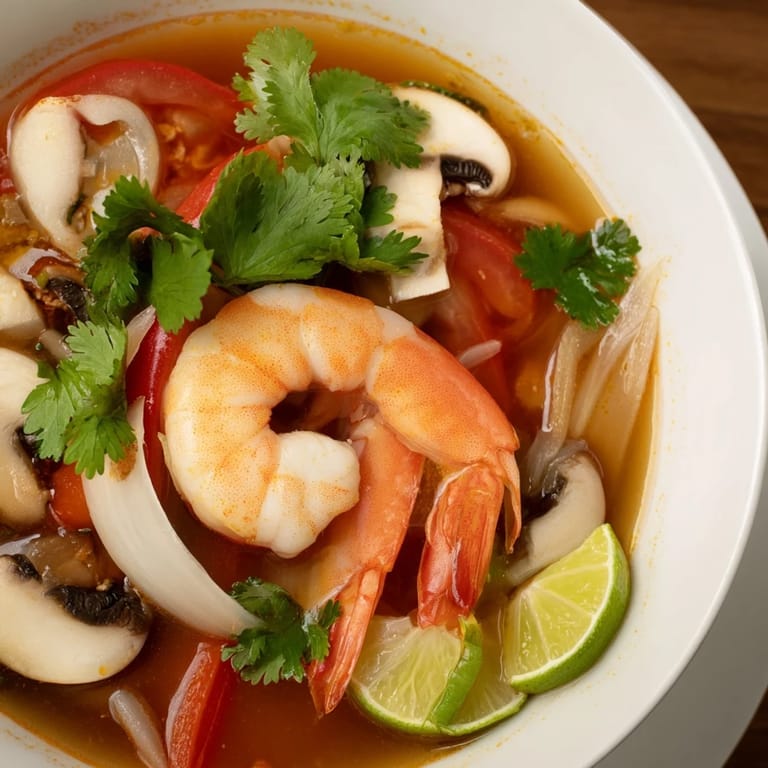
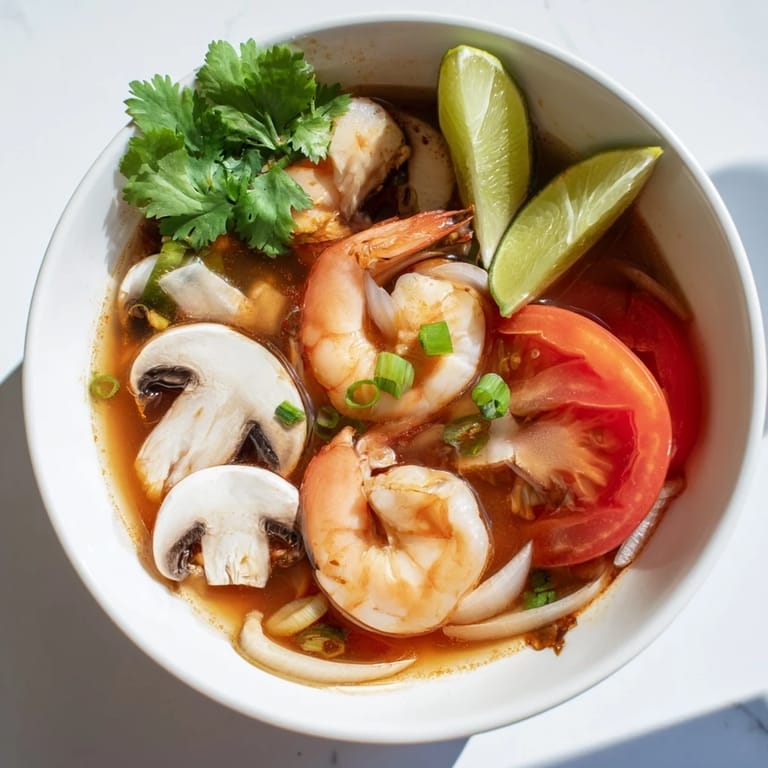
- Large shrimp (250 g): Buy them fresh if you can—you'll taste the difference in the final moment when they turn pink.
- White mushrooms (150 g): Sliced thin so they absorb the broth without disappearing entirely.
- Tomatoes (2 medium): Cut them into wedges so they release their juice slowly into the pot.
- Onion (1 small): Sliced thin so it softens into the broth without overwhelming the other flavors.
- Fish sauce (2 tablespoons): This is the umami anchor—it might smell intense in the bottle, but trust it.
- Lime juice (1 tablespoon plus more): Fresh squeezed, always.
- Sugar (1 teaspoon): Just a whisper to round out the heat and sourness.
- Chili paste nam prik pao (1 teaspoon, optional): Adds a roasted depth if you want to layer the heat.
- Salt: To taste, added at the very end.
- Fresh cilantro, green onions, and lime wedges for garnish: These aren't afterthoughts—they're how the soup finishes itself.
Tired of Takeout? 🥡
Get 10 meals you can make faster than delivery arrives. Seriously.
One email. No spam. Unsubscribe anytime.
Instructions
- Build your flavor base:
- Bring stock to a simmer and add lemongrass, kaffir lime leaves, galangal, and chilies. Let it sit for 5–7 minutes, and your kitchen will start smelling like somewhere far away. You'll notice the broth shifting from plain to something with character.
- Welcome in the vegetables:
- Add mushrooms, tomatoes, and onion, then wait 3–4 minutes until they soften and start giving up their moisture to the pot. The tomatoes will begin to collapse slightly, which is exactly what you want.
- Cook the shrimp just right:
- Add shrimp and watch it carefully—the moment it turns pink and opaque, usually 2–3 minutes, is when you pull it from heat. Overcooked shrimp becomes rubber, and that's the only real mistake you can make here.
- Season to taste:
- Stir in fish sauce, lime juice, sugar, and chili paste if using. Taste it, then adjust—maybe it needs more brightness from lime, or more depth from fish sauce. This is where you make it yours.
- Finish and serve:
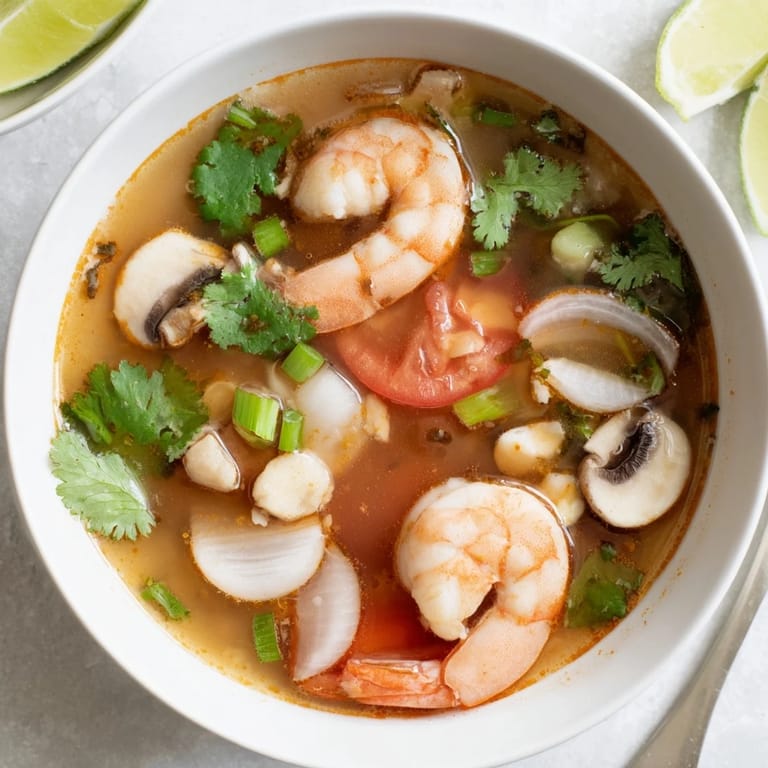
- Remove from heat and fish out the lemongrass and galangal pieces if they bother you, though some people leave them in for continued flavor. Ladle into bowls and scatter cilantro, green onions, and a wedge of lime on top.
 Save to Pinterest
 I served this to my partner on a cold evening, and they asked why we hadn't made it sooner. It's become one of those recipes that lives in permanent rotation, the kind that turns a regular weeknight into something that feels intentional. The fact that it takes less than an hour makes it feel like a small act of kindness to yourself.
The Heart of Thai Seasoning
Tom yum teaches you that Thai cooking lives in balance—heat and sour, funk and brightness, all in conversation. The trinity of lime juice, fish sauce, and chili is doing the heavy lifting here, and once you understand how they work together, you'll find yourself reaching for the same combination in other dishes. It's not about following a formula; it's about tasting and adjusting until the soup is singing.
Making It Your Own
This recipe is a springboard, not a prison. If you love seafood, add scallops or squid. If you're vegetarian, swap shrimp for tofu and fish sauce for soy sauce, and the soup becomes something equally valid. Some people add coconut milk to mellow the heat, though that edges you toward tom kha territory. The point is that once you understand the base, you can play with it.
Pairing and Serving
This soup doesn't need much—a bowl of steamed jasmine rice on the side is all you need for a complete meal, though some nights I just eat it as is and feel completely satisfied. A cold, crisp white wine or a chilled lager cuts through the heat beautifully, if you're in the mood for a drink.
- Serve it immediately while it's still steaming and the aromatics are still alive in the air.
- Leftover soup keeps in the fridge for three days, though the shrimp becomes softer and the fresh brightness fades slightly.
- If you're making this for a crowd, double the recipe and let people adjust the heat and sourness at the table with extra lime and chili.
 Save to Pinterest
 Tom yum soup is a reminder that some of the most rewarding dishes come together quickly if you understand what you're building. Make it, taste it, adjust it, and most importantly, share it with someone who'll appreciate the care you put into the balance.
Recipe FAQs
- → What ingredients give Tom Yum its signature flavor?
Lemongrass, kaffir lime leaves, galangal, Thai bird’s eye chilies, lime juice, and fish sauce combine to create the distinctive hot, sour, and aromatic character.
- → Can I substitute shrimp with other proteins?
Yes, tofu can replace shrimp for a vegetarian option, and the fish sauce can be swapped with soy sauce to suit dietary needs.
- → How spicy is this Tom Yum variety?
The level of heat can be adjusted by adding or reducing Thai bird’s eye chilies and chili paste according to your preference.
- → What garnishes enhance this soup?
Fresh cilantro leaves, sliced green onions, and extra lime wedges brighten the soup’s layers of flavor and add freshness.
- → What dishes pair well with this soup?
Steamed jasmine rice complements the broth’s flavors, and crisp Riesling or a chilled lager are excellent beverage pairings.
- → How long does the preparation and cooking take?
Preparation takes about 15 minutes, with 20 minutes cooking time, totaling roughly 35 minutes from start to finish.