 Save to Pinterest
 The kitchen counter was dusted with flour like fresh snow, and my hands were sticky with egg yolk when I realized I had no idea what I was doing. Making ravioli from scratch seemed like a good idea until I was elbow-deep in dough that refused to cooperate. But then something shifted, the dough came together under my palms, smooth and alive, and I understood why people have been doing this for centuries. That first batch was lumpy and uneven, but when they bobbed to the surface of the boiling water, I felt like I'd accomplished something real.
I made this for my sister on a rainy Tuesday when we both needed something to do with our hands. We stood side by side, pressing the edges of each ravioli with forks, laughing at the crooked ones and saving the prettiest for the top of the plate. The smell of garlic hitting hot olive oil filled the kitchen, and by the time we sat down to eat, the rain had stopped. She still asks me to make it whenever she visits.
Ingredients
- All-purpose flour: The backbone of your dough, it gives structure without being too heavy, and a little extra on the counter makes rolling easier.
- Eggs: They bind everything together and give the pasta that rich, golden color and silky texture.
- Ricotta cheese: Choose whole milk ricotta for the creamiest filling, it should be thick, not watery.
- Fresh spinach: Wilts down to almost nothing, so don't be shy with the amount, and squeeze it dry or your filling will be soupy.
- Parmesan cheese: Adds a salty, nutty depth that balances the mild ricotta perfectly.
- Nutmeg: Just a pinch transforms the filling from flat to complex, like a quiet secret in every bite.
- Marinara sauce: Homemade is lovely, but a good jarred sauce works when life is busy.
- Garlic: Fresh cloves sautéed until fragrant make all the difference in a simple sauce.
- Olive oil: Use a decent one for the sauce, you'll taste it.
- Fresh basil: Torn at the last minute, it adds brightness and a pop of color.
Tired of Takeout? 🥡
Get 10 meals you can make faster than delivery arrives. Seriously.
One email. No spam. Unsubscribe anytime.
Instructions
- Make the Pasta Dough:
- Pile your flour on the counter, make a well like a little volcano, and crack the eggs into the center with the salt. Use a fork to whisk the eggs, slowly pulling in flour from the sides until it becomes shaggy, then dive in with your hands and knead until it's smooth and elastic, about 8 to 10 minutes. Wrap it in plastic and let it rest for 30 minutes so the gluten relaxes.
- Prepare the Filling:
- Wilt the spinach in a hot pan or steam it, then squeeze out every bit of moisture you can, this step matters more than you think. Mix it with ricotta, Parmesan, egg yolk, nutmeg, salt, and pepper until everything is evenly combined and tastes balanced.
- Roll the Pasta:
- Cut the dough in half and work with one piece at a time, keeping the other covered. Roll it out thin, about 1/16 inch, using a pasta machine if you have one or a rolling pin and some patience if you don't.
- Shape the Ravioli:
- Lay one sheet flat and drop teaspoons of filling in neat rows, about 2 inches apart. Brush the edges and spaces between with water, drape the second sheet over the top, and press firmly around each mound to seal, then cut into squares and press the edges with a fork.
- Cook the Ravioli:
- Bring a big pot of salted water to a gentle boil and slide the ravioli in carefully, don't crowd them. They'll float to the top in 3 to 4 minutes, that's when you know they're done.
- Make the Marinara Sauce:
- Heat olive oil in a saucepan, toss in minced garlic, and let it sizzle until it smells amazing, about a minute. Pour in your marinara, season with salt and pepper, and let it simmer gently for 5 minutes.
- Serve:
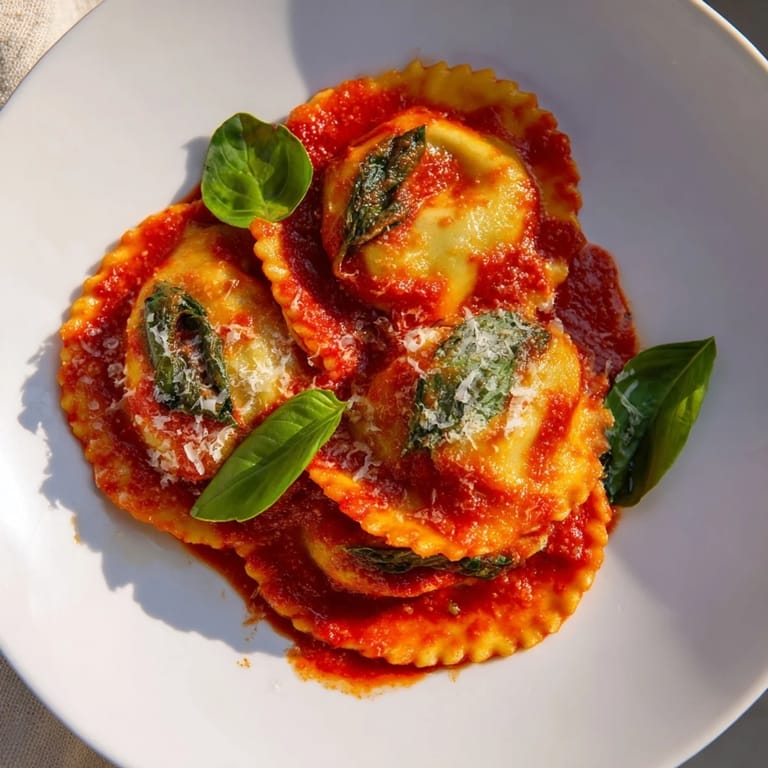
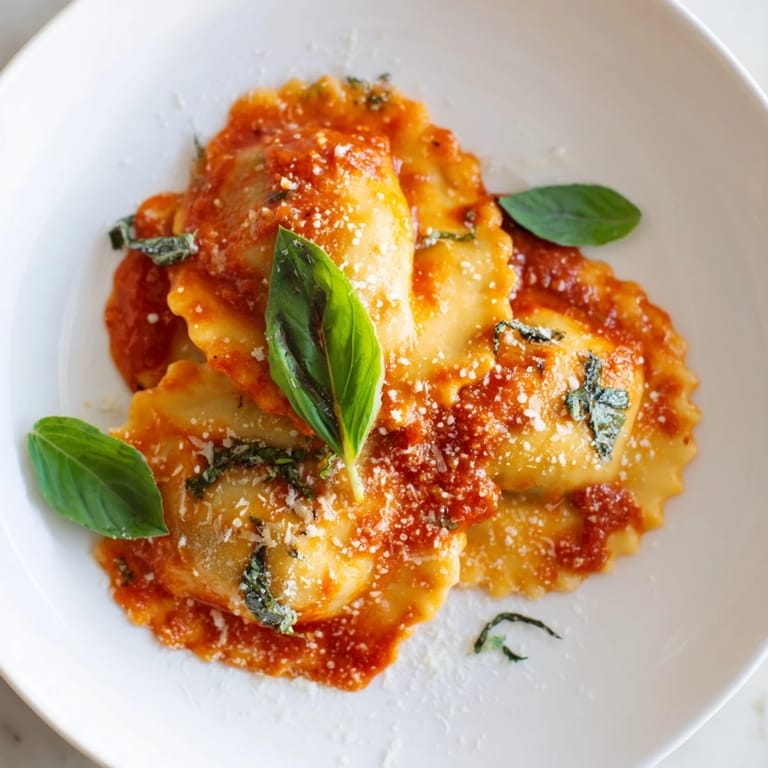
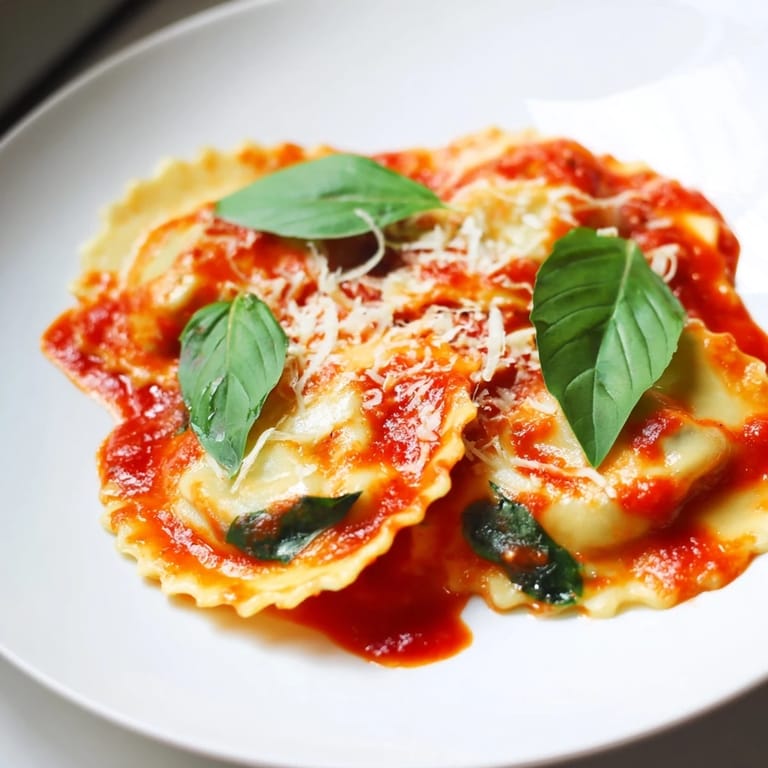
- Spoon sauce onto each plate, arrange the hot ravioli on top, add more sauce, and finish with torn basil and a shower of Parmesan. Serve immediately while everything is steaming.
 Save to Pinterest
 There was a night I served these to friends who didn't know I'd made the pasta myself. They ate quietly at first, then someone said, wait, did you actually make these? and the whole table lit up with questions. It wasn't just about the food, it was about the care folded into every little square, the kind of effort that people feel even if they don't say it. That's when I realized cooking like this is a love language.
Storing and Reheating
Uncooked ravioli freeze beautifully if you lay them flat on a parchment-lined tray until solid, then transfer to a freezer bag. Cook them straight from frozen, just add an extra minute or two to the boiling time. Cooked ravioli can be stored in the fridge with a little sauce for up to three days, and they reheat gently in a covered pan with a splash of water.
Choosing Your Cheese
Ricotta can vary wildly in texture, so look for one that's thick and creamy, not watery. If yours seems loose, let it drain in a fine-mesh strainer for 20 minutes before using. I learned this after one batch turned into a soggy mess, and now I always check the consistency first.
Making It Your Own
This recipe is a base you can build on. I've swapped the marinara for brown butter and sage when I wanted something richer, or tossed the ravioli in a light cream sauce with peas. You can add lemon zest to the filling for brightness, or mix in some sautéed mushrooms if you want earthiness.
- Try a drizzle of truffle oil for a fancy finish.
- Use butternut squash instead of spinach for a fall version.
- Top with toasted pine nuts for a little crunch.
 Save to Pinterest
 Every time I make these, I remember that first messy attempt and smile. They don't have to be perfect to be delicious, and the imperfect ones always taste just as good.
Recipe FAQs
- → Can I use frozen spinach instead of fresh?
Yes, frozen spinach works perfectly. Thaw it completely and squeeze out excess moisture before chopping and mixing into the filling. This ensures the proper consistency and prevents a watery filling.
- → How long can I store uncooked ravioli?
Uncooked ravioli can be refrigerated for up to 24 hours on a floured baking sheet covered with plastic wrap. For longer storage, freeze them on a baking sheet, then transfer to freezer bags for up to 3 months. Cook directly from frozen, adding 1-2 minutes to cooking time.
- → What type of wine pairs well with this dish?
A crisp white wine such as Pinot Grigio, Sauvignon Blanc, or Vermentino complements the creamy ricotta filling and bright marinara sauce beautifully. These wines provide acidity that cuts through the richness.
- → How do I know when the ravioli are done cooking?
Ravioli are ready when they float to the surface of the boiling water, typically after 3-4 minutes. Let them simmer for another minute or two after floating to ensure the filling is heated through completely.
- → Can I make the pasta dough in advance?
Absolutely. Prepare the dough, wrap it tightly in plastic wrap, and refrigerate for up to 24 hours. You can also freeze it for up to 3 months. Allow it to come to room temperature for 15-20 minutes before rolling.
- → How can I enhance the filling flavor?
Add a pinch of lemon zest, fresh lemon juice, or a hint of garlic powder to the ricotta mixture. Fresh herbs like basil or parsley, or a touch of red pepper flakes, also add wonderful depth and complexity to the filling.