 Save to Pinterest
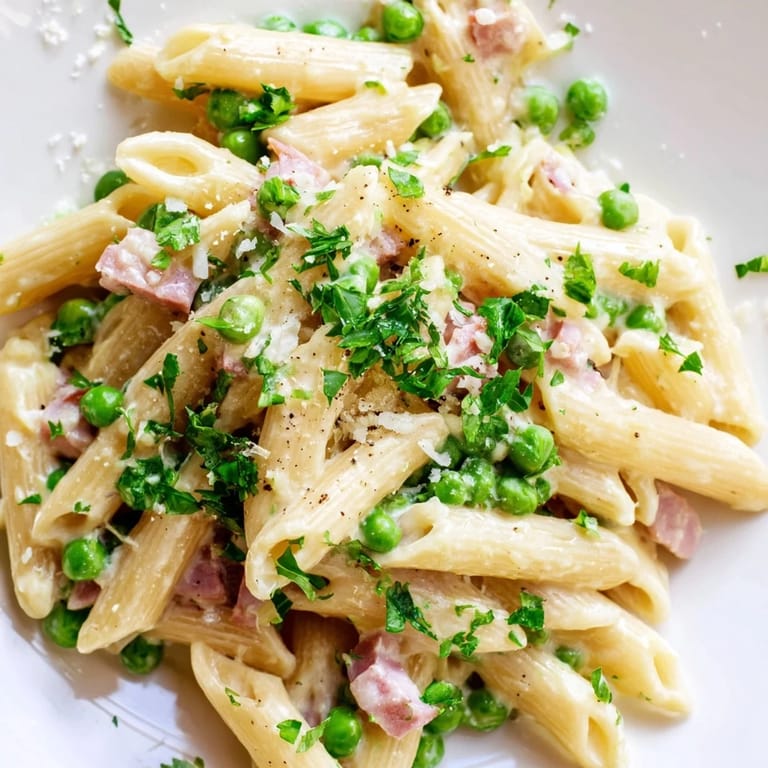
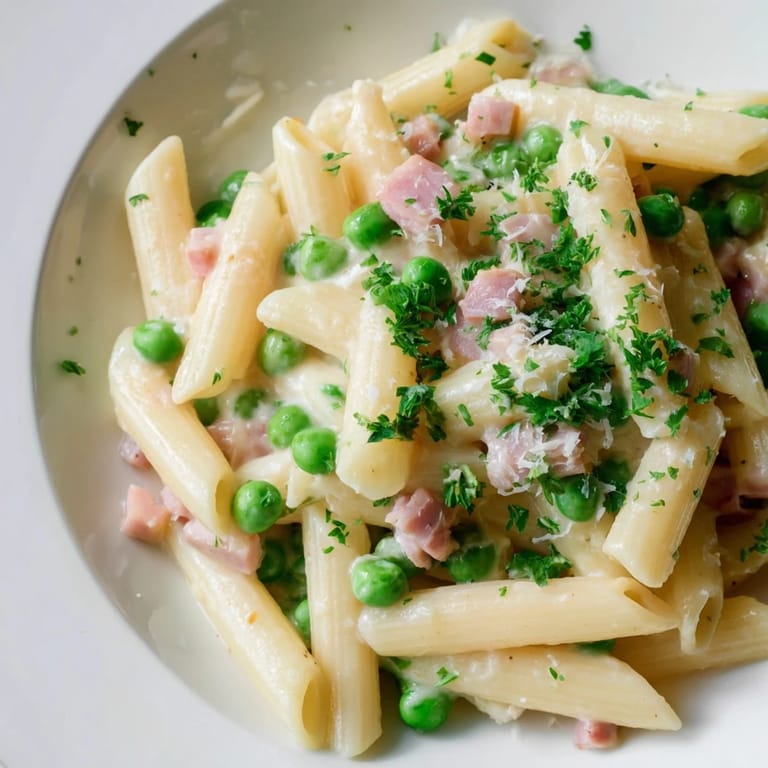
 The first time I made this pasta was on a rainy Tuesday when I had half a ham leftover from Sunday dinner and a bag of peas screaming to be used. My kitchen smelled like butter and comfort, and something about the sweetness of those peas against salty ham just clicked.
I served this to my brother who claims to hate cream sauces, and he went back for seconds. Sometimes the simplest combinations hit the hardest, and watching someone reconsider their entire food philosophy over a bowl of pasta is pretty satisfying.
Ingredients
- 350 g penne pasta: The ridges catch the sauce perfectly, and I have found that penne holds up better to heavy cream than longer noodles
- 1 cup fresh or frozen peas: Frozen peas work beautifully here, but if you can find fresh spring peas, they pop with sweetness that changes everything
- 2 cloves garlic, minced: Do not skip this or use garlic powder, the fresh stuff melts into the cream and creates depth
- 1 small onion, finely chopped: I have learned to chop it smaller than you think you need, so it practically disappears into the sauce
- 1 cup cooked ham, diced: Leftover ham is ideal, but good deli ham works in a pinch, just cut it into small cubes
- 1 cup heavy cream: This creates that velvety texture, and I have tried lighter versions but nothing coats the pasta quite the same
- 2 tbsp unsalted butter: Start your sauce with butter instead of oil, it makes the foundation richer
- 1/2 cup grated Parmesan cheese: Freshly grated matters here, the pre-shredded stuff has anti-caking agents that prevent smooth melting
- 1/2 tsp freshly ground black pepper: Creamy dishes need plenty of pepper to cut through the richness
- 1/4 tsp salt, plus more for pasta water: The pasta water needs to taste like the sea, that is how you get well-seasoned noodles
- 2 tbsp chopped fresh parsley: This is optional but I love how it brightens the plate and makes everything look finished
Tired of Takeout? 🥡
Get 10 meals you can make faster than delivery arrives. Seriously.
One email. No spam. Unsubscribe anytime.
Instructions
- Get your pasta water going first:
- Bring a large pot of salted water to a boil, then cook the penne until al dente. Drain it but save that starchy pasta water, it is liquid gold for fixing sauce consistency later.
- Build your flavor base:
- Melt butter in a large skillet over medium heat, then add your chopped onion and sauté for 3 minutes until it softens. Toss in the garlic for just 1 minute, you want it fragrant not browned.
- Add the ham and get it sizzling:
- Stir in the diced ham and cook for 2 to 3 minutes until it is lightly browned and heated through. This step releases all those salty savory notes into the butter.
- Drop in the peas:
- Add the peas and cook for 2 minutes until they turn bright green. If you are using frozen peas, just cook until they are heated all the way through.
- Create the creamy sauce:
- Pour in the cream and bring it to a gentle simmer, then add Parmesan, salt, and pepper. Keep stirring until the cheese melts completely and the sauce thickens enough to coat a spoon.
- Bring it all together:
- Add the drained penne to the skillet and toss until every piece is coated. If the sauce feels too thick, splash in some of that reserved pasta water until it loosens up.
- Finish and serve immediately:
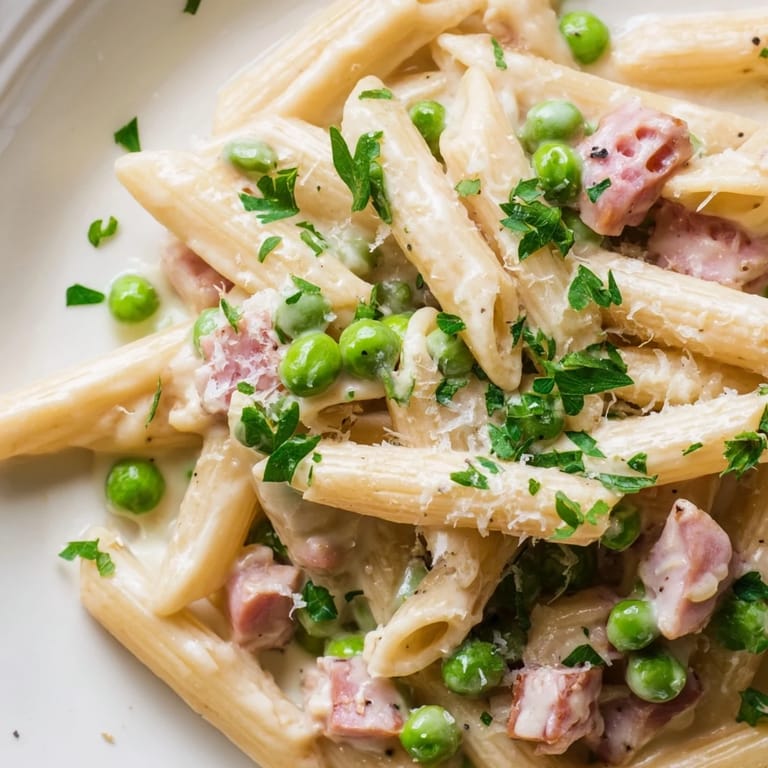
- Remove from heat, sprinkle with fresh parsley and extra Parmesan if you want, and get it on the table while the sauce is still clinging to each piece of pasta.
 Save to Pinterest
 This recipe became my go-to for hosting friends on weeknights because it feels fancy enough for company but comes together while we catch up in the kitchen.
Making It Lighter
I have tried using half-and-half instead of heavy cream when I was serving a lighter crowd, and while the sauce is not as velvety, it still coats the pasta beautifully. The key is watching it closer so it does not break, since there is less fat to protect the emulsion.
Switching Up The Protein
Cooked chicken or turkey work surprisingly well in place of ham, and I have even used crumbled bacon when I wanted something smokier. The important thing is cooking whatever protein you choose long enough to render some fat and develop flavor before adding the cream.
Adding More Vegetables
Sometimes I throw in sautéed asparagus or baby spinach during the last minute of cooking to bulk up the vegetables. The asparagus needs to be cut into bite-sized pieces so it cooks through, and spinach should be added right at the end so it just wilts without becoming watery.
- If you are adding asparagus, cut it into 1-inch pieces and add it with the peas
- Baby spinach only needs about 30 seconds in the hot sauce before it is perfect
- Do not overload the skillet with too many extras or you will lose that creamy coating action
 Save to Pinterest
 There is something deeply satisfying about turning a handful of humble ingredients into a meal that makes people pause between bites and ask for the recipe.
Recipe FAQs
- → Can I use frozen peas instead of fresh?
Yes, absolutely. Frozen peas work wonderfully in this dish. Simply cook them until heated through in step 4, which takes about the same time as fresh peas.
- → What can I substitute for ham?
Cooked chicken, turkey, or bacon are excellent alternatives. You can also use pancetta or prosciutto for a different flavor profile. Adjust cooking time based on the ingredient you choose.
- → How do I prevent the sauce from becoming too thick?
Keep the reserved pasta water nearby and add it gradually while tossing the penne with the sauce. The starch in the pasta water helps achieve the perfect consistency without thinning the sauce too much.
- → Can I make this ahead of time?
This dish is best served immediately for optimal flavor and texture. However, you can prepare the sauce ahead and reheat it gently. Cook the pasta fresh just before serving and combine together.
- → What wine pairs well with this dish?
A crisp Sauvignon Blanc or Pinot Grigio complements the creamy sauce and spring flavors beautifully. The acidity cuts through the richness and enhances the peas and ham.
- → How can I make this lighter?
Substitute half-and-half or whole milk for the heavy cream to reduce fat content while maintaining creaminess. You can also reduce the butter slightly or use a combination of butter and olive oil.