 Save to Pinterest
 The first time I truly understood Thai green curry was in a cramped Bangkok kitchen, watching an elderly vendor stir a massive pot with the kind of focus most people reserve for important decisions. She didn't measure anything—just knew by instinct when the paste had bloomed enough, when the coconut milk was at the perfect whisper of a simmer. Years later, I recreated that moment in my own kitchen, and somehow this soup became the dish I make when I want to feel like I'm cooking with intention rather than just following steps.
I made this for my sister on a Tuesday night when she'd had a terrible day, and I watched her shoulders actually drop with the first spoonful. There's something about the warmth, the hit of lime, the creaminess balancing the spice—it's the kind of comfort that doesn't feel heavy. She asked for the recipe right then, mid-bowl, which is how you know it landed.
Ingredients
- Firm tofu or chicken breast: I prefer tofu because it soaks up all that curry flavor, but chicken works beautifully too—just slice it thin so it cooks through quickly without drying out.
- Green curry paste: This is your backbone; a good paste already has the balance of heat, aromatics, and depth built in, so don't skip buying quality.
- Coconut milk: Full-fat is worth it here because it creates that silky mouthfeel, though light coconut milk works if you're watching fat intake.
- Vegetable or chicken broth: Homemade is ideal, but quality store-bought is honest work—just taste before adding salt.
- Fish sauce: Use this even though it smells funky in the bottle; it vanishes into the background and makes everything taste more like itself.
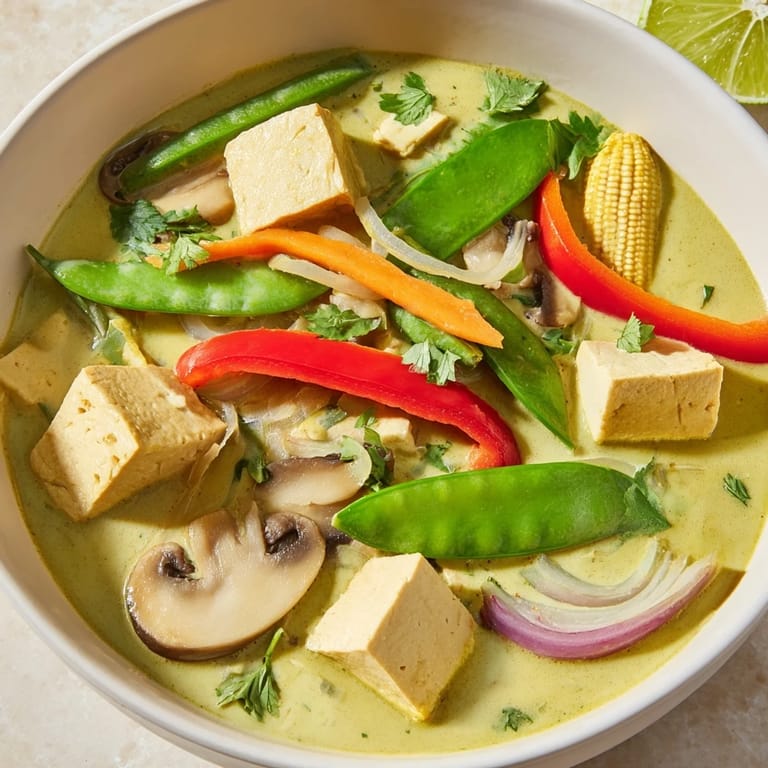
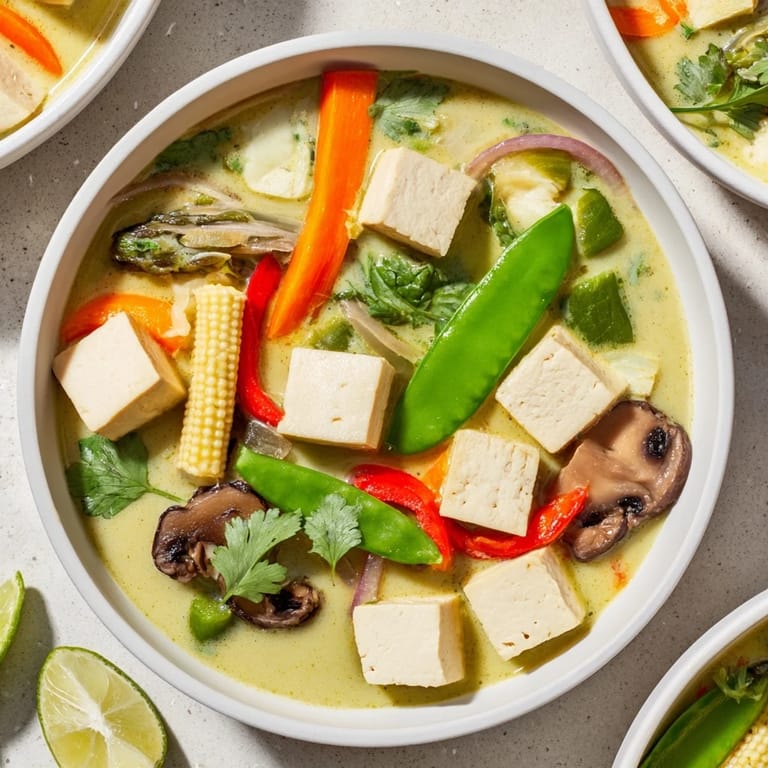
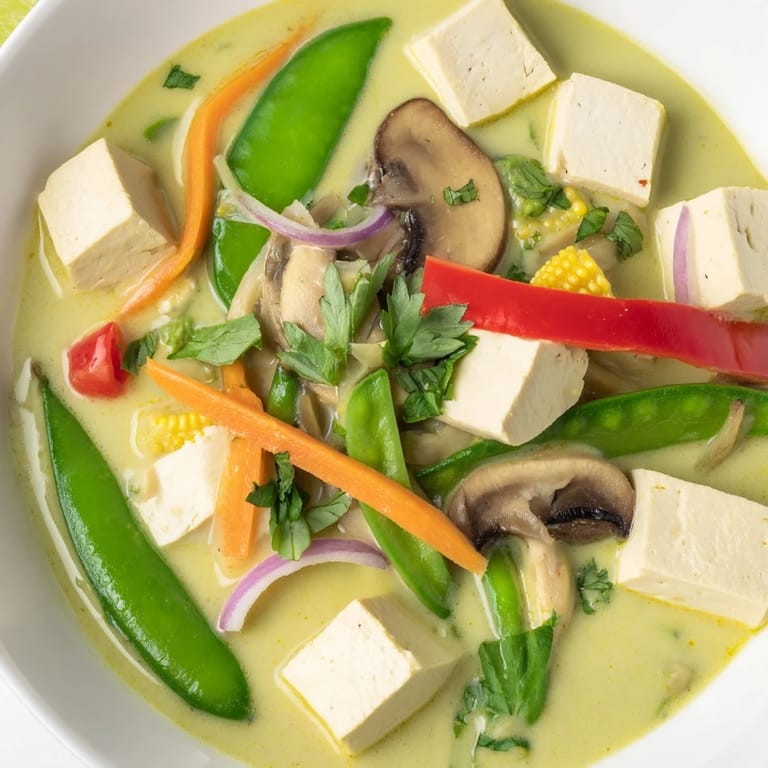
- Red bell pepper, zucchini, baby corn, snap peas, mushrooms, carrot, onion: These vegetables are suggestions, not commands—use whatever looks fresh at your market, keeping in mind that softer vegetables go in near the end.
- Fresh cilantro, lime, Thai basil, red chili: Don't skip the garnishes; they transform a good soup into something that feels alive on your tongue.
Tired of Takeout? 🥡
Get 10 meals you can make faster than delivery arrives. Seriously.
One email. No spam. Unsubscribe anytime.
Instructions
- Bloom the curry paste:
- Heat oil in your pot and add the paste, stirring constantly for 1–2 minutes until you can actually smell it perfuming the air and it darkens slightly. This step matters because it wakes up all the spices and deepens their flavor.
- Build the flavor base:
- Add onion and let it soften for about 2 minutes—don't rush this, as it becomes sweet and mellow. Drop in your protein and cook just until it starts changing color, not until it's fully done.
- Create the broth:
- Pour in coconut milk and broth together, then bring everything to a gentle simmer—the key word is gentle, because you want a quiet bubble, not an aggressive boil.
- Cook the vegetables:
- Add firmer vegetables first (bell pepper, carrot), then softer ones (zucchini, mushrooms, snap peas) so everything finishes at the same time, about 8–10 minutes total. You're looking for just-tender, not mushy.
- Season and taste:
- Stir in fish sauce and sugar, then taste—this is your moment to adjust, adding more paste for heat, more lime juice for brightness, more broth if it's too concentrated.
- Finish and serve:
- Ladle into bowls and pile on cilantro, basil, a squeeze of fresh lime, and chili if you want more heat. The bright garnishes aren't decoration; they're essential to how this soup tastes.
 Save to Pinterest
 There's a moment in cooking this soup when the kitchen fills with that distinctive green curry aroma—it's herbaceous and slightly spicy, and it signals that everything is about to come together. That smell alone is why I make this soup regularly, because it's the olfactory version of being transported somewhere warm and unfamiliar, even if you're just in your own kitchen.
The Vegetable Question
I used to think the vegetable list was sacred until I realized the best version of this soup is the one made with what's actually in season or what you enjoy eating. Eggplant, bok choy, broccoli, cauliflower—they all work beautifully. The only rule is to add them in waves based on how quickly they cook, so you're not left with mushy zucchini and crunchy carrots. Pay attention to what's actually available at your market; that's where the most authentic version of this recipe lives.
Protein Flexibility
I lean toward tofu because it's quietly receptive—it sits in that broth and becomes this blank canvas that absorbs all the curry flavor. Chicken works if you slice it thin and add it early; shrimp is spectacular if you add it in the last 2 minutes so it doesn't turn rubbery. Even fish works beautifully, breaking apart gently into the soup. The choice is yours, but commit to it fully and adjust your cooking time accordingly.
Serving and Storage Wisdom
This soup tastes even better the next day, once all the flavors have had time to get properly acquainted. Store it in an airtight container for up to 3 days, and when you reheat it, do so gently over low heat so the coconut milk doesn't break. Serve it with jasmine rice to soak up all that silky broth, or with rice noodles if you want something a bit more substantial.
- Freeze it without the garnishes and it keeps for a month, though the vegetables lose some texture.
- Make a double batch on Sunday night and you've got at least two dinners sorted for the week.
- If it's too spicy, add more coconut milk or broth; if it's too mild, add more curry paste or a squeeze more fish sauce.
 Save to Pinterest
 This soup is the kind of dish that reminds you why cooking at home matters—it's quick enough for a weeknight, beautiful enough to serve to people you want to impress, and honestly good enough that you'll find yourself making it again and again. There's comfort in that consistency, in knowing that you can create something delicious and nourishing whenever you need it.
Recipe FAQs
- → Can I use chicken instead of tofu?
Yes, chicken breast works well and cooks quickly. Both options absorb the curry flavors beautifully.
- → What can I use for a vegetarian version?
Replace chicken broth and fish sauce with vegetable broth and soy sauce to keep it vegetarian-friendly.
- → How spicy is the curry soup?
It has a balanced heat from green curry paste, but you can adjust spice by adding more paste or fresh chili slices.
- → Can I substitute vegetables in this dish?
Yes, seasonal vegetables like bell pepper, zucchini, and snap peas can be swapped for others you prefer.
- → What sides pair well with this soup?
Steamed jasmine rice or rice noodles complement the soup’s rich and spicy flavors perfectly.