 Save to Pinterest
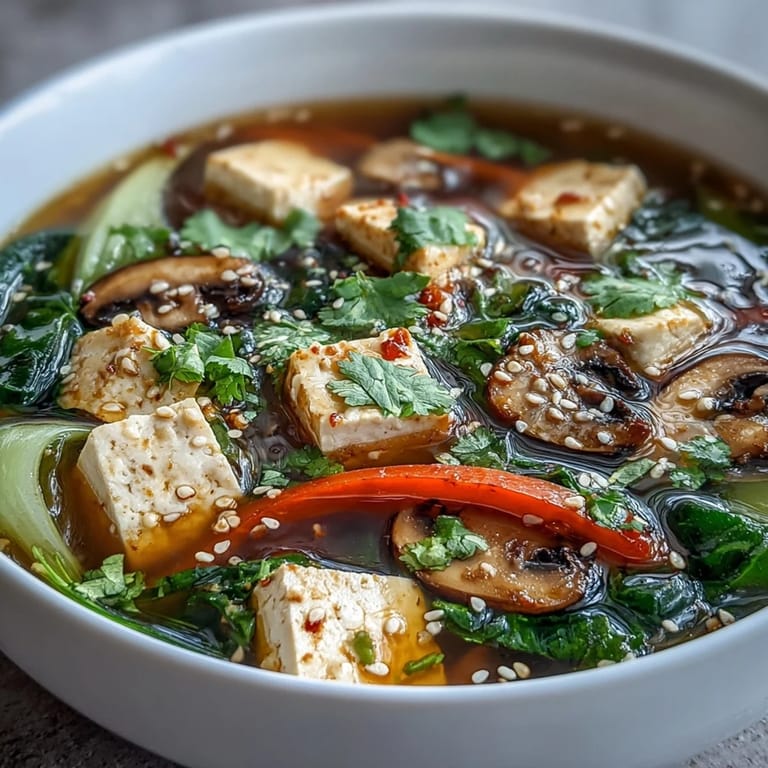
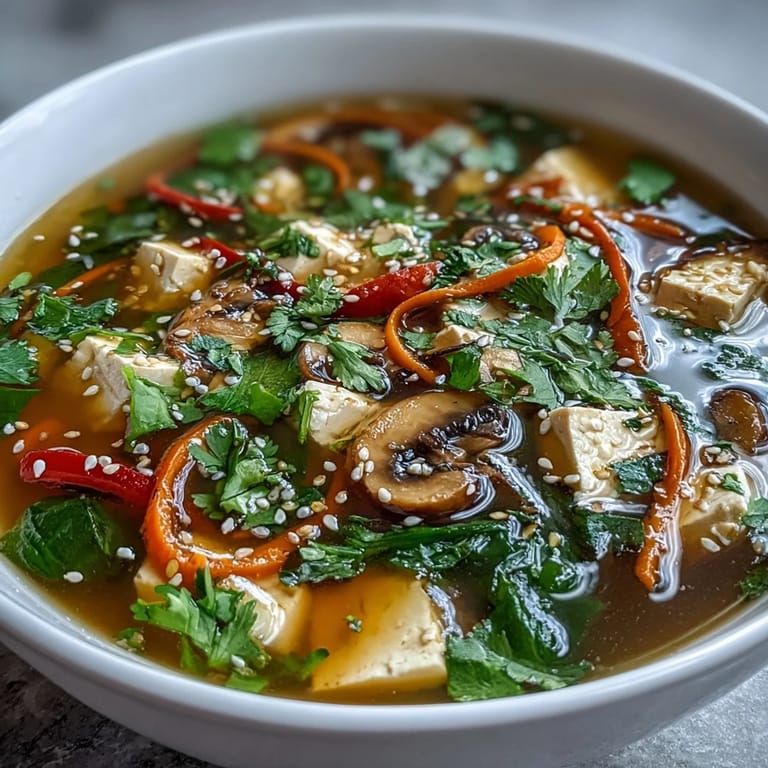
 There's something about a steaming bowl of this soup that stops me mid-afternoon, pulls me away from my desk, and reminds me that eating doesn't have to be complicated. I discovered it on a quiet Tuesday when I had exactly three vegetables in my crisper drawer and needed something gentle but satisfying. The broth came together so quickly, almost like the pot was doing the thinking for me, and by the time the silken tofu went in—those soft, cloud-like cubes—I understood why this soup appears on tables across Asia with such quiet confidence.
I made this for my neighbor last winter when she mentioned feeling under the weather, and I watched her spoon up the tofu so carefully, as if the soup might break if she wasn't gentle enough. She told me later that it was the first thing she'd wanted to eat in days, and something about that stuck with me—how a bowl of the right soup at the right moment becomes its own kind of medicine.
Ingredients
- Low-sodium vegetable broth (1.5 liters): This is your foundation, so choose one you'd actually sip on its own—it makes all the difference when nothing else is competing for attention.
- Soy sauce (2 tablespoons) or tamari: Use tamari if you're keeping this gluten-free, and remember it's slightly saltier, so taste before you add more.
- Fresh ginger, thinly sliced (1 tablespoon): Don't mince it—those thin slices will perfume the broth and soften into something almost candy-like by the end.
- Garlic, minced (2 cloves): Two cloves is a whisper, not a shout, which is exactly what this soup needs.
- Sesame oil (1 teaspoon): This is the secret opening note; it's not much, but your nose will know it's there.
- Carrot, julienned (1 medium): Cut them thin so they soften quickly and look delicate floating in the broth.
- Shiitake mushrooms, sliced (100 g): Their earthy depth transforms simple broth into something with real character.
- Baby bok choy, chopped (100 g): Add these late so they stay slightly crisp and bright green, not mushy and sad.
- Red bell pepper, thinly sliced (1 small): The color matters here—it makes the bowl look alive.
- Spring onions, sliced (2): Save some of the green parts for garnish; they brighten everything they touch.
- Silken tofu, cubed (300 g): Handle it like you're holding something precious, because the gentler you are, the better it stays intact.
- Fresh cilantro, toasted sesame seeds, lime wedges (optional garnish): These aren't extra—they're the final word, turning a simple bowl into something you'll remember.
Tired of Takeout? 🥡
Get 10 meals you can make faster than delivery arrives. Seriously.
One email. No spam. Unsubscribe anytime.
Instructions
- Start with warmth and fragrance:
- Heat sesame oil in a large pot over medium heat and add your minced garlic and ginger slices. Let them dance in the heat for just a minute or two until your kitchen smells like somewhere warm and far away.
- Build your broth base:
- Pour in the vegetable broth and soy sauce, stirring gently. Bring it to a simmer—not a rolling boil, just a gentle, patient bubble.
- Add the sturdy vegetables first:
- Drop in the carrots, shiitake mushrooms, and red bell pepper. Give them about five minutes to soften and release their flavors into the broth.
- Finish with the delicate greens:
- Stir in the bok choy and spring onions, letting them cook just two or three minutes until they're bright and tender but still have a whisper of crunch.
- Welcome the tofu gently:
- This is the moment where patience matters most—add your silken tofu cubes and let them warm through for about two minutes without stirring too much. Think of it like tucking them into bed.
- Taste and trust your instincts:
- Dip a spoon in, taste it, and decide if it needs more salt, more soy sauce, or if it's already perfect as it is.
- Serve and celebrate:
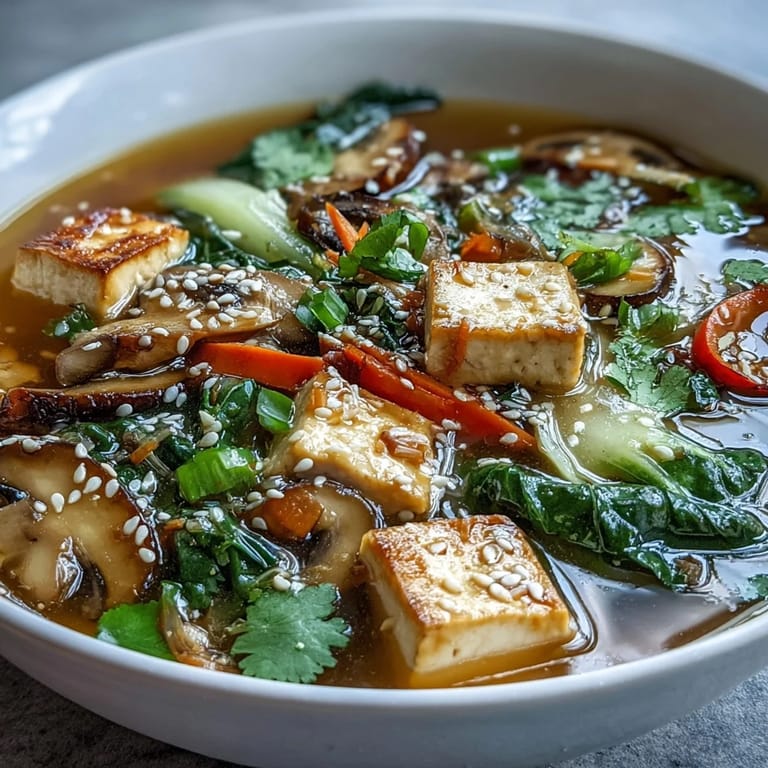
- Ladle into bowls with care, letting the vegetables and tofu distribute evenly. Scatter cilantro and sesame seeds on top if you're feeling generous, and set a lime wedge nearby for anyone who wants to squeeze brightness into their bowl.
 Save to Pinterest
 There was an evening when my daughter came home tired from school and asked if I could make her something warm but light, and this soup was what appeared. She sat at the counter, and I watched her blow on each spoonful, and I realized that feeding someone well, feeding them something that asks nothing of them but to sit and eat and feel better—that's a kind of love that doesn't need words.
When to Make This Soup
This soup knows no season but seems to taste best when you need something quick and honest, when you've had a long day or when someone you care about needs gentle nourishment. It's the kind of thing you make on a Tuesday without fanfare, but somehow everyone remembers it was there.
Variations That Still Feel Right
Once you've made it once, you'll start noticing what else could float in that broth. Snow peas add a snap, napa cabbage brings a deeper green, enoki mushrooms make it feel lighter than air. If you want heat, a drizzle of chili oil or a few slices of fresh chili can wake it up without overpowering it. Some nights I add a thin rice noodle to the bottom of the bowl before ladling, turning it into something more substantial.
- For more texture, swap the silken tofu for firm tofu cut into small cubes.
- A squeeze of rice vinegar at the end adds brightness without changing the character of the soup.
- Keep the ratio of broth to vegetables loose enough that you can always add more broth if someone wants a second bowl.
Storage and Make-Ahead Wisdom
The broth keeps beautifully in the refrigerator for three or four days, which means you can make it ahead and save yourself time on nights when you're already running behind. The tofu is best added fresh when you're ready to eat, though it holds up fine for a day or two if you're not too precious about it.
Beyond the Bowl
This soup taught me that not every meal needs to be loud or complicated to matter. It showed me that when you start with good broth and let each ingredient do what it does best—the ginger warming, the mushrooms deepening, the tofu softening—you get something that feels like care in a bowl. Make it for someone who needs it, or make it for yourself on a day when you do.
- If you have leftover broth, it freezes for months and becomes the start of your next good meal.
- The soup tastes even better the next day, once everything has time to know each other.
- Always taste and adjust seasoning just before serving—your mood and your palate are always the final judge.
 Save to Pinterest
 This soup asks so little of you but gives back generosity in return. Make it soon, make it often, and notice how something this simple becomes necessary.
Recipe FAQs
- → Can I use firm tofu instead of silken?
Yes, firm tofu works well if you prefer more texture. It will hold its shape better during simmering and provide a heartier bite to your bowl.
- → What other vegetables can I add?
Snow peas, napa cabbage, enoki mushrooms, or spinach make excellent additions. Just adjust cooking times accordingly—add delicate greens like spinach in the last minute.
- → How can I make this soup spicy?
Stir in chili oil, sriracha, or fresh sliced chilies during the final minutes of cooking. Start with a small amount and adjust to your preferred heat level.
- → Can I freeze this soup?
The broth freezes well, but the silken tofu texture may change slightly. For best results, freeze the broth and vegetables separately, then add fresh tofu when reheating.
- → Is this soup gluten-free?
Use tamari instead of regular soy sauce to make it completely gluten-free. Double-check all ingredient labels, especially the vegetable broth, to ensure no hidden gluten.
- → What protein alternatives work in this soup?
Beyond tofu, try adding edamame, sliced tempeh, or even cooked shredded chicken for non-vegetarian versions. These additions pair beautifully with the Asian broth.