 Save to Pinterest
 My sister called me one Tuesday afternoon with a problem: she'd gone all-in on low-carb eating and was absolutely sick of cauliflower rice. I'd been tinkering with zucchini ribbons in the kitchen that week, and suddenly it clicked—why not layer them like pasta? Twenty minutes later, this skillet lasagna was bubbling away, and when she came over to try it, she ate two plates without saying much, which for her meant everything.
I made this for a weeknight dinner with my partner last month, and he came home from work expecting the usual quick pasta. When he saw the skillet bubbling under the broiler with that golden cheese crust, he actually sat at the counter and watched it finish cooking instead of scrolling on his phone. That's when I knew I'd stumbled onto something he'd actually request.
Ingredients
- 2 medium zucchinis, sliced lengthwise into thin ribbons: A mandoline makes this effortless, but a sharp knife and steady hands work fine too—just aim for consistency so everything cooks evenly.
- 1 small onion, finely chopped: The onion melts into the beef, creating that savory foundation the whole dish leans on.
- 2 cloves garlic, minced: Never skip this; it's what makes people ask for the recipe.
- 450 g (1 lb) lean ground beef: Lean beef keeps the dish from becoming greasy, and the meat breaks down beautifully as it simmers.
- 250 g (1 cup) ricotta cheese: Ricotta is milder and creamier than cottage cheese, spreading like a dream between those zucchini layers.
- 100 g (1 cup) shredded mozzarella cheese: Fresh mozzarella can break down oddly under heat, so stick with the standard shredded kind for reliable melting.
- 30 g (1/4 cup) grated Parmesan cheese: Parmesan adds a sharp, salty note that prevents the whole thing from tasting bland.
- 400 g (1 can, 14 oz) crushed tomatoes: Crushed tomatoes give you a better texture than whole; they meld into the sauce without needing to be broken down.
- 2 tbsp tomato paste: This concentrates the tomato flavor and adds depth that a can of sauce alone can't quite reach.
- 1 tsp dried oregano and 1 tsp dried basil: These dried herbs are your backbone here; they bloom as everything simmers together.
- 1/4 tsp red pepper flakes (optional): A whisper of heat makes all the other flavors pop, even if your guests can't quite identify what they're tasting.
- Salt and black pepper, to taste: Taste as you go; the cheese adds saltiness too, so hold back at first.
- 2 tbsp olive oil: Good olive oil starts the cooking process, but don't waste your expensive stuff here—mid-range is perfect.
Tired of Takeout? 🥡
Get 10 meals you can make faster than delivery arrives. Seriously.
One email. No spam. Unsubscribe anytime.
Instructions
- Build your base:
- Heat the olive oil in your oven-safe skillet over medium heat until it shimmers slightly. Add the onion and let it soften for about 3 minutes, stirring occasionally—you'll hear it sizzle gently and smell something sweet starting to develop.
- Brown the beef:
- Stir in the garlic and cook for just a minute until fragrant, then add the ground beef. Break it up with a spatula as it cooks, keeping everything moving so you get small, even pieces instead of clumps. This takes about 5 minutes; you'll know it's done when there's no pink left and the kitchen smells incredible.
- Make the sauce:
- Pour in the crushed tomatoes and tomato paste, then sprinkle in the oregano, basil, red pepper flakes, salt, and pepper. Stir everything together and let it simmer for 5 minutes so the flavors start holding hands.
- Layer your first round:
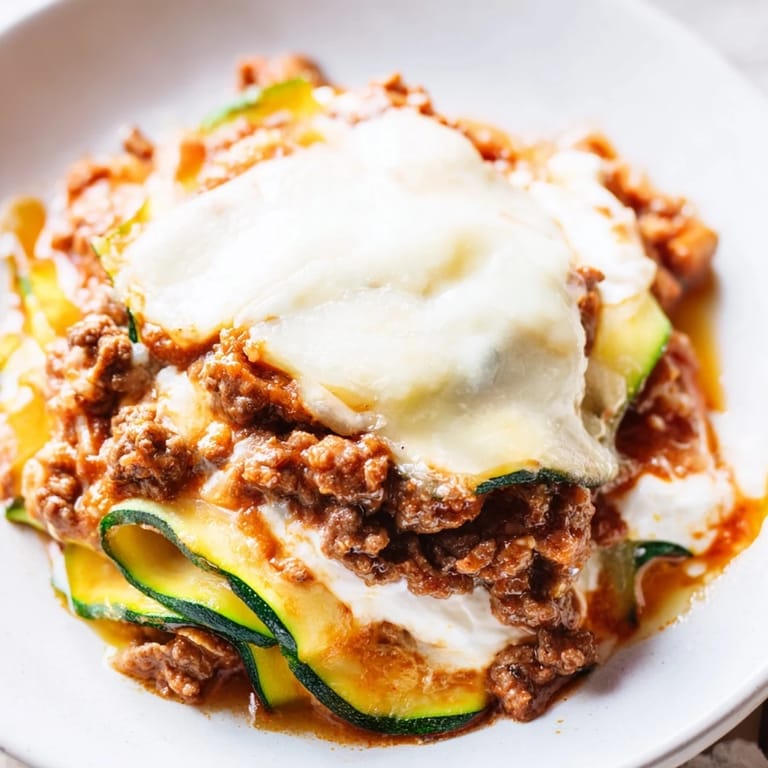
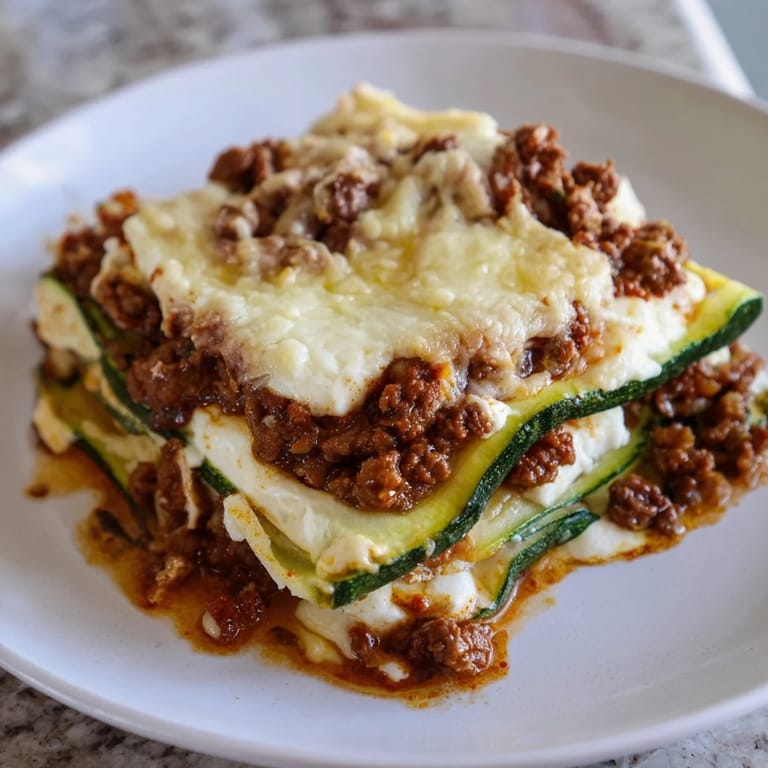
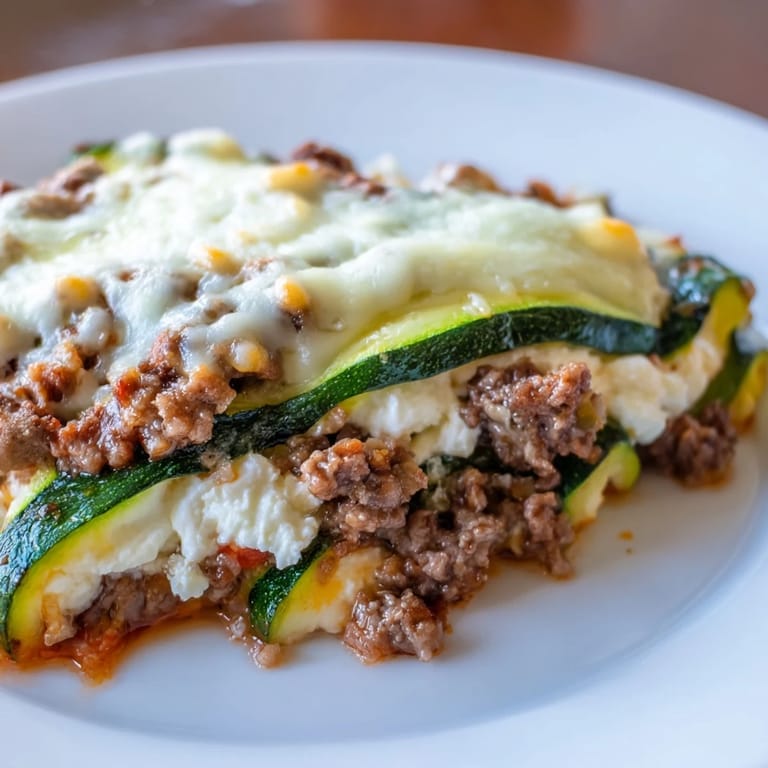
- Arrange half the zucchini ribbons over the sauce, overlapping them slightly like roof shingles. Dollop half the ricotta across the top and gently spread it, then scatter a third of the mozzarella and some Parmesan over that.
- Repeat and crown:
- Layer the remaining zucchini, the rest of the ricotta, another third of the mozzarella, and more Parmesan. Top everything with the last of the mozzarella and Parmesan so you get that golden, bubbly crust when it cooks.
- Cook low and slow:
- Cover the skillet and reduce heat to low, then cook for 10 minutes. The cover traps steam, which softens the zucchini gently so it doesn't turn into mush.
- Optional broiler finish:
- If you want that restaurant-style cheese crust with real color, remove the cover and slide the skillet under a preheated broiler for 2 to 3 minutes. Watch it like a hawk—broilers are surprisingly enthusiastic about turning things from golden to burnt.
 Save to Pinterest
 I served this to my running group one Sunday after a long morning, and three of them asked for the recipe before they'd even finished eating. One person mentioned she actually made it the next week and texted me a photo—there's something about turning zucchini into something people genuinely crave that feels like a small kitchen victory.
Why This Skillet Method Matters
Lasagna in a skillet isn't just about being lazy with the dishes, though that's a solid bonus. The shallow pan means every forkful gets beef, sauce, cheese, and zucchini all at once instead of the layers separating as you serve it. The heat distributes more evenly too, so you don't end up with cold corners and scorched edges like you might in a traditional baking dish. Plus, something about watching it all come together in one pan feels less fussy than the traditional method, which might be why I actually make this more often than I do regular lasagna.
Flavor Balance and Variations
The beauty of this dish is how the acidic tomato sauce plays against the rich, creamy ricotta and mild mozzarella. That balance is what keeps it from feeling heavy even though it's deeply satisfying. If you want to play around, ground turkey or chicken works beautifully and cuts the richness even further—I've made it both ways, and honestly, I can't decide which I prefer. Fresh basil scattered over the top right before serving is like hitting the refresh button on all those cooked herbs; it wakes everything up and adds a brightness that feels almost fancy for a weeknight dinner.
Serving and Storage Wisdom
A crisp green salad with lemon vinaigrette is the perfect partner—it cuts through the richness and makes the whole meal feel complete instead of just hearty. The leftovers keep beautifully in the fridge for about three days, and reheating is straightforward: just cover it and warm it gently over low heat so the cheese doesn't separate. I've found that letting it rest for a few minutes right out of the skillet, before you dive in, lets everything set slightly so it holds together better on the plate.
- Fresh basil added at the very end tastes almost like a completely different herb than the dried version you cooked with.
- A mandoline slicer pays for itself the first time you make this if you were on the fence about buying one.
- This freezes well if you skip the cheese on top and add it fresh when you reheat—future you will be grateful for the shortcuts you took today.
 Save to Pinterest
 This skillet lasagna has become my answer to the question: how do you eat well without overthinking dinner? It's comforting and surprising all at once, the kind of meal that reminds you why you love being in the kitchen.
Recipe FAQs
- → How should I slice the zucchini for even cooking?
Slice zucchinis lengthwise into thin ribbons, ideally using a mandoline slicer for uniform thickness that cooks evenly in the skillet.
- → Can I substitute ground beef with other meats?
Yes, ground turkey or chicken work well and provide a lighter alternative while maintaining the dish's savory profile.
- → Is it necessary to broil the skillet at the end?
Broiling is optional but recommended to achieve a bubbly, browned cheese topping that adds extra flavor and texture.
- → What herbs complement this dish best?
Dried oregano and basil enhance the tomato sauce's flavors, while fresh basil added before serving offers a fragrant finish.
- → How can I reduce moisture from zucchini while cooking?
Salting sliced zucchini and letting it rest before cooking helps draw out excess moisture, preventing a watery skillet.
- → Is this dish suitable for a gluten-free diet?
Yes, the ingredients used are naturally gluten-free; however, always check canned goods and cheese labels to avoid hidden gluten.