 Save to Pinterest
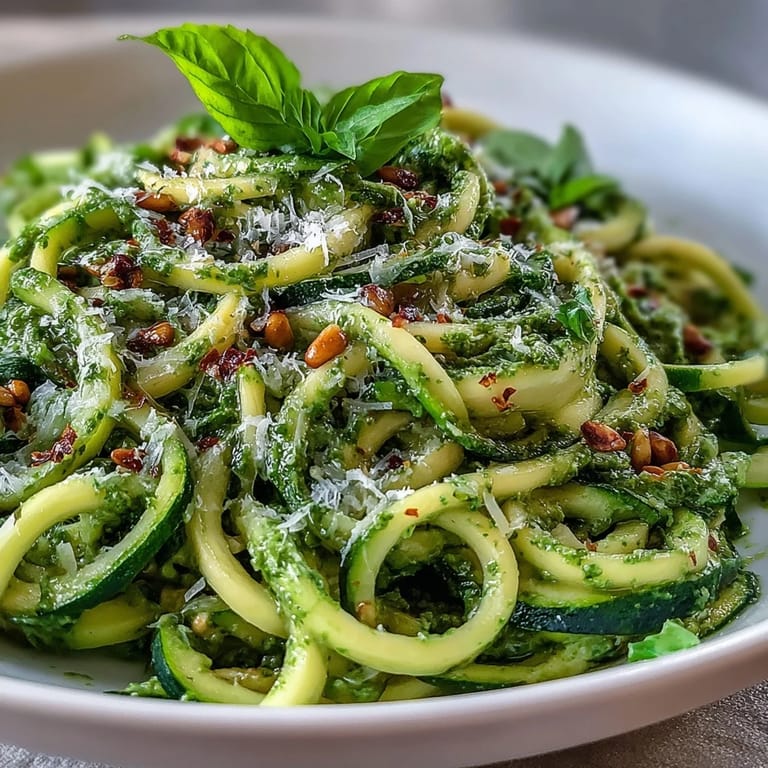
 My spiralizer sat in a drawer for months until my neighbor casually mentioned she'd given up pasta entirely and somehow felt lighter. That conversation stuck with me, so one humid afternoon, I pulled out that untouched kitchen gadget and turned two zucchinis into delicate ribbons. Ten minutes later, tossing them with a pesto I'd made while the garlic was still fragrant in my fingertips, I understood what she meant. This dish became my answer to craving something that tastes restaurant-worthy but happens in less time than it takes to boil water.
I made this for my sister during a week when she was experimenting with eating lighter, and she circled back to the kitchen three times asking if there was more pesto. By the third bowl, I realized she wasn't thinking about what was missing from the plate. The basil-forward brightness somehow made everything feel abundant instead of restrictive, which changed how I think about cooking for people watching their carbs.
Ingredients
- Zucchini: Medium ones spiralize beautifully without becoming watery; I learned to pat them dry after spiralizing because the extra moisture is a silent dish killer.
- Fresh basil leaves: Pack them into your measuring cup generously—this isn't the time to be delicate, and the more basil, the more you'll taste that vibrant essence.
- Pine nuts: They toast slightly while pulsing in the processor, adding a buttery richness that walnuts can't quite match, though walnuts save you money and taste genuinely good too.
- Parmesan cheese: Grate it yourself if you have time; the pre-shredded stuff contains anti-caking agents that make the pesto feel less silky.
- Extra-virgin olive oil: The quality here matters since it's not cooked off—this is where you use the good bottle you've been saving.
- Lemon juice: Fresh squeezed, because that bright acid is what keeps the pesto from tasting heavy or sitting too long on your palate.
- Garlic clove: One clove is enough; I once used two and the pesto tasted like garlic wearing a basil costume instead of the other way around.
Tired of Takeout? 🥡
Get 10 meals you can make faster than delivery arrives. Seriously.
One email. No spam. Unsubscribe anytime.
Instructions
- Build your pesto foundation:
- Add the basil, Parmesan, pine nuts, and garlic to a food processor and pulse a few times until everything is finely chopped but still has texture. You're looking for that moment when it's broken down but not yet a paste.
- Add the luxurious finish:
- Turn the processor on and drizzle the olive oil in slowly while it runs, watching the mixture transform into something glossy and cohesive. Add lemon juice at the end and taste as you go, seasoning with salt and pepper until it tastes bright enough to make you pause.
- Prepare your noodles:
- Spiralize your zucchinis using steady, even pressure so the strands stay consistent in thickness. If you don't have a spiralizer, a julienne peeler works, though it takes a bit longer and your forearms will know it.
- The sauté:
- Heat olive oil in a large skillet over medium heat until it shimmers, then add your zucchini noodles and a small pinch of salt. Sauté for two to three minutes, stirring gently with a spatula so the noodles soften without collapsing into a tangle.
- Bring it together:
- Remove the pan from heat and toss in your pesto, starting with half of it and adding more if you want it more coated. The residual warmth will make the pesto smell even better without cooking off its fresh brightness.
- Plate and embellish:
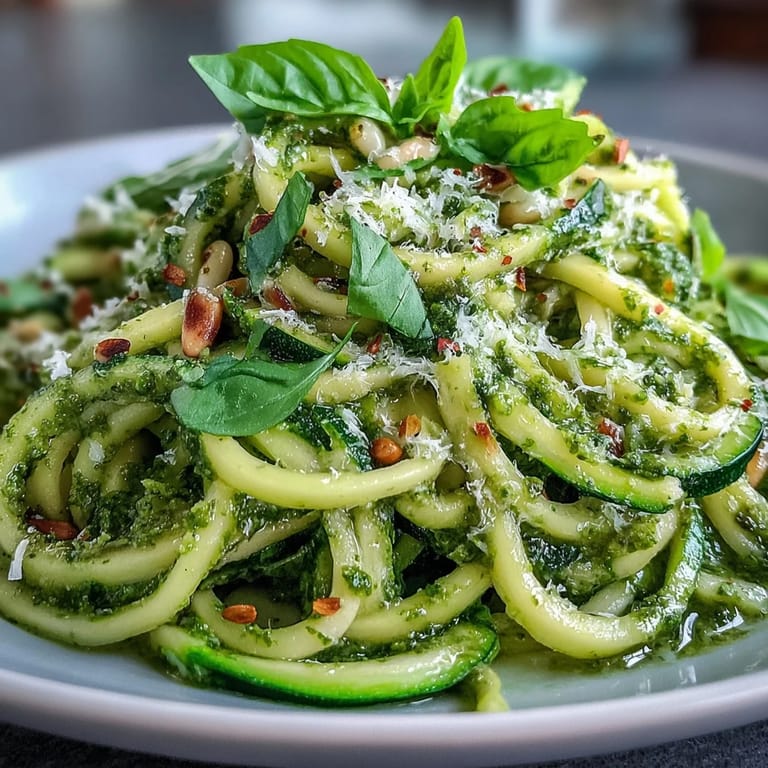
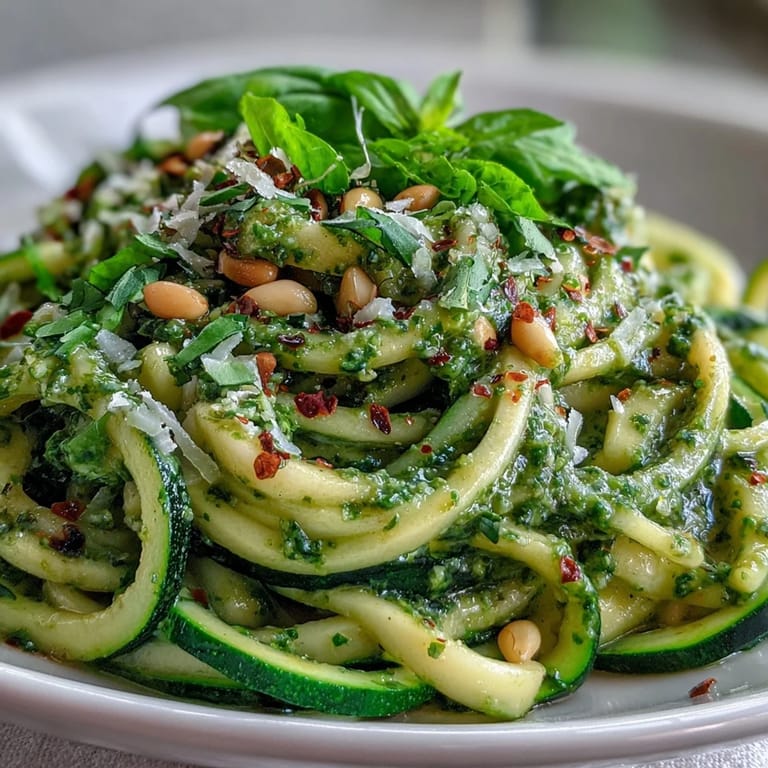
- Divide between plates and top with extra Parmesan, a few fresh basil leaves, and a small scatter of red pepper flakes if you want a whisper of heat.
 Save to Pinterest
 One evening, I made this without telling my guests it was low-carb, and their conversation never shifted to what was missing. Instead, they asked for the recipe. That moment taught me that restriction and satisfaction don't have to be at odds when you build a dish on flavors that actually sing.
The Pesto Approach
Pesto is one of those sauces that forgives gentle creativity. I've made it with walnuts when I couldn't find pine nuts, used a mix of basil and spinach when basil ran low, and even swapped in microplaned lemon zest for juice when the lemons in my bowl looked tired. The principle remains the same: fat, herbs, acid, and umami in proportions that make you want another bite. The ratio that works is roughly one cup of basil to a quarter cup of nuts to a quarter cup of oil, but your hand will learn this better than any measuring cup ever could.
Spiralizing Without Stress
If you're new to spiralizing, know that it's more forgiving than it looks. The vegetable peeler method produces thinner, more delicate noodles that cook faster, while a spiralizer creates thicker strands that hold their shape slightly better. Either way, the goal is to eat them within minutes of cooking, when they're still tender but not yet releasing their moisture into the pan like they're weeping.
Making It Your Own
This dish is a canvas if you want it to be. Some mornings I add grilled chicken for protein, other times I throw in halved cherry tomatoes that burst under my fork, and once I added a handful of blanched almonds for extra crunch. The pesto stays the star, but everything else can bend to what you have or what sounds good that day.
- Cherry tomatoes, halved and stirred in at the end, add juiciness without heaviness.
- A handful of blanched almonds or toasted pine nuts scattered on top gives textural contrast that makes each bite more interesting.
- Serve this warm, never cold, because cold zucchini noodles lose their delicate appeal and start to taste like texture for its own sake.
 Save to Pinterest
 This has become my weeknight anchor, the meal I make when I want something that feels like taking care of myself. It's quick enough that hunger doesn't win, but intentional enough that eating it feels like a small celebration.
Recipe FAQs
- → How do I prevent zucchini noodles from becoming watery?
Sauté zucchini noodles briefly for 2-3 minutes over medium heat until just tender. Avoid overcooking as this causes them to release excess water and become mushy. Serve immediately after tossing with pesto for the best texture.
- → Can I make the pesto ahead of time?
Yes, prepare the pesto up to 5 days in advance and store it in an airtight container in the refrigerator. The flavors often develop and improve after resting. You can also freeze pesto for up to 3 months.
- → What can I use instead of pine nuts?
Walnuts make an excellent budget-friendly alternative with a slightly earthier flavor. For nut allergies, substitute sunflower seeds or pumpkin seeds. Both options provide similar texture and creaminess when blended into the pesto.
- → Is this dish suitable for meal prep?
While best enjoyed fresh, you can meal prep components separately. Store spiralized zucchini in a container with paper towels to absorb moisture. Keep pesto in a separate jar. Combine and sauté just before serving to maintain optimal texture.
- → How can I add more protein to this dish?
Grilled chicken breast, shrimp, or white beans pair beautifully with pesto zucchini noodles. You can also stir in chickpeas or sprinkle hemp seeds over the top. The pesto itself provides protein from Parmesan and pine nuts.
- → Can I use store-bought pesto instead?
Absolutely. High-quality jarred pesto works well in a pinch. Look for brands with simple ingredients and vibrant green color. You may want to add a squeeze of fresh lemon juice to brighten the flavors since fresh pesto typically has more acidity.